249 Hydrogen Fuel Cell Buses Delivered to Guangzhou Public Transport Group
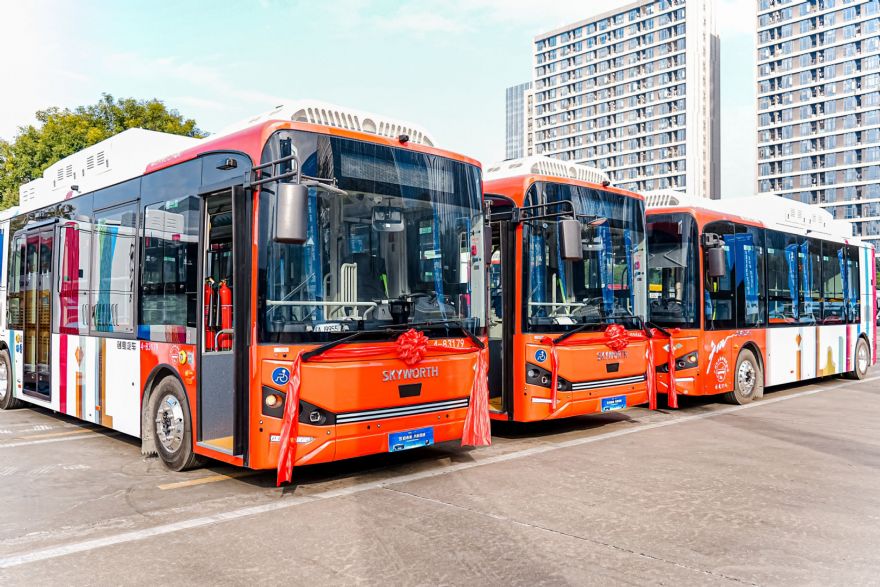
February 16, 2026This month, Skywell New Energy Vehicles, operating under the Skyworth Auto banner and part of Kaiwo Group, handed over 249 shiny new hydrogen fuel cell buses to the Guangzhou Public Transport Group. Built in partnership with HTWO Guangzhou—the first overseas hydrogen production hub from Hyundai Motor Group—this is one of China’s biggest single deployments of fuel cell buses yet. It’s a clear signal that Guangzhou is doubling down on zero-emission transport to tackle smog and hit national goals for hydrogen in heavy-duty fleets.
Delivery Highlights
- 249 midibuses (model NJL6856FCEVF), each 8.5 meters long, with a low-floor, barrier-free layout for easy boarding
- Powered by a 90 kW hydrogen fuel cell system at 64% peak efficiency from HTWO Guangzhou
- Backed up by a 176 kWh CATL lithium-ion battery pack for extra range and smooth acceleration
- Cruising up to 390 km on hydrogen alone, or 576 km when the battery kicks in
- Full refuels in just 3–5 minutes—perfect for busy urban routes
- These 249 buses cover roughly half of Guangzhou’s latest hydrogen bus tender
Technical Overview
At the core of each bus sits that 90 kW hydrogen fuel cell system from HTWO Guangzhou. It fuses onboard hydrogen with air to churn out electricity, with water vapor as the only byproduct. On top of that, a 176 kWh CATL battery harvests brake energy and lends a power boost during starts and hills. Together, they deliver a whisper-quiet ride and a combined range that rivals many diesel or pure-battery models in city service.
Thanks to the lightning-fast 3–5 minute refill, these midibuses can stick to jam-packed schedules without long pit stops. Plus, the low-floor design and slim rear overhang (under 1.1 meters) make weaving through Guangzhou’s crowded streets feel like a breeze.
Strategic Partnership
This rollout highlights a deepening Sino-Korean team-up in cutting-edge fuel cell technology. HTWO Guangzhou, Hyundai’s dedicated hydrogen arm, kicked off its first overseas factory in 2023 and now supplies 90 kW stacks to Chinese bus builders like Skywell. Meanwhile, Skywell New Energy Vehicles has been busy expanding its electric bus lineup and jumped into hydrogen through its Skyworth Auto arm.
When Hyundai first announced the Guangzhou order last December, the goal was clear: localize production, slash costs and turbocharge commercialization. That way, China’s growing hydrogen infrastructure ecosystem—from filling stations to service networks—can scale up faster.
China’s Hydrogen Momentum
China’s been trialing hydrogen buses since 2016 in places like Foshan, but real growth kicked in once national policies and city tenders pushed megacities to act. Guangzhou’s late-2023 tender called for around 450–500 buses, and this batch of 249 is about half of that—other suppliers will fill out the rest.
Under the 14th Five-Year Plan, Beijing’s made heavy-duty hydrogen transport a priority, aiming to knit together a nationwide network of production and refueling points. HTWO Guangzhou feeds straight into that vision, while Skywell’s Skyworth Auto brand is gearing up to serve domestic and export markets. As Europe and the U.S. cool on fuel cell bus rollouts, China is hitting the accelerator—and could soon lead global adoption by volume.
Urban Impact and Outlook
Guangzhou, home to nearly 19 million people, has long battled traffic-related pollution. These new hydrogen buses will slash tailpipe emissions on busy routes, help clear the air and prove that fast-refueling, zero-emission fleets work at scale. They’ll also spur jobs in manufacturing, maintenance and the wider sustainable energy supply chain.
Of course, building out enough hydrogen infrastructure—from green hydrogen production to more filling stations—remains a hurdle. But when you see 249 buses glide up, top off their tanks in under five minutes and head back out, it’s hard not to feel that momentum.
Looking ahead, the Guangzhou Public Transport Group will weave these buses into its busiest lines, while Skywell and HTWO Guangzhou gear up for the rest of the tender. For anyone tracking the future of zero-emission transport, this rollout isn’t just a pilot—it’s a real-world stress test of hydrogen’s promise: fast fills, long routes and cleaner skies.

 With over 15 years of reporting hydrogen news, we are your premier source for the latest updates and insights in hydrogen and renewable energy.