3D-Printed Copper Catalyst Offers Efficient Hydrogen Purification
Researchers at Universidad de Alicante have developed a 3D-printed copper-based catalyst that efficiently oxidizes CO in hydrogen streams, boosting purification performance, reducing noble metal use, and shrinking reactor size, aiming to lower the cost barriers for green hydrogen production and fuel cell technology.
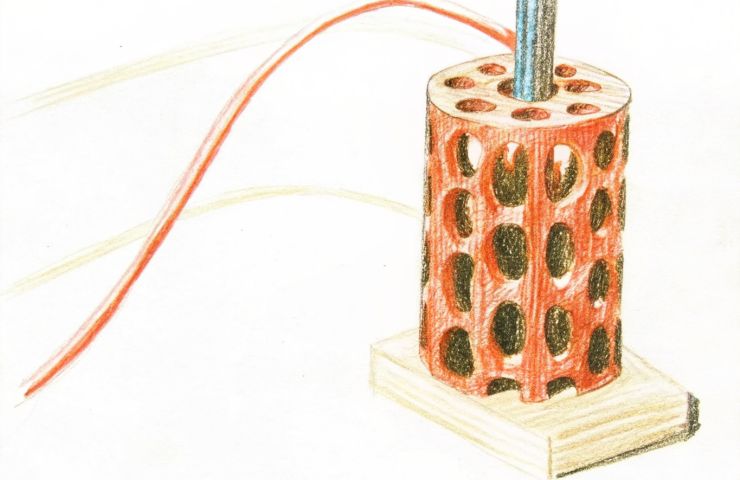
You ever think about how we get hydrogen to go from that messy reformer stream to the pure stuff that fuel cells really want? Well, researchers at Universidad de Alicante have been digging into that and came up with something pretty cool, mixing 3D printing with some clever base-metal chemistry. They’ve actually made a monolithic copper-based catalyst that does a great job at munching through carbon monoxide—basically paving the way for cleaner and greener hydrogen production.
This project is led by Arantxa Davó Quiñonero, a postdoctoral researcher over at UA’s Instituto Universitario de Materiales (IUMA), and their approach is pretty nifty. They’ve printed a porous copper structure that's layered with copper oxide and sprinkled with cerium oxide. This isn’t just some flashy design; it’s efficient! Each atom of copper plays a role, unlike those older powder-on-support catalysts. The end result? They can convert a lot of CO to CO2 at lower temperatures, with no hydrogen lost in the mix, and they also cut down on the need for those pricey noble metals.
But why does that really matter? When feeding a hydrogen fuel cell, even the tiniest bits of carbon monoxide can mess with the platinum catalyst that makes everything tick. Traditionally, the industry relied on platinum-ruthenium combos to scrub CO from reformate, and while they work, they can seriously break the bank and come with their supply risks. Researchers have been exploring options like copper and cerium oxides since the 2010s, but transforming those materials into something efficient and usable has been the real challenge—until now, thanks to additive manufacturing.
Breaking Down the 3D-Printed Catalyst
So, this printed catalyst is kind of built like a three-act play. First, they lay down a skeleton of pure copper, creating the backbone of the structure. Next up, an intermediate layer of copper oxide steps in to provide that active redox interface. Finally, you’ve got cerium oxide particles sprinkled on top that help with oxygen storage and release. What happens here is pretty neat: oxygen from the gas stream reacts with CO to turn it into CO2 without messing with hydrogen, in a process often referred to as CO-PROX.
This whole setup is making the best of 3D-printed catalysts. By creating internal channels and altering the porosity, they’ve increased the active surface area and improved gas flow. Lab tests are showing that this new design can outperform traditional pellets or washcoats in terms of CO conversion and selectivity. Plus, it could mean smaller reactors—think more streamlined purification units.
3D Printing: Revolutionizing Reactor Design
Picture this: a Lego piece that works as both a highway and a chemical reactor. That’s basically what 3D printing lets engineers do nowadays. Instead of just cramming powdered catalysts into a fixed space, they can print whole monoliths with custom channels that fit the feed composition and flow rates perfectly. This modular design makes scaling up easier—start with a short stack for testing, then tile them together when you’re ready to go big.
In real-world terms, this means faster prototyping of shapes, and quicker iterations on pore size, plus less waste overall. It also separates the catalyst’s microstructure from its larger form, giving a lot of flexibility to optimize both at the same time.
The Journey from Lab to Spain’s Hydrogen Future
This project really ties in with Universidad de Alicante’s ongoing hydrogen research efforts. Back in 2022, they teamed up with the University of Liverpool to take a closer look at fuel cell behavior and the weaknesses of platinum catalysts. They also explored hydrogen storage methods with carbon nanoreactors that same year. Fast-forward to now, and they've snagged a patent for their 3D-printed copper-cerium catalyst—marking a significant step in Spain’s green hydrogen agenda.
Living in Alicante with all that sunshine and EU funding for renewable energy creates a prime environment for innovation. By making hydrogen production tech more affordable through better purification processes, their work is tightening up the clean hydrogen value chain. It’s all leading toward Spain’s ambitious target of rolling out 4 GW of electrolyzers by 2030 and contributing to Europe’s wider REPowerEU goal of 40 GW across all member states.
Industry Implications
When the costs for purification catalysts drop, it stirs up a whole domino effect. The fuel cell sector can expect smaller systems and less reliance on scarce platinum. Big industries like steel and cement are eyeing clean hydrogen as a powerful tool for reducing carbon emissions, while transport players—ranging from trucks to trains—are searching for dependable and affordable supply chains. If purification costs go down, green hydrogen could start to compete with gray hydrogen, which might shake up market shares across chemicals and refining.
Current data from the EU shows that green hydrogen already holds about 15.3% of the market share. Each boost in efficiency bumps that number higher, which means more investment and commercial trials could pop up. We might soon see the next generation of refineries adopting these 3D-printed catalysts or modular skid-mounted purification units, especially where space is tight.
Looking Forward: Beyond the Lab
Of course, getting from lab experiments to industrial use isn’t without its challenges. How will these catalysts hold up under real-world conditions, with all the pressure and temperature swings? Can they maintain consistent quality when producing large monoliths? What's next for UA is teaming up with industrial gas suppliers and reactor manufacturers for pilot trials beyond the bench.
The good news is there’s minimal environmental risk since copper and cerium oxides are quite common, plus the additive process results in less waste. Still, making the jump to industrial use will depend on techno-economic studies, regulatory permissions, and integrating supply chains. If all goes well, this 3D-printed strategy could shift hydrogen purification from a clunky process to a seamless step in sustainable energy projects.
As we watch the clean energy landscape evolve, breakthroughs like UA’s catalyst remind us that the most impactful changes often happen within the reactor itself. By combining materials science with digital fabrication, they’re lighting the way toward making hydrogen infrastructure more accessible, flexible, and aligned with a zero-emission future.
It’s an exciting time to be at the forefront of energy innovation—a university lab in Alicante is literally printing the building blocks of tomorrow’s hydrogen economy, one carefully crafted layer at a time.
```