ARENA Grants AUD 21 M to Pilbara Green Hydrogen Hub
February 9, 2026This February, the Australian Renewable Energy Agency (ARENA) awarded InterContinental Energy (ICE) a cool AUD 21 million grant (around USD 15 million). This windfall supercharges the ambitious 26 GW Australian Renewable Energy Hub (AREH) in Western Australia’s Pilbara. The cash will hammer out front-end engineering design, partner integration and regulatory studies—and smooth the path to a final investment decision (FID) in 2028, with first power expected by 2030.
Background
What’s now the AREH started life back in 2016 as the Asian Renewable Energy Hub, a BP-led joint venture. Fast-forward to January 2023, and it snagged state approval to build 26 GW of wind and solar across 6,500 sq km, about 250 km northeast of Port Hedland. When BP stepped back in 2025, ICE—bootstrapped in 2016 and steered by CEO Neil Parker and Australia head Isaac Hinton—picked up the torch, transforming AREH into the Pilbara’s flagship for green hydrogen and hydrogen production.
Pilbara Context
The Pilbara’s been Australia’s mining powerhouse since the 1960s, thanks to its iron-ore exports and a workforce of about 65,000. But with some of the world’s best solar irradiance and coastal winds, it’s also tailor-made for large-scale renewable energy integration and hydrogen production. Swapping raw-ore shipments for green iron smelting could lock more value in the region—and propel Australia further down the road of industrial decarbonization.
ARENA’s Strategic Role
Since 2012, ARENA has poured more than AUD 1.4 billion into 50 + projects—shouldering the early-stage risk that lures private capital in. This latest grant slots right into Australia’s “Future Made in Australia” agenda, which is all about industrial decarbonization and driving down the levelized cost of hydrogen production.
Market Impact
By taking the edge off early development costs, that AUD 21 million from ARENA beefs up ICE’s pitch for equity and debt funding. Down the line, AREH will funnel green hydrogen to on-site iron smelters or turn it into ammonia bound for Asia’s export markets. It’s another example of how renewable energy integration can drive new revenue streams. If all goes to plan, construction could create around 20,000 jobs, with another 3,000 long-term roles in operations and maintenance.
Technical Snapshot
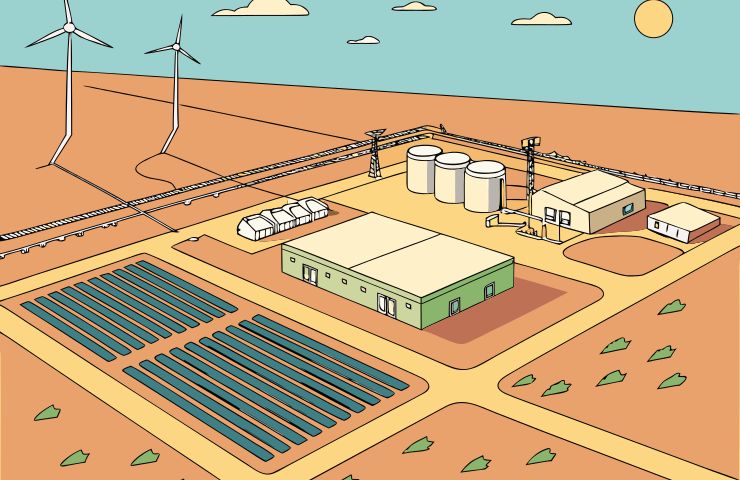
In Phase 1, think roughly 1 GW of wind and solar, teamed up with 150 MW of electrolysers over at the Boodarie precinct near Port Hedland. They’ll desalinate seawater on-site before channeling it to the electrolysers via the Pilbara Green Link. Future stages will crank things up—scaling generation and electrolysis until AREH can pump out 1.6–1.8 million tonnes of green hydrogen every year.
Environmental & Indigenous Agreements
AREH has already locked in essential environmental approvals and inked an Indigenous Land Use Agreement that tackles heritage protection, biodiversity offsets and benefit-sharing. A bespoke desalination plant handles freshwater in this arid setting, with continuous monitoring to keep any ecological impacts in check.
Synergies with Pilbara Hydrogen Hub
Alongside AREH sits the Pilbara Hydrogen Hub—backed by AUD 140 million between 2021 and 2024—working on a 492,000 tpa hydrogen pipeline and export terminal. By sharing infrastructure, both projects can trim costs and fast-track market entry for hydrogen infrastructure and ammonia exports.
Key Takeaways
- Government boost: AUD 21 million grant to kick-start FEED.
- Industrial decarbonization: Paving the way for green iron smelting.
- Job creation: Around 20,000 roles in construction, 3,000 in O&M.
- Scale & timing: 26 GW of renewables; FID by 2028; first power in 2030.
- Hydrogen output: Up to 1.8 million tonnes per year.
Risks & Considerations
Of course, there are hurdles: keeping the desalination plant fed with seawater, tying into the remote grid, wrangling electrolyser and turbine supply chains, and locking in long-term offtake deals—whether that’s green iron or ammonia—to nail down the financing.
Future Outlook
Thanks to ARENA’s grant, ICE is all set to wrap up FEED, nail down partner commitments, and head into a final investment decision by 2028. Teaming up with the Pilbara Hydrogen Hub, AREH could catapult the region to the forefront of renewable energy integration and industrial decarbonization. Pull this off, and you’ve got a blueprint for massive hydrogen production and zero-emission steel making that other regions might only dream about.
At the end of the day, this AUD 21 million lifeline fills a key funding gap. If ICE can steer through the technical, financial and logistical twists, the Pilbara could transform from a classic mining heartland into a trailblazing green metals hub.
 With over 15 years of reporting hydrogen news, we are your premier source for the latest updates and insights in hydrogen and renewable energy.