China Targets an estimated €3 per kilogram hydrogen price to Boost Fuel Cell Electric Vehicles
March 20, 2026China just took a big step forward with a fresh national guideline that slashes hydrogen prices to around €3 per kilogram (estimation, unconfirmed by China authorities). With that price point in sight, the government hopes to speed up the shift beyond oil refining and chemical factories into everyday uses—especially fuel cell electric vehicles (FCEVs) for trucking, buses, even heavy equipment. This isn’t some half-baked experiment; hydrogen’s been promoted to a headline priority in the 15th Five-Year Plan (2026–2030), and the National Energy Administration (NEA) has rolled out policies to stitch together a full-blown hydrogen infrastructure, from production all the way to refueling. If it pans out, dropping costs to €3/kg could finally close the gap with diesel, giving green hydrogen a real shot at large-scale adoption and powering the next wave of industrial decarbonization across mining, shipping, and more.
Turning Strategy into Targets
It wasn’t random luck that hydrogen popped up in the 15th Five-Year Plan. Late last year, analysts at S&P Global and ING confirmed what many were guessing: hydrogen is moving from pilot status to the heart of national strategy. Since then, the NEA has been busy plotting a post-2025 roadmap to take hydrogen production and energy storage out of the lab and into the marketplace. The new guideline spells it out in black and white: slash prices to about €3/kg. That clear-cut goal gives regional planners and provincial implementers a solid benchmark as they lay out industrial clusters, transportation corridors, and the supporting hydrogen infrastructure for everything from trucking fleets to off-grid power.
Understanding Green Hydrogen Production
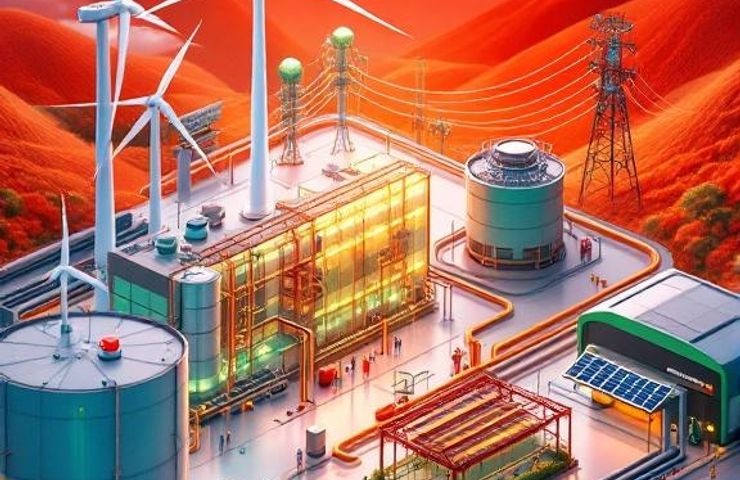
At the core of China’s plan is green hydrogen made by electrolyzing water with clean energy. Imagine wind turbines spinning and solar panels soaking up sun in resource-rich regions—that power runs electrolyzers that split H₂O into hydrogen and oxygen. Chinese producers report their costs hovering around $3–3.5/kg, says S&P Global. The NEA’s challenge? Slice that figure by nearly half by 2030. Pulling that off would be a real game-changer for hydrogen fuel cells, making them cheaper and more appealing for heavy-duty trucks, trains, and even industrial boilers.
Building a Cost-Competitive Value Chain
One of China’s trump cards is its vertical integration. By making electrolyzers, compressors, and storage tanks under one roof, domestic producers can sell units at about 25% of the price you’d see in Europe or North America. To ride that strength, the NEA’s 2026 plan rolls out:
- Capex subsidies covering up to 20% of green hydrogen plants and related hydrogen infrastructure
- Pilot programs to cultivate regional hydrogen ecosystems
- Guidelines for blending hydrogen production with coal and other new energy sources
- Proposals for a national green fuel certification system
Tying together economies of scale, cash incentives, and a uniform rulebook around that €3/kg target gives China a shot at spawning market-ready hydrogen hubs instead of a patchwork of pilots.
Regional Hubs and Infrastructure Rollout
Instead of a blanket approach, China is focusing on provinces with ample renewables and industrial demand—like Inner Mongolia, Hebei, and Shandong. These areas are already installing large-scale electrolyzers and sketching out high-pressure refueling stations for mining trucks and heavy-duty vehicles. With that €3/kg benchmark guiding every decision, local authorities and state-owned players can tweak project economics, whether it’s stitching together solar-wind-hydrogen setups or fine-tuning storage and distribution networks.
Global and Domestic Impacts
If China pulls this off, the ripple effects could be wild. Cheaper equipment and streamlined green hydrogen production might force Europe and North America to ramp up their own incentives or risk falling behind. Back home, dropping hydrogen costs could accelerate the industrial decarbonization of transport, mining, and heavy manufacturing, while cutting urban smog. As Energies Media notes, China already produces about half of the world’s renewable-based hydrogen—and this push could cement that lead.
Challenges and Next Steps
Of course, aiming for €3/kg is no walk in the park. To keep production truly low-carbon, grid operators will have to juggle new renewable power and smart dispatching. Safety rules and a robust certification system need to keep pace with the boom in hydrogen infrastructure. You’ll likely see a two-speed picture, with resource-rich regions racing ahead while others lag. Clear milestones, regular reporting, and maybe even mid-course policy tweaks will be crucial if China wants to hit its 2030 cost goals.
All told, China’s latest guideline sends a clear message: the era of hydrogen R&D is over. Now it’s about scaling up, cutting costs, and hitting hard price targets. Whether €3/kg becomes reality will hinge on NEA-backed pilot programs, how quickly fleets adopt hydrogen fuel cells, and keeping the whole chain green from electrolyzer to tailpipe. As the global hydrogen scene keeps an eye on Beijing, one question looms: will this strategic push force other big players to step up their game?

 With over 15 years of reporting hydrogen news, we are your premier source for the latest updates and insights in hydrogen and renewable energy.