
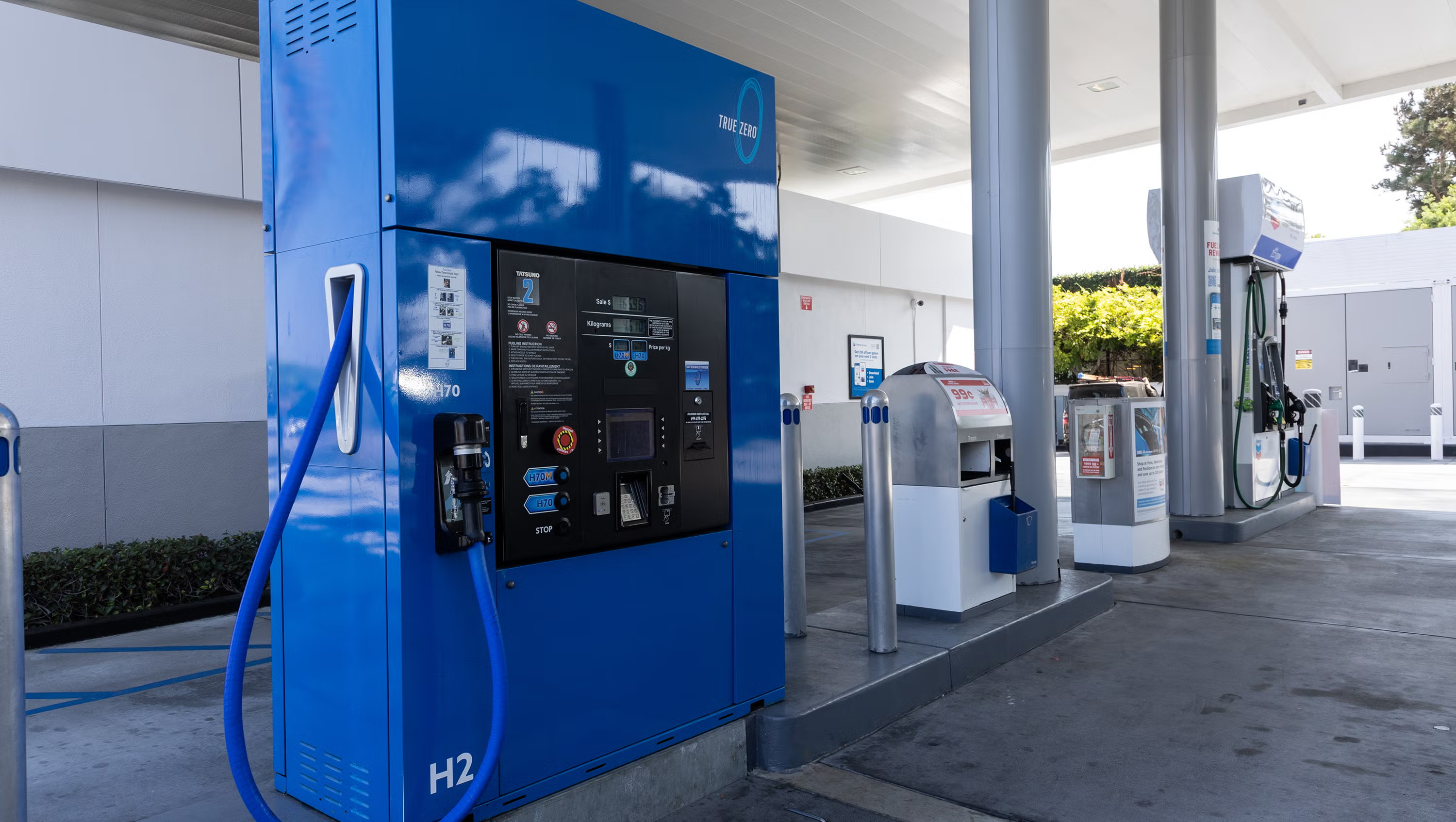
CryoPump Module slashes boil-off losses at California hydrogen stations
March 27, 2026At the bustling Port of Oakland hydrogen station, there’s a new pump turning heads in the clean energy scene. Bosch Rexroth just installed its CryoPump Module, a slick cryogenic hydrogen pump designed to tackle those annoying boil-off losses that have plagued liquid hydrogen fueling for years. In California, it wasn’t unusual to see up to half of the fuel vanish into thin air during a fill-up—a waste that’s made hydrogen a tough sell for big rigs hunting zero-emission creds. If you’ve ever watched a massive fuel tanker at the terminal, you know how high the stakes are: every drop counts.
Can a pump make hydrogen fueling cost-effective?
You’re probably thinking, “Really, one gadget?” But the magic’s in how the CryoPump Module works. It chills everything down to around –420°F and pushes liquid hydrogen straight into truck tanks at up to 900 bar. It’s like giving the hydrogen its own personal mini freezer as it travels, so there’s no need for clunky external chillers or extra gas priming—just a smooth, leak-tight handoff that slashes waste.
- Keeps hydrogen below boiling point so it stays liquid.
- Feeds fuel at 350, 700 or 900 bar with up to 95% transfer efficiency.
- Cuts boil-off losses down to about 5%, compared to up to 50% in older setups.
- Fits into existing station layouts without hauling around a ton of extra kit.
From lab to port: the evolution of cryogenic fueling
Back when hydrogen stations first popped up in the early 2010s, any little temperature bump would turn the liquid into gas—and whoosh, out it vented. Losing half your load was standard—making hydrogen refueling stations unpredictable cash burners. Engineers liked liquid hydrogen because it packs more punch in a smaller tank, but the economics just weren’t there. Drawing on more than 30 years of cryogenics know-how, around 2023 Bosch Rexroth retooled its drive and control expertise to dream up a pump that could finally tame those losses.
Who’s behind the technology?
At the core of this shake-up is Bosch Rexroth, the German engineering powerhouse known for its advanced drive and control systems—and with roots stretching back centuries, they’ve been playing in the cryogenics sandbox for ages. Jumping into hydrogen fueling was a no-brainer.
Down at Port of Oakland, FirstElement Fuel—the state’s largest retail hydrogen operator—took the wheel. Last fall, they dropped the CryoPump Module into their flagship station, and suddenly, a fleet of Hyundai XCIENT fuel-cell trucks is getting faster fills and better mileage on every dollar spent.
Why it matters now
California’s leading the U.S. with roughly 40 hydrogen refueling stations, thanks to aggressive zero-emission mandates. But many of those stations were built before the tech was mature, so millions of dollars worth of hydrogen literally slipped through the cracks. By tightening up the fueling dance, the CryoPump Module unlocks:
- Lower fueling costs—more fuel in the tank means better station economics.
- Faster turnaround—high-efficiency transfers cut fueling times and boost throughput.
- Environmental wins—chopping waste aligns with California’s goals to slash greenhouse gases at ports and city hubs.
- Scalability—nailing it here paves the way for a planned zero-loss hydrogen station in Texas by Hyroad Energy and GenH2.
And let’s not forget the power utilities looking at hydrogen electrolyzers to soak up extra renewable energy. Efficient cryogenic storage and dispensing can help balance the grid and make large-scale hydrogen production actually pencil out.
What comes next?
With the Port of Oakland pilot live, Bosch Rexroth is strutting the CryoPump Module at industry events from coast to coast. On deck are a few clear next steps:
- Retrofits of aging stations to ditch inefficient pumps.
- New station builds crafted from the ground up around cryogenic hardware.
- Ongoing tweaks to push transfer efficiency past 95%.
- Integration with digital monitoring and predictive maintenance to keep things humming.
Fixing boil-off losses isn’t just a minor tweak—it’s potentially the game-changer hydrogen’s been waiting for. Pulling back most of the liquid hydrogen delivered means one thing: a drop in the overall cost of liquid hydrogen fueling. That efficiency gain ripples out to lower prices at the pump, fewer emissions in the air, and a bulletproof case for hydrogen as a mainstream energy player.
Of course, hurdles remain—scaling supply chains for cryogenic gear, ramping up electrolyzer capacity, and getting solid policy backing. But if the CryoPump Module keeps living up to its promise, we might just be looking at the dawn of a new hydrogen era, where boil-off losses are finally a solved problem.


 With over 15 years of reporting hydrogen news, we are your premier source for the latest updates and insights in hydrogen and renewable energy.