Daimler Truck and Partners to Forge Liquid Hydrogen Supply Chain for Next-Gen Fuel Cell Trucks
Daimler Truck to roll out 100 NextGenH2 fuel cell trucks and team up with MB Energy and Kawasaki to build a liquid hydrogen supply chain into Europe.
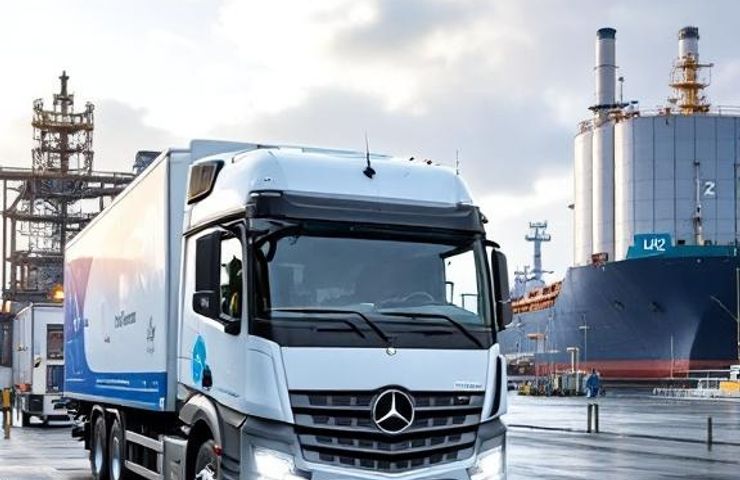
Recently, Daimler Truck AG made big waves in the hydrogen fuel news with their announcement to roll out a small fleet of 100 Mercedes-Benz NextGenH2 hydrogen fuel cell trucks for customer operations starting in late 2026. This comes with a neat partnership with MB Energy and Kawasaki Heavy Industries aimed at establishing a liquid hydrogen supply chain in Europe, particularly through the Port of Hamburg. This progress is a serious step forward for developing hydrogen infrastructure for long-haul trucking.
- 100 NextGenH2 trucks powered by liquid hydrogen will soon hit late-stage test fleets
- New agreement secures a supply chain from Japan right to Hamburg
- MB Energy plans to boost the hydrogen refueling network in Lübeck and Neumünster
- Kawasaki will handle cryogenic liquefaction, LH2 carriers, and compressors
- This initiative supports EU regulations for the rollout of hydrogen infrastructure under the AFIR framework
Building a Strong Team to Tackle Challenges
This agreement is a fantastic mix of talent. We've got Daimler Truck focusing on making those fuel cell trucks, MB Energy diving into European hydrogen trading and infrastructure, and Kawasaki Heavy Industries bringing their A-game with innovative cryogenic tech for liquefaction and transport. By connecting the dots between vehicle manufacturing and reliable logistics, they aim to tackle the classic "chicken-and-egg" dilemma that often holds back hydrogen fuel cell adoption. Their formal joint development plan includes doing feasibility studies, designing the necessary infrastructure, and laying out a timeline targeted at getting things rolling commercially in the early 2030s.
Creating a Liquid Hydrogen Logistics Chain
With this partnership, Kawasaki will put their cryogenic know-how to work, liquefying and transporting hydrogen efficiently. Their demo liquefaction units in Japan can pump out about 5 tons of liquid hydrogen daily, which will be shipped on specialized carriers heading to Hamburg. Once there, the port will offload this cryogenic treasure into insulated tanks. MB Energy will then take it from there, distributing liquid hydrogen to refueling stations throughout northern Germany, starting with their new sites in Lübeck and Neumünster. These refueling stations will be equipped with 700-bar dispensers and advanced direct liquid refueling tech that can fill up in less than 15 minutes—pretty much on par with diesel.
NextGenH2 Truck: What’s Under the Hood?
The new Mercedes-Benz NextGenH2 Truck features liquid hydrogen stored at a bone-chilling –253 °C in two 40 kg tanks, giving it a total capacity of around 85 kg. This setup allows for a jaw-dropping operational range of over 1,000 km on a single fill, already proven by the earlier GenH2 prototype that hit an impressive 1,047 km during its HydrogenRecordRun. The proton exchange membrane (PEM) fuel cell stack does the heavy lifting of converting hydrogen into electricity at temperatures between 60 and 80 °C, driving an electric powertrain. The only waste? Pure water vapor—talk about a clean ride, right? This design minimizes the size of both the fuel cell and cryogenic systems, so they can easily fit standard trailer connections, making them a breeze to integrate into existing fleets.
Aligning Infrastructure and Policies
Germany has plans for a robust hydrogen network, backed by a whopping EUR 18.9 billion investment and EUR 3 billion in guarantees through the Hydrogen Core Network initiative. Additionally, the EU's Alternative Fuels Infrastructure Regulation requires a refueling station every 200 km on vital transport routes by 2030. This double push from regulations is designed to attract private investment, with Hamburg being a focal point for these routes. The upcoming MB Energy station in Lübeck, which will handle a daily throughput of 2,000 kg, is set to start operations soon and works in tandem with Neumünster, providing early fleet users with solid access to fuel cell services.
Navigating the Regulatory Landscape
Germany and the EU are creating a supportive environment for hydrogen infrastructure, making it a hot topic for investors. The German Federal Government is pouring funding into various programs, while EU regulations under the AFIR are helping to ensure that stations roll out on crucial transport corridors. The approved Hydrogen Core Network aims to cover over 9,000 km of pipelines by 2032. This stable base is essentially a green light for private capital, making long-term agreements for green hydrogen production much more appealing—an essential factor if we want to make real strides in reducing greenhouse gas emissions.
The Environmental Case for Hydrogen
While the immediate goal is to secure supply and prove that the drivetrain can hold its own, let's not forget the environmental side of the equation. On a lifecycle basis, fuel cell trucks running on green hydrogen—produced through renewable energy and electrolysis—could slash CO₂ emissions by over 50% compared to diesel vehicles. Even when hydrogen comes from natural gas with carbon capture, the emissions profile sees a significant improvement. Plus, local air quality will benefit, as hydrogen fuel cells spit out nothing but water vapor and heat, it’s a win-win for urban areas suffering from air pollution.
MB Energy's Growing Role
MB Energy is making a strategic pivot toward hydrogen, integrating this clean energy into their existing operations, which include oil and LPG networks in Europe. They've recently secured two hydrogen refueling stations in Germany and are collaborating with Hypion to design innovative refueling modules. Their Lübeck facility is geared up to handle 2,000 kg daily—enough to support a fleet of about 15 to 20 heavy-duty trucks. On top of that, their trading desks will help manage pricing and contracts to give fleet operators some peace of mind amid concerns over hydrogen price fluctuations.
Kawasaki’s Cryogenic Edge
Kawasaki Heavy Industries isn’t new to the game; they bring over 30 years of cryogenic experience to the table. Their plants utilize cutting-edge centrifugal hydrogen compressors that hit speeds over 100,000 rpm, which is crucial for cooling hydrogen to that chilly –253 °C. Their “Hy Touch Kobe” terminal, up and running since 2020, demonstrated the feasibility of importing liquefied hydrogen. Now, with a new demo facility at Harima Works, they’ll be testing the next-gen compressors and controls, with an eye on ramping up commercial capacity and trimming down energy costs, both of which are critical for making hydrogen production more competitive.
Collaborating for Fuel Cell Advancements
The fuel cell stacks that power the NextGenH2 come from cellcentric GmbH, a joint venture formed by Daimler Truck and Volvo in 2021, with Toyota joining as an equal shareholder. Collectively, they combine decades of research and development—Toyota’s passenger car fuel cell designs and Daimler/Volvo’s heavy-duty vehicle expertise. They’re working on creating standardized PEM modules designed with modular integration in mind. This means future capacity boosts or stack replacements can happen without overhauling the entire chassis, highlighting how teamwork can accelerate cost savings and simplify maintenance networks.
The Road Ahead
The heavy-duty transport sector is at a pivotal moment. While battery-electric trucks face challenges like range and weight penalties as batteries get heavier, hydrogen fuel cell trucks offer quick refueling and long-range capabilities without the same weight issues. Other OEMs, like Volvo and MAN, are also ramping up their hydrogen initiatives, often teaming up with electrolyzer manufacturers or pipeline operators. The Daimler-MB-Kawasaki deal signals a major shift: focusing on a liquid hydrogen supply chain could pave the way where compressed gas would struggle due to bulkiness. Fleet operators will need to weigh total cost of ownership (TCO), considering fuel cost predictions, maintenance, and residual values as they carve out their zero-emission strategies.
Wrapping It Up
This partnership serves as a solid model that balances truck deployment, scaling up infrastructure, and getting regulatory support in place. As more heavy-duty manufacturers dive into fuel cell tech, synced supply chains will be vital for moving from prototypes to real-world fleets. Everyone will be keeping a close eye on this initial batch of 100 NextGenH2 trucks and the Hamburg import chain. If it all proves to be cost-effective and reliable, we could see a wider jump into hydrogen fuel cells in sectors where battery electrics just can’t keep up.
In the grand scheme of things, this isn’t just about a test run. It’s about laying the groundwork for a thriving hydrogen ecosystem across Europe. With set timelines and cross-industry collaboration, the dream of zero-emission long-haul trucking could soon be a reality, and liquid hydrogen might just be the key to unlocking this next chapter in transportation.