Delphy Explores China’s Evolving Hydrogen Ecosystem for Agribusinesses
Delphy visited China to assess its rapidly evolving hydrogen ecosystem, focusing on electrolysis, storage, and fuel cells amid Beijing’s aggressive infrastructure expansion and sustainability goals.
Delphy Explores China’s Hydrogen Ecosystem
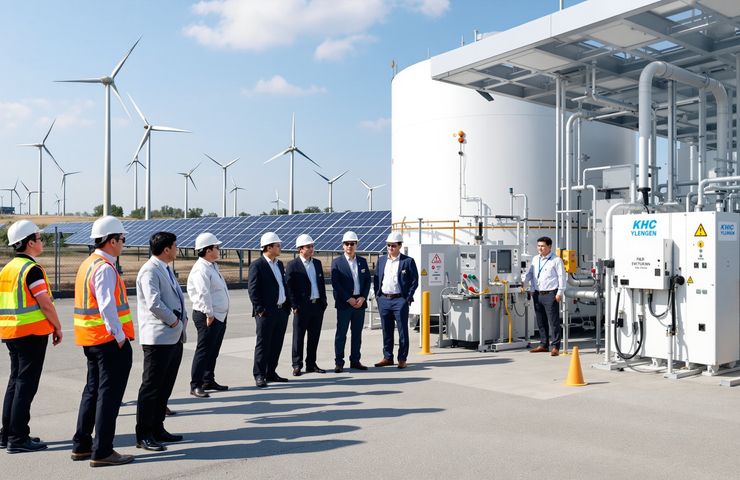
This month, Delphy hopped on a plane to China, one of the fastest-growing hubs for hydrogen production. The trip was all about checking out the latest tech and safety measures across the full hydrogen value chain. Since Delphy has already been guiding farmers through energy transition strategies, diving into green hydrogen felt like the next natural step.
By embedding themselves in China’s domestic ecosystem—from electrolysis facilities to distribution routes and refueling stations—Delphy is on the hunt for scalable ideas to bring back to European agribusinesses. They haven’t spelled out every partner or agenda item yet, but this mission really underlines a growing trend: agriculture teaming up with clean-energy innovators.
Key Takeaways
- Technological Leadership: China already boasts over 200 hydrogen refueling stations and is racing to hit 1,000 by 2025, a clear sign of rapid hydrogen infrastructure growth.
- Policy Backing: The 2022 Hydrogen Development Mid- and Long-Term Plan (2021–2035) pours subsidies into electrolyzer build-outs, fuel-cell rollouts, and R&D efforts.
- Green Transition: Although around 80% of current hydrogen output still relies on fossil fuels, pilots using renewable-powered electrolysis are springing up to decarbonize industry and transport.
- Strategic Synergies: Think on-site green ammonia for fertilizer and fuel cell–powered heating in greenhouses—applications perfectly suited to farming needs.
China’s Rapid Hydrogen Expansion
Ever since Beijing unveiled its national hydrogen roadmap in 2016, investments in both gray and green hydrogen pathways have shot up. Post-2020 subsidies turbocharged fuel-cell electric vehicles and supporting infrastructure, especially in key freight corridors. By 2022, targets were set at 20 million tons per year by 2025—and a whopping 200 million by 2050—to help hit carbon neutrality by 2060. In 2023, China’s total output climbed to roughly 33 million tons. While most of that still comes from steam methane reforming without carbon capture, a parallel surge in wind, solar, and hydro is fueling dozens of new electrolysis projects. Unlike Europe’s step-by-step regulatory path, China’s state-led model lays out bold incentives for fast capacity growth—though it does stir debate about water use and environmental trade-offs.
Technical Foundations of the Hydrogen Supply Chain
Delphy’s team got a hands-on look at multiple production and handling technologies:
- Electrolyzers: They toured sites with PEM electrolyzers (fast start-up, ultra-pure output) and alkaline electrolyzers (cost-friendly at scale). Advanced sensors constantly monitor voltage, temperature, and gas flow for safe, efficient operation.
- Steam Methane Reforming (SMR): Legacy SMR plants still make up the backbone of capacity. Some operators are piloting carbon capture units, though hooking them up can be pricey.
- Storage Solutions: High-pressure composite cylinders rated to 700 bar sit alongside liquid hydrogen dewars. Optical sensors and hydrogen-specific semiconductors snap shut valves at the first sign of a leak.
- Distribution Networks: Beyond refueling stations, China is testing pipelines, tube-trailers, and mobile truck deliveries—often linking storage hubs right into industrial parks.
- Fuel Cell Applications: The delegation saw stacks ranging from 50 kW for small vehicles to multi-megawatt modules in class-8 trucks and stationary CHP units in commercial buildings.
Strategic Implications for Agribusiness
For farmers and agribusiness consultants alike, hydrogen is more than just a fuel—it’s both an input and an output opportunity. On the input front, green hydrogen can decarbonize ammonia synthesis for fertilizers, cutting out long transport legs. Chinese trials pairing on-site electrolysis units with mini ammonia reactors show the concept works. On the backup side, fuel cell generators step in to keep greenhouse climate controls humming—no grid interruptions, zero tailpipe emissions.
With emissions rules tightening and energy costs climbing in Europe, Delphy is eyeing China’s co-located industrial parks—where electrolysis, storage, and fertilizer plants share the same campus—as a blueprint. The goal: leverage local renewables, slash logistics bills, and hit sustainability targets.
Economic, Environmental, and Geopolitical Trade-offs
- Job Creation: The rising hydrogen economy could spawn millions of new roles in manufacturing, installation, and upkeep. Chinese electrolyzer factories are already hiring by the thousands.
- Energy Security: Diversifying away from coal and cutting hydrocarbon imports bolsters resilience, especially in landlocked provinces with limited pipeline access.
- Environmental Stress: Large-scale electrolysis demands vast water resources—no small issue in drought-prone regions. And until carbon capture drops in cost, gray hydrogen will keep emitting CO₂.
- Geopolitics: As a major exporter of electrolysis gear and storage tech, China could reshape global supply chains. Other nations may tighten export rules on key membranes and catalysts.
Global Partnerships and Future Outlook
Delphy’s journey underscores a bigger picture: cross-border collaboration. Exchanging insights between Chinese technology providers and European consultants could accelerate farm-scale pilots—covering everything from safety standards to financing. Meanwhile, policymakers in Southeast Asia, Latin America, and beyond are watching closely, eager to adapt lessons for rural electrification and low-carbon logistics.
Looking ahead, balancing rapid capacity growth with environmental stewardship will be key. Investments in more efficient electrolysis, advanced materials, and scalable carbon capture will set the pace at which green hydrogen overtakes fossil sources. As hydrogen infrastructure gears up for a projected $150 billion market by 2030, agricultural stakeholders must align on resource management, grid integration, and shared cost models.
About Delphy
Founded in 2015 from a merger of Dutch horticultural experts, Delphy offers advisory services, R&D, and project management to the global agricultural sector. With deep roots in sustainable energy strategies, greenhouse innovation, and decarbonization roadmaps, Delphy partners with private companies and public institutions to chart net-zero journeys.
This article is based on reporting from FuelCellsWorks. Specific agendas, site locations, and partnership agreements from Delphy’s trip have not been publicly confirmed.