
EKA Mobility Showcases Hydrogen Fuel Cells with New Bus at Cochin Airport
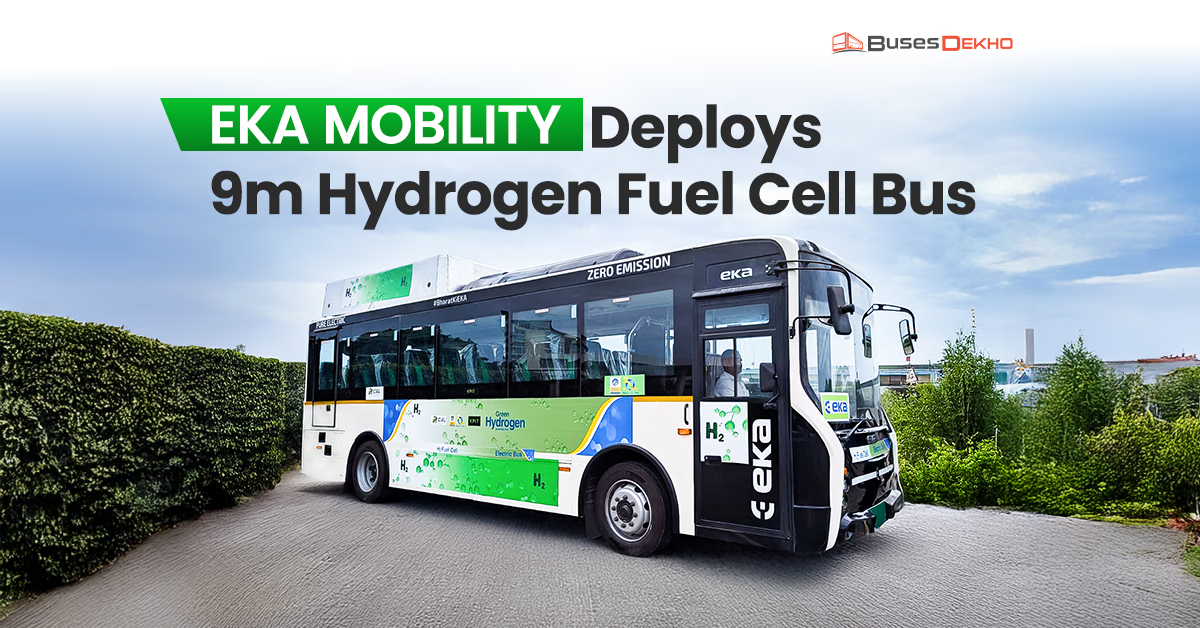
April 3, 2026When you land at Cochin International Airport these days, you’ll probably spot something out of the ordinary parked by the bus bay: a sleek, whisper-quiet shuttle running on hydrogen fuel cells. On April 1, 2026, EKA Mobility teamed up with KPIT Technologies and BPCL to roll out a 9-meter prototype hydrogen fuel cell bus—marking a landmark moment for zero-emission technology in India’s aviation world. It’s more than a pilot—it’s a sign that public and private players are ready to take fuel cell technology from demos to real-deal operations.
A Milestone for Clean Mobility at CIAL
This custom-built shuttle lives on nothing but hydrogen-powered electricity, kicking out only water vapor and zero tailpipe emissions. Refueling takes under ten minutes, so turnaround times are practically on par with diesel coaches. Already, the team plans to add 15 more of these silent runners at the airport over the next year, banking on dropping costs and growing reliability. For travelers and airport staff, that means a quieter commute, cleaner air around the terminals, and a front-row seat to the early maintenance data. With BPCL handling the on-site refueling station and KPIT Technologies piping in performance-monitoring tools, everyone’s collecting real-time insights on consumption rates and best operational practices.
How the Hydrogen Fuel Cell Bus Works
At its heart, the bus houses a fuel cell stack where hydrogen meets oxygen over a proton exchange membrane, producing electricity—and, yes, a little water vapor. That electricity feeds an electric motor, delivering instant torque when the driver stops and starts frequently around the airport. KPIT Technologies engineered the fuel cell module and integrated controls to keep a live eye on stack health, while BPCL installed green hydrogen refueling units with buffer storage to handle ups and downs in demand. Early test runs are matching diesel-range figures, though we’ll only know the full numbers after logging serious miles.
What’s cool is the modular design: fleet managers can swap out hydrogen tanks or upgrade to newer cell stacks without overhauling the entire chassis—talk about future-proof scalability.
Aligning with National Green Hydrogen Strategy
This launch dovetails neatly with India’s National Green Hydrogen Mission, aiming for electrolyser capacity powered by renewables. Under the PM E-DRIVE and PM e-Bus Sewa schemes, EKA Mobility snagged Champion OEM status, unlocking perks through the Auto PLI programme. Those incentives shave down manufacturing costs and light a fire under demand for new bus fleets and hydrogen infrastructure. While battery-electric buses still dominate city streets, these fuel cell vehicles fill the gap when quick refueling and nonstop operation are deal-breakers, giving planners more options in the zero-emission mobility mix.
EKA Mobility’s Rapid Advancement
Founded by Dr. Sudhir Mehta, EKA Mobility saw its sales balloon fivefold in FY 2025-26, moving 1,143 electric commercial vehicles across India. Their upcoming Pithampur plant is set to churn out as many as 10,000 buses, 6,000 trucks, and 24,000 small commercial vehicles each year. Now, by adding fuel cell technology to their lineup, they’re eyeing high-utilization fleets—think airport shuttles and logistics haulers—that crave rapid refueling and long duty cycles. It’s a neat complement to their current battery-electric offerings.
Strategic Implications for Industry
By joining forces, EKA Mobility, KPIT Technologies and BPCL are showcasing a full-blown hydrogen value chain in India—from vehicle design and assembly right through to fuel distribution. Airports, with their predictable routes and dedicated depots, make perfect testing grounds. Nail it here, and you set the stage for hydrogen shuttles in mining zones or intercity coach operations. That ripple effect could spark fresh investments in electrolysers, storage solutions, and maintenance networks. Plus, each partner gets to flex in its lane: EKA as a multi-fuel OEM, KPIT as an engineering whiz, and BPCL as a green hydrogen provider.
Kerala: A Hotspot for Green Mobility
Kerala, one of India’s most densely packed states, has been chasing cleaner transport for years. Cochin International Airport—India’s first PPP airport back in 1999—went fully solar in 2015. Adding hydrogen fuel cells to the mix only deepens its green reputation. The state government has already rolled out battery and hybrid buses across both city streets and rural lanes, making the airport shuttle a high-visibility proof point for locals and policymakers alike. Cleaner, quieter shuttles also help Kerala keep air quality targets in sight and could spur hydrogen infrastructure along major highways.
Collateral Benefits and Challenges
Right off the bat, hydrogen FCEVs deliver big environmental wins—no NOx, no particulates, and a lot less noise polluting the terminal area. From a price perspective, if green hydrogen scales up, per-kilogram fuel costs could stack up favorably against diesel, especially once carbon pricing and grid constraints are factored in. But let’s not gloss over the hurdles: India’s green hydrogen output still mostly lives in pilot electrolyser projects. We’ll need a massive build-out of storage and transport networks before a true nationwide fuel chain takes shape. For fleets, the cost and service gap with battery-electric buses remains a critical metric in total cost of ownership calculations.
Global Context and Lessons Learned
This isn’t India’s first rodeo watching airports flirt with hydrogen shuttles—Germany and Japan have been running small-scale tests for almost a decade. Those pilots fine-tuned safety protocols, crew training, and tank-integration methods. While early efforts never went big, they produced a wealth of know-how. Now, backed by domestic incentives and abundant renewable power, India could vault into larger rollouts, packaging its cost-effective designs and best practices for other emerging markets.
Looking Ahead: Scaling Hydrogen Infrastructure
The next stop is getting those 15 extra buses into service, stress-testing the supply chain, and benchmarking key performance indicators like uptime, fuel efficiency, and maintenance intervals. If the results shine, other airports and heavy-use fleets may follow suit—kickstarting investments in medium- and heavy-duty hydrogen refueling stations. On the supply side, syncing green hydrogen production with future demand—and locking in steady partnerships with renewable energy providers—will be vital to keep the fuel both clean and cost-competitive for FCEVs across the country.
Conclusion
The debut of a 9-meter hydrogen fuel cell bus at Cochin International Airport is more than a proof of concept—it’s a real-world glimpse at how zero-emission technology can reshape commercial transport. Thanks to the collaboration of EKA Mobility, KPIT Technologies, and BPCL, India is charting a path toward a robust hydrogen infrastructure that spans production, refueling, and vehicle operations. As policy backing, engineering innovation, and strategic investments line up, hydrogen fuel cell vehicles are primed to hit the road alongside battery-electric models in driving a cleaner, greener future.


 With over 15 years of reporting hydrogen news, we are your premier source for the latest updates and insights in hydrogen and renewable energy.
