
Enagás unveils 393 km green hydrogen backbone route in Valencian Community
March 17, 2026Enagás, Spain’s go-to gas transmission operator and a big player in hydrogen infrastructure, just unveiled the route for a 393 km slice of the Spanish Hydrogen Backbone Network’s Levante Axis across the Valencian Community. They’re also rolling out a Public Participation Plan, inviting about 100 local towns in Castellón, Valencia and Alicante to chime in on the design, helping dodge environmental hiccups and keep neighbors happy.
Key insights
- 393 km of dedicated green hydrogen pipeline snaking through roughly 100 municipalities in Castellón, Valencia and Alicante.
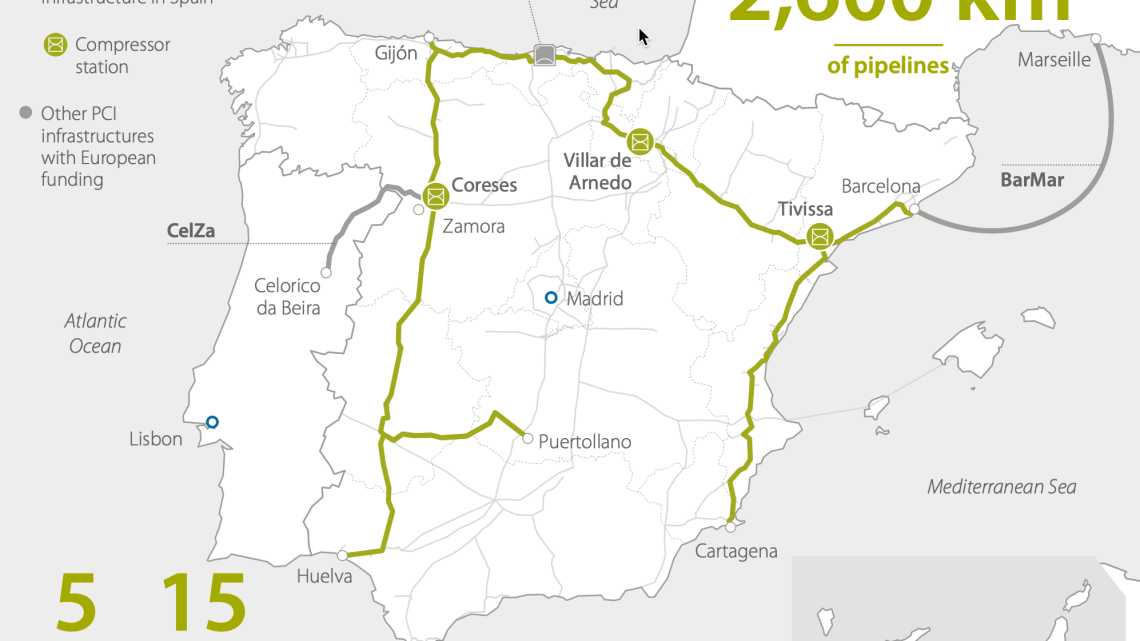
- This stretch is a big chunk of the Levante Axis, tying together Tarragona, the Valencian Community and Murcia.
- The path pretty much shadows existing natural gas corridors, tapping into current infrastructure to speed things up.
- The Public Participation Plan includes 29 hands-on workshops for regional authorities, stakeholders and everyday citizens.
- It’s set to boost industrial decarbonization, drive local economic growth and help Spain hit its sustainable energy targets.
Route details and context
Breaking it down, the Levante Axis in the Valencian Community splits into four legs: Tivissa–Salzadella, Salzadella–Paterna, Paterna–Montesa and Montesa–Cartagena. Together, that’s 393 km of high-pressure steel pipeline designed to haul green hydrogen produced by electrolysis using renewable power. By sticking close to existing gas lines, Enagás can curb new land grabs, breeze through permits and link key industrial hubs and ports in Castellón, Valencia and Alicante.
Stakeholder engagement
Earlier this month, at the Palau de la Generalitat Valenciana, Arturo Gonzalo (CEO of Enagás) and Felisa Martín (General Director of Communication) sat down with Juan Francisco Pérez Llorca, President of the regional government, and Vicente Martín, Third Vice-president and Regional Minister for Environment and Infrastructure. They unveiled the Conceptual Public Participation Plan, detailing 29 in-person workshops where municipalities, environmental agencies, industry players and local residents can pore over route maps, flag land-use concerns and brainstorm tweaks to keep ecological impacts in check. It’s not just about formal presentations—these sessions are meant to be open conversations with coffee on the table, so everyone from mayors to farmers can pitch in ideas.
Strategic significance
This 393 km corridor isn’t just another pipe—it’s a linchpin in a 2,600 km national backbone stretching across 13 autonomous communities. Plugged into Spain’s National Hydrogen Roadmap and the PNIEC climate plan, it’ll link renewable hydrogen valleys, industrial clusters and export hubs. The Valencian Community, with its ceramics, chemical and logistics powerhouses plus major ports in Valencia and Castellón, is perfectly placed to both churn out and consume hydrogen. Nearby projects—like large-scale electrolysis plants in Cartagena and the Castellón Green Hydrogen scheme—are being designed to plug straight into this trunk network.
Economic and environmental impacts
Getting large-scale hydrogen production moving down this pipeline is projected to turbocharge decarbonization in heavy industry, ceramics, chemicals and freight transport. Construction and operation could spark hundreds of local jobs and attract investment in everything from compressor stations to storage facilities. Of course, tracing a line through about 100 municipalities raises land-use, biodiversity and agricultural questions. That’s why the Public Participation Plan’s early workshops are crucial—they’ll help spot sensitive areas, tweak the design to match the landscape and safeguard protected habitats. Lessons learned here could even shape future European hydrogen corridor standards.
Next steps
Once the workshops wrap, Enagás will refine its engineering plans and lock in the necessary environmental permits. Feedback from the Public Participation Plan will steer final alignments and mitigation measures, with detailed design work stretching into next year. Meanwhile, national efforts will zero in on compressor station siting and cross-axis connections.
As Spain races toward its 2030 hydrogen goals, the Levante Axis through the Valencian Community stands out as both a technical challenge and an opportunity to blend existing infrastructure with a community-first, eco-sensitive approach. By bringing local voices into the mix from the get-go, Enagás and the Generalitat Valenciana are aiming to build a backbone that not only transports green hydrogen efficiently, but also earns the social license to operate in a region on the move.


 With over 15 years of reporting hydrogen news, we are your premier source for the latest updates and insights in hydrogen and renewable energy.