Enapter’s Stack 250 Advances Green Hydrogen Production with Modular AEM Electrolyser
Enapter AG launched the Stack 250, a tenfold capacity increase in its AEM electrolysers, aiming to scale green hydrogen production to industrial levels with modular cores and AI-driven management.
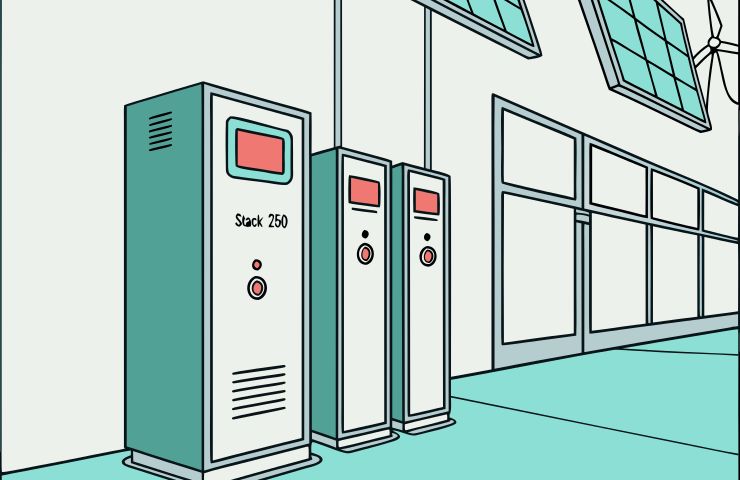
Exciting news in the world of green hydrogen production this month! Enapter AG has just rolled out its game-changing Stack 250, which has the potential to shake up industrial supply chains like never before. This nifty little modular unit can churn out around 100 kilograms of 99.999% pure green hydrogen daily—yup, that’s a whopping ten times the output of its predecessor, the Stack 25! This isn’t just some overnight success; it’s the result of over two decades of dedicated research into anion exchange membranes. The Stack 250 effectively bridges the gap between small-scale test rigs and the big multi-megawatt plants that industries need to ditch fossil fuel dependency. And it’s not just for show—it’s all about flexibility, scalability, and making the most of materials to keep up with the skyrocketing demand for clean hydrogen.
The Magic Behind the Modularity
So, what’s the cool secret behind this new tech? It’s all about blending a modular stack design with cutting-edge AI through the CoreKraft energy management system. Each Stack 250 can operate independently, ranging from 10% to 100% output. How’s that for adaptability in tomorrow's energy landscape, which is increasingly powered by solar and wind? The AI in CoreKraft is like the brains of the operation, monitoring everything from renewable energy inputs to battery storage. It even juggles different electrolyzer technologies, including hybrid setups that combine AEM with traditional alkaline units, ensuring everything runs smoothly around the clock. This tech isn't just a boon; it smooths out fluctuations and cranks up efficiency, meaning hydrogen production can flex with demand instead of being held back.
Designed for Flexibility and Growth
One of the standout features of AEM electrolysis is its cost-saving magic: it skips the expensive catalysts, like iridium, that can jack up the costs of traditional PEM systems. With over 100 patents related to its anion exchange membrane chemistry, Enapter has crafted a system that operates efficiently at 60–80°C and current densities of 1–2 A/cm². At an efficiency rate of 73–78% (LHV), this tech cuts out those rare-metal headaches while delivering rapid startups in under five minutes and the flexibility to adjust output perfectly for renewable-driven facilities. The Stack 250 is designed to easily integrate into large-scale operations, like those ticking past 100 MW. That modular setup means industries—from steel mills to cement plants—can scale their capacity step by step, making their investments in clean hydrogen not just smart, but also manageable.
From Prototype to Powerhouse
The story of anion exchange membrane electrolysis dates back to the early 2000s when ACTA in Italy began testing out prototypes for a microgrid in Thailand. Fast forward to 2017, and Enapter AG came into the picture by acquiring and refining ACTA’s original technologies. The company went public in 2020 through a reverse merger, which really supercharged its growth with production partnerships worldwide. They've achieved some notable milestones, too, including launching the AEM Multicore MW-class system and the recent 2.5 MW Nexus 2500 electrolyser. With manufacturing bases in Italy and a joint venture plant in China with the Wolong Group, Enapter has delivered over 12,000 stacks to more than 375 clients in 55 countries, racking up over 2.5 million hours of real-world operation. That track record isn't just impressive—it's a solid foundation for rolling out the higher-capacity Stack 250.
Economic and Environmental Implications
On the economics side, the Stack 250 is gunning to bring the price of green hydrogen down to levels that can compete with traditional gray hydrogen made from fossil fuels. How are they doing it? By leveraging standardized production at their German facility and assembling at high volume in Italy—along with that joint venture in China—Enapter AG is driving down capital expenses and ramping up supply efficiency. Market predictions are optimistic, with the global electrolyzer sector expected to expand at about 56.6% CAGR, surpassing $63 billion by 2033. That means a growing appetite for solutions that check the boxes for cost, efficiency, and decarbonization. In Europe, the EU Green Deal and IPCEI initiatives are getting the investment wheels turning, while Asian governments are ready to pump tens of billions into their local hydrogen sectors. On the environmental front, this shift towards modular systems that use water and renewable energy sources can lead to a significant drop in CO₂ emissions, especially in industries that have been tough to decarbonize, which account for nearly 10% of global emissions.
Driving the Energy Transition
Insiders have been keeping an eye on early deployments of AEM stacks in off-grid microgrids and pilot refueling stations. Now, though, we’re seeing a real-world rollout: companies in Italy are already placing orders for multi-megawatt systems featuring Stack 250 at their center. And there’s a lot of buzz coming from Asia, where emerging GW-scale projects are eagerly looking to cut down on fossil fuel reliance. Dr. Jürgen Laakmann, CEO of Enapter AG, pointed out that most inquiries are focused on megawatt systems, marking a significant transition from the demo phase to commercial applications. This hybrid approach lets operators intelligently blend alkaline electrolyzers for consistent loads with agile AEM stacks for peak demands, driving down the cost of hydrogen per kilogram while ensuring operational efficiency. This strategy is a game changer for speeding up the deployment of renewable hydrogen across heavy industries and energy sectors alike.
Challenges on the Road Ahead
Of course, it’s not all smooth sailing. There are challenges to tackle on the road to fully decarbonized industrial ecosystems. Things like supply chain management, grid integration, water sourcing, and permitting remain critical parts of the puzzle for large-scale hydrogen hubs. While testing has shown that the Stack 250 can yield 100 kg/day under optimal conditions, it’s still waiting for independent verification before project financiers sign off on those capacities. Yet with over 12,000 stacks delivered across 375 clients in 55 countries along with 2.5 million operating hours, Enapter has built a pretty solid reputation that helps lessen those uncertainties. The great part? By standardizing components and software, they can quickly roll out capacity without needing custom engineering for every new site.
The Bottom Line: Ready to Lead the Charge
In short, the Stack 250 marks a bold step forward for green hydrogen production and an ambitious push to replace traditional fossil-fuel plants with renewable-powered ones. Thanks to its modular AEM cores, the AI-powered management through CoreKraft, and a solid global manufacturing strategy, Enapter AG is getting set to meet the growing demand for hydrogen fuel news and clean hydrogen innovations from heavy industries and energy utilities. This month’s big reveal is just the beginning in the evolving landscape of hydrogen energy news, spotlighting how technological advancements can pave the way for greener, more resilient infrastructure around the globe. So, the bottom line is clear: we’re on the brink of a gigawatt-scale green hydrogen era, and the Stack 250 is ready to take on the challenge!