Engineered Mineral Hydrogen Collaboration: A Game-Changer in Green Hydrogen Production
BRGM and VEMA Hydrogen are pioneering engineered mineral hydrogen, targeting sub-$1/kg green hydrogen through rock-based production. With €71.4M and $13M in backing, therm-hydro-chemical modeling and Quebec pilot wells are steering the world toward a new era of clean, affordable energy.
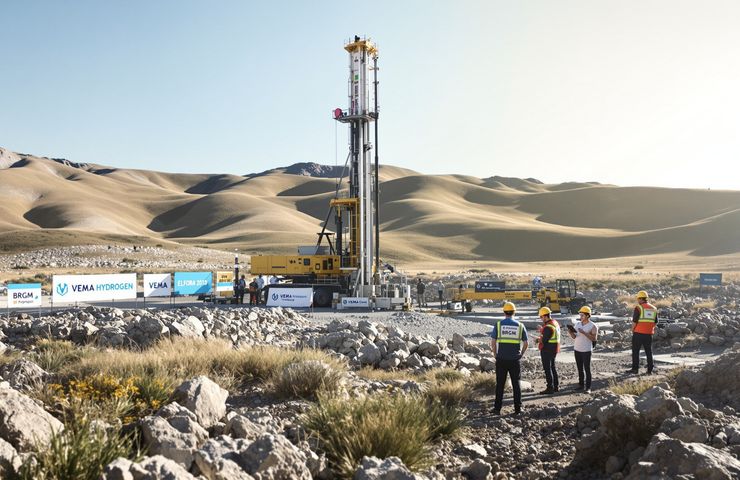
Imagine the picturesque city of Orléans in France, renowned for its rich history and beautiful limestone plains, stepping into the spotlight of a clean energy transformation. And just across the Atlantic, Quebec is buzzing with potential, thanks to its unique rock formations that promise a fresh energy source. This month, two pioneers in the fields of geology and clean technology are teaming up to push the boundaries of green hydrogen production through a groundbreaking technique called Engineered Mineral Hydrogen (EMH). This partnership between BRGM, France’s leading geological research institution, and VEMA Hydrogen, a trailblazing startup in subsurface hydrogen, is set to change the game. With the right funding and a shared vision, they’re unveiling a sustainable energy future that harnesses the Earth’s natural resources to produce clean, affordable hydrogen on a large scale.
Setting the Stage: Orléans Meets Quebec
BRGM boasts a proud history dating back to the late 1950s, built on decades of expertise in mapping, mineral exploration, and managing subsurface resources. Located in the Orléans region, BRGM spearheads France’s “Subsurface, a Common Good” initiative, backed by an impressive €71.4 million investment slated over seven years. This initiative places a spotlight on five key areas—native hydrogen research, geothermal energy, mineral resources, CO₂ storage, and urban subsurface infrastructure—showing the government’s dedication to a diverse, decarbonized energy mix. Meanwhile, VEMA Hydrogen is making its own waves, having successfully drilled two pilot wells deep within Quebec’s ophiolite and banded iron formations. These wells mark the first real-world tests of EMH, proving that ordinary rock can effectively transform into a hydrogen production powerhouse. By combining BRGM’s extensive experience with VEMA’s agile development capabilities, this collaboration beautifully balances the need for thorough research and prompt action.
Backing the Charge with Strategic Funding
This partnership is fueled by a strategic blend of public and private investment, each bringing their strengths to the table. France’s France 2030 energy transition plan directs funds toward subsurface energy initiatives, while VEMA recently secured a cool $13 million Series Seed round, co-led by Extantia and joined by Propeller, Zero Carbon Capital, Pace Ventures, and The Grantham Foundation. Together, these funds empower the project to scale from pilot efforts to commercial readiness without sacrificing scientific integrity. The government’s support ensures that their research aligns with national decarbonization efforts and energy security goals, while the venture capital keeps things nimble, enabling real-world testing and refinement. It highlights how when policy and entrepreneurship join forces, innovation can gain both credibility and momentum.
Engineered Mineral Hydrogen: The Core Innovation
Conventional methods of hydrogen production often rely on steam methane reforming or renewable-powered electrolysis, which come with their own set of costs and emissions drawbacks. However, Engineered Mineral Hydrogen, sometimes referred to as orange hydrogen, flips the script by transforming iron-rich subsurface rocks into hydrogen sources. Instead of searching for natural hydrogen deposits that took eons to form, EMH speeds up the process by injecting water, using affordable catalysts, and controlling heat and pressure. Early experiments show that reactions that used to take geological ages can now happen in a matter of months, all while requiring less than 3 kWh of energy per kilogram of hydrogen—compared to the hefty 50 kWh needed for typical electrolysis. The end result? High-purity hydrogen at production costs potentially dipping below $1 per kilogram, and with further tweaks, it could reach as low as $0.50 per kilogram. That kind of pricing could completely revamp global hydrogen production methods and hasten our move toward a zero-carbon economy.
Advanced Modeling Unlocks Subsurface Secrets
At the core of this innovative collaboration is the Thermo-Hydro-Chemical (THC) Modeling, a cutting-edge framework that simulates the complex interactions of heat flow, fluid dynamics, and geochemical reactions deep within the Earth. BRGM integrates geological data—like porosity, permeability, and mineral composition—into these computational models to forecast hydrogen production potential, injection needs, and long-term sustainability. The pilot data from VEMA’s wells in Quebec fine-tunes these models, creating a feedback loop that enhances both efficiency and reliability. By adjusting factors such as injection pressure, temperature differentials, and catalyst concentrations, researchers can pinpoint the best conditions for continuous hydrogen yield. It’s like transforming guesswork into precise engineering, significantly lowering risks and speeding up the journey to commercial-scale operations.
Scaling Impact: From Pilot Wells to Global Deployment
The initial tests by VEMA involved drilling two wells several hundred meters into banded iron formations, both of which showed encouraging hydrogen flow rates during the early extraction process. The next big step involves an 800-meter commercial well, set to be drilled at a site chosen based on insights from BRGM’s surveys. If this well performs as expected and cost estimates hold true, the project could ramp up production to tens of thousands of kilograms per day. By utilizing ophiolite formations that stretch across continents—from Europe to North America, Africa to Asia—this model has a far-reaching potential. It opens doors for industries that thirst for low-carbon heat and power, such as steel mills and green data centers. In fact, California’s data centers have already signed contracts with VEMA, proving there’s a strong commercial need for a steady energy source that goes beyond intermittent renewable options.
A Broader Network of Impact
This collaboration stands at the intersection of regional strengths and global aspirations. France’s recent uncovering of significant natural hydrogen reserves in the Lorraine region highlights the potential below our feet, while VEMA’s successes in Quebec validate that engineered solutions can enhance natural finds. As European policymakers fine-tune hydrogen infrastructure regulations to include orange hydrogen, projects like these are likely to influence subsidy frameworks and offtake agreements. Meanwhile, the lessons learned here feed into other subsurface energy sectors—think CO₂ storage, geothermal heating, and mineral extraction—broadening the scope of their research impact. It’s a prime example of how cross-border and interdisciplinary collaboration can create momentum in the clean hydrogen economy worldwide.
A Glimpse into the Future of Clean Energy
What started as an ambitious vision in research labs and startup offices is now gaining real traction. By uniting BRGM’s decades of geological expertise, government backing through the PEPR program, and VEMA Hydrogen’s groundbreaking technology, this partnership is paving the way for large-scale, economical hydrogen production. We’re looking at a future where the entire process of production, hydrogen storage, and distribution operates as a seamless system, fueling industries, communities, and essential infrastructure. For those keeping an eye on clean hydrogen news, it’s becoming clear that the next significant breakthrough might just come from deep within the ground—transforming rock into a strategic energy resource and pushing us closer to a carbon-neutral future.
```