EU Backs RWE’s Gronau-Epe Hydrogen Storage Project with Major Funding
February 4, 2026Earlier this year, the European Commission rolled out a €650 million package to shore up cross-border hydrogen infrastructure and electricity links. Germany topped the leaderboard: RWE’s Gronau-Epe hydrogen storage project snagged around €120 million, giving Europe’s clean energy plans a serious shot in the arm.
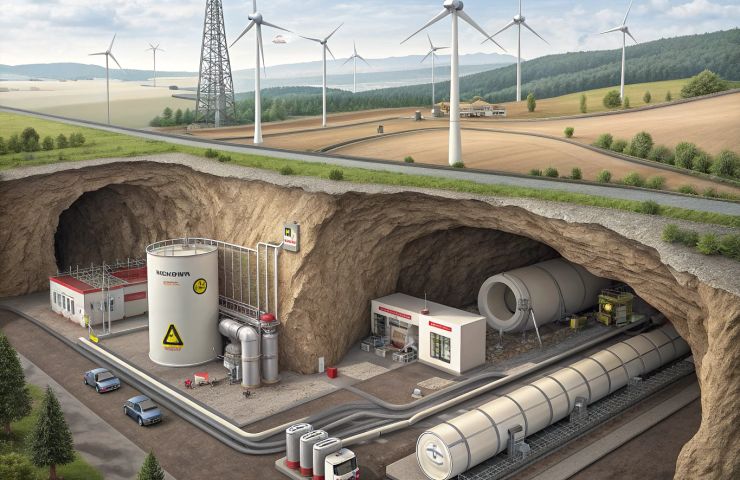
Helmed by RWE Gas Storage West GmbH, a unit of RWE, Gronau-Epe is poised to become Germany’s first commercial hydrogen storage hub using repurposed salt caverns. It builds on five former natural gas chambers just a stone’s throw from the Dutch border, ready to stockpile renewable hydrogen.
Underground, you’ve got two massive caverns offering roughly 38 million cubic metres of working gas volume, plus 50,000 m³/h of injection and withdrawal capacity. The plan is to kick off the first fill by mid-2026, with full commercial operations slated for summer 2027.
Technical Dive: Cavern Storage Basics
Salt cavern storage is pretty slick—you flush out brine from deep geological layers, carve out these giant voids, then pump in hydrogen under high pressure. Those airtight spaces are perfect for long-haul storage, smoothing out the peaks and troughs of electrolysis powered by fickle renewables.
At the Köttiger Hook site in North Rhine-Westphalia, the geology couldn’t be better. Thick, impermeable salt layers mean your caverns stay rock-solid, and by tapping into existing gas pipelines with barely any surface footprint, you slash both costs and red tape.
Linking to Electrolysis and Green Hydrogen Supply
Over in Lingen, RWE’s GET H2 Nukleus project is on track to be Europe’s biggest green hydrogen plant. It kicks off with 100 MW of proton exchange membrane electrolysers and plans to ramp up to 300 MW, channeling clean hydrogen straight into local industry.
When the wind dies down or clouds roll in, the stored hydrogen at Gronau-Epe steps up to bridge the gap. Conversely, whenever sunny or windy spells pop up, any extra production gets tucked away in the caverns. It’s a neat one-two punch that keeps our sustainable energy system balanced.
Strategic Funding
All this financing comes via the EU’s Connecting Europe Facility, which is dedicated to boosting energy security and slashing carbon footprints. The goal? Kick-start cross-border connections and weave together a truly pan-European market.
It’s managed by the Innovation and Networks Executive Agency, which co-funds projects of common interest—especially those that integrate hydrogen infrastructure across multiple member states.
Back in mid-2025, RWE threw open a tender to lease out the facility’s remaining capacity, aiming to lock in contracts well before the first cavern gets its hydrogen load. That early market move shows there’s serious appetite for long-term hydrogen storage.
Business and Contracts
Already, about 70 percent of Gronau-Epe’s capacity is under contract, including a 15-year agreement with TotalEnergies for 30,000 tonnes of hydrogen a year starting in 2030. Those cavern buffers mean the Leuna refinery and other off-takers get a reliable, steady supply.
The site ties into Germany’s budding hydrogen core network, which in turn links to the broader European Hydrogen Backbone. Thanks to bi-directional pipelines, Gronau-Epe can both send out and take in hydrogen, offering real cross-border flexibility.
Expansion Plans
Looking ahead, RWE’s eyeing up to 80 million cubic metres of hydrogen storage—more than double the initial capacity. Hit that target, and you’ve got seasonal storage capabilities for an entire region.
Recognized as a PCI under the EU’s Ten-Year Network Development Plan, the expansion by 2029 is set to add around 43.5 million normal cubic metres and boost throughput to 120,000 Nm³/h.
Regional Impact and Industrial Decarbonization
In North Rhine-Westphalia, Gronau-Epe will create hundreds of construction roles and specialist operator jobs. Local engineering, drilling, and logistics firms are lining up for contracts, strengthening a regional hydrogen hub.
Stockpiled hydrogen is a game-changer for tough-to-abate sectors like refining and chemicals. Refineries in Leuna and beyond can swap out fossil fuels for clean hydrogen, slashing CO₂ emissions and giving Germany’s net-zero goals a big boost.
Transport and Energy Synergies
Seasonal hydrogen storage is crucial to move surplus summer volumes into the leaner winter months, when demand peaks and renewable output dips. Those giant caverns can release weeks’ worth of supply in a single run.
Down the road, hydrogen from Gronau-Epe could power zero-emission trucks, trains, or even ships equipped with hydrogen fuel cells. Having bulk storage on tap lowers the bar for scaling up clean transport.
Policy and Historical Context
Germany’s 2020 National Hydrogen Strategy set bold targets for electrolysis and storage. Projects like Gronau-Epe are the living proof of that policy push, weaving production, transport, and use into one seamless cycle.
Snagging PCI status underscores the project’s cross-border clout. It ranks high in the EU’s Ten-Year Network Development Plan, signaling strong political support and unlocking community co-funding.
Challenges and Considerations
Of course, first-of-their-kind projects come with teething issues. RWE flags that up to 30 percent of capacity might slip into 2028 for final testing, but the core volumes are expected to roll out on schedule.
The economics of those giant electrolysers hinge on access to low-cost renewable power. As grid conditions and market prices shift, locking in dedicated wind or solar supply will be vital to keeping green hydrogen affordable.
Broader Implications for Europe
By linking renewable hydrogen production with real industrial demand, large-scale cavern storage delivers dispatchable energy. It’s a cornerstone for Europe’s net-zero roadmap and a live testbed for future zero-emission tech.
Strengthening cross-border pipelines and storage hubs means smaller markets in eastern and southern Europe can reliably tap into hydrogen supplies. That slashes entry barriers and accelerates regional industrial decarbonization.
When commercial operations kick off in mid-2027, Gronau-Epe will serve as a real-world demo of a grid-scale hydrogen economy—storage, transport, and on-demand usage all woven together.
Upcoming tenders for extra caverns will test RWE’s scaling chops. If they pull it off, Germany’s playbook of combining electrolysis, storage, and industrial offtake could be rolled out elsewhere.
With more projects tapping EU cross-border schemes, the blueprint is crystal clear: ramp up electrolyser capacity, store the surplus, and deliver to hard-to-abate sectors whenever they need it.
At the end of the day, hydrogen storage isn’t just about burying tanks underground—it’s the linchpin linking production, distribution, and consumption, and a bedrock for Europe’s shift to a resilient, carbon-neutral future.
 With over 15 years of reporting hydrogen news, we are your premier source for the latest updates and insights in hydrogen and renewable energy.