EU DSO Entity Expands into Hydrogen Production and Gas Distribution Governance
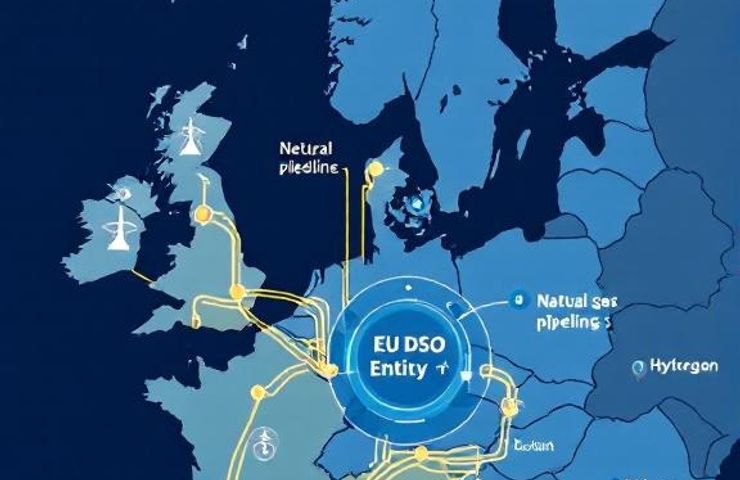
March 19, 2026Earlier this month, the EU DSO Entity sent its revamped statutory documents over to the European Commission and the Agency for the Cooperation of Energy Regulators (ACER). The tweak goes beyond electricity distribution to include hydrogen production—especially green hydrogen—and natural gas networks. It’s all part of rolling out the 2024 Hydrogen and Decarbonised Gas Market Package, and it kicks off a public consultation that could reshape Europe’s multi-vector energy governance.
- Scope expansion: For the first time, the Entity’s mandate jumps from pure electricity into hydrogen and gas, syncing up with Europe’s decarbonization goals.
- Governance refresh: They’ve introduced new procedures, board seats, and decision-making paths designed for a three-vector model.
- Stakeholder input: ACER’s consultation is open until mid-December, inviting DSOs, regulators, consumers, and industry groups to weigh in.
- Regulatory alignment: This complements joint work on flexibility needs assessment and demand response codes with ENTSO-E.
- Next steps: ACER will review feedback over the next four months, then the European Commission will endorse the final version, aiming for national roll-out by mid-2026.
Where it all began
You can trace the EU DSO Entity back to the Clean Energy Package approved in 2019, with operations kicking off in mid-2021. It was Europe’s first real home for electricity distribution system operators (DSOs) to collaborate. Fast-forward to today, and it represents over 830 DSOs across all 27 member states—covering more than 95% of connections and serving about 250 million customers.
Europe’s energy networks are a mixed bag: some countries run extensive gas grids installed decades ago, while others are building hydrogen pipelines from scratch. Recognizing hydrogen’s strategic role in industrial decarbonization, mobility, and storage, the Hydrogen and Decarbonised Gas Market Package extended governance tools to these sectors, setting the stage for a unified remit.
A comprehensive governance overhaul
Revamping the Entity’s statutes and rulebook meant carefully aligning different network quirks and regulatory needs. Here’s how they did it:
- Mix-and-match membership: Clear roles, voting rights, and eligibility criteria are now in place for electricity, natural gas, and hydrogen DSOs.
- Board makeover: The board’s been rebalanced to include reps from each vector, packing in the right technical expertise.
- Decision trenches: New committee structures will handle cross-vector issues—from investment planning to emergency protocols.
- Day-to-day playbook: Updated guidelines cover confidentiality, stakeholder engagement, and coordination with ENTSO-E on tasks like the Flexibility Needs Assessment (FNA) Methodology.
- Show me the money: Cost allocation and incentive schemes were overhauled to reflect capex differences between electricity and gas/hydrogen infrastructure, ensuring transparent funding for joint projects.
Opening the consultation window
ACER has flung open a four-week public consultation, running until mid-December. DSOs, suppliers, consumer groups, renewable energy associations—it’s your chance to weigh in on the draft. After closing submissions, ACER will take up to four months to craft its opinion before the European Commission signs off. The goal? National regulators rolling out the new rules by mid-2026, so everyone’s on the same page.
Linking technical workstreams
- Flexibility Needs Assessment: Back in April, the Entity and ENTSO-E submitted a joint methodology outlining data formats, analysis approaches, and reporting templates to gauge system flexibility across transmission and distribution.
- Network Code on Demand Response: Last May, they proposed rules for demand response integration, data exchange, and task delegation.
- Cybersecurity standards: The Entity contributed to methodologies that help national authorities apply the Network Code for Cybersecurity, pinpointing high-impact grid components.
- Public outreach: Earlier this year, the Entity and ENTSO-E hosted a webinar on the FNA methodology, drawing over 200 participants from utilities, regulators, and tech providers. You can catch the recording on the Entity’s website.
Why it matters
- Boosting investment certainty: Clear governance cuts through the fog, giving developers and financiers more confidence to back hydrogen infrastructure projects.
- Streamlining compliance: A unified platform means multi-vector DSOs deal with one institution instead of juggling several.
- Accelerating green hydrogen roll-out: Defining DSO responsibilities for distribution lays out clear paths for pipelines, refueling stations, and industrial off-takes.
- Advancing hydrogen fuel cell technology: Robust distribution networks are crucial for scaling fuel cell use in transport and stationary applications.
- Enabling industrial decarbonization: Reliable access to hydrogen supports sectors like steel and chemicals that can’t go 100% electric.
- Strengthening energy security: Coordinating across vectors helps manage cross-border flows and seasonal flexibility, reducing reliance on single-source supplies.
The road ahead
In the coming months, stakeholder feedback will help fine-tune the final governance framework. ACER’s review and the Commission’s green light are critical steps. Then, national regulators will adapt these rules into local regulations, aiming for full implementation by mid-2026.
Looking further out, the Entity plans to team up with standardization bodies like CEN and CENELEC to harmonize technical specs for hydrogen pipelines and connectors—key for cross-border hydrogen infrastructure and market integration. Meanwhile, work on cross-vector cybersecurity, grid connection standards, and energy market design will cement the Entity’s role at the heart of Europe’s sustainable energy transition.
Bottom line: By extending its mandate into hydrogen production and natural gas distribution, the EU DSO Entity is laying the institutional groundwork for an integrated, multi-vector energy system that’ll drive Europe’s push toward industrial decarbonization and energy security over the next decade.


 With over 15 years of reporting hydrogen news, we are your premier source for the latest updates and insights in hydrogen and renewable energy.