EU Takes Malta to Court Over RED III Transposition Delay
Malta, Greece and Portugal face EU court action over missing hydrogen quotas in RED III, highlighting Brussels’ push to enforce renewable energy rules and unlock green hydrogen investment.
When Policy Meets Production
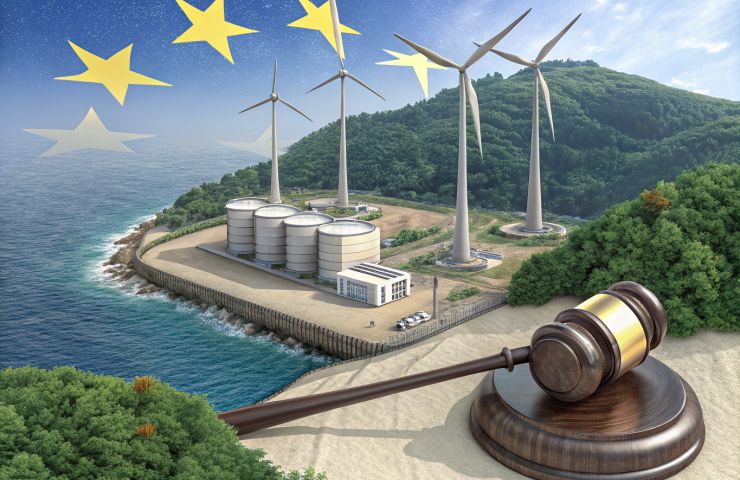
Late April saw the European Commission turn up the heat on Malta—alongside Greece and Portugal—by dragging all three to the Court of Justice of the European Union. It’s not just about missing paperwork; it’s a full stop on green hydrogen ambitions. Without national laws to transpose the renewable energy directive (Directive (EU) 2023/2413 or RED III), any plans for ramping up hydrogen production stall. Malta, home to 563,000 people and heavily reliant on energy imports, did revamp its National Energy and Climate Plan early 2025, focusing on solar PV, offshore wind and electrolysis. But without quota laws or certification processes, projects can’t lock in offtake deals or unlock EU funding. With a per-capita GDP north of $42,000 but zero domestic fossil fuels, Malta’s energy security hangs in the balance—another reason Brussels is pressing for timely transposition.
Core News Summary
This court referral is the final curtain after Brussels fired off a formal notice in July 2025 and a reasoned opinion by December. Over 20 member states missed RED III’s mid-May 2025 deadline, but only Malta, Greece and Portugal now face litigation. Under RED III, 42% of industrial hydrogen production must be Renewable Fuels of Non-Biological Origin (RFNBOs) by 2030, plus a 1% quota in transport—binding targets designed to decarbonize the toughest sectors. Until national laws are on the books, there’s no way to issue guarantees of origin or tap co-financing under the TEN-E regulation. Bottom line? Hydrogen project planners can’t get the green light on permits or financing.
Technical Deep Dive: How RFNBO Hydrogen Works
At its heart, RED III’s hydrogen chapter is all about tight sustainability rules. You split water into H2 and O2 through electrolysis—either PEM or alkaline—using strictly renewable juice. To prove additionality, that renewable power must come from brand-new wind or solar capacity dedicated to the electrolyzer. Then come the temporal and geographical correlation rules: production has to match the grid’s timing and bidding zone. Once certified in the EU registry, your RFNBOs get stamped with an official green badge, opening doors to industrial and transport markets. RED III even locks in a 1% RFNBO share for transport by 2030, hinting at a boom in hydrogen fueling stations at Mediterranean ports and airports.
Without national implementing acts, though, authorities can’t set quotas, issue guarantees or oversee certification bodies. That legal void stalls equipment orders, funding bids and greenfield offshore electrolysis platforms—effectively pausing any real growth in hydrogen infrastructure.
Strategic and Business Implications
This isn’t bureaucracy for bureaucracy’s sake; it could slow down game-changing hydrogen infrastructure. Under the TEN-E regulation, key Projects of Common Interest—like backbone pipelines and cross-border corridors—need harmonized national laws to tap EU grants. Malta’s pitch to plug into the Europe-wide hydrogen network operator (ENNOH) risks falling by the wayside, and smart investors might reroute their cash to countries where the rulebook is clear. With roughly $73 billion in RFNBO capex on the line by 2030, policy uncertainty is a serious deal-breaker.
On a bigger scale, patchwork transposition drives up costs, throws a wrench into cross-border trade and muddies compliance checks. Electrolyzer and fuel cell suppliers crave stable frameworks before they line up long-lead orders. And let’s not forget penalties: the CJEU can slap on lump sums or daily fines, adding even more incentive to get laws in place.
Policy Evolution and Context
Europe’s push for renewables started in the late ’90s with voluntary targets, jumped to RED I in 2009 (20% renewables by 2020), then to RED II in 2018 (32% by 2030). The 2022 energy crisis turbo-charged ambitions, spawning RED III with its hydrogen quotas in 2023. Member states had until mid-May 2025 to flip those rules into national law. The infringement journey—formal notice, reasoned opinion, Court referral under Article 258 TFEU—is standard, but it shows how even draft bills can stall in parliaments or get stuck in bureaucracy. Small states often ask for wiggle room, yet Brussels has shown scant appetite for derogations, especially when energy security is on the line.
Malta’s previous big infringement—over gambling laws—was a different beast. This one, however, zeroes in on market certainty for a booming hydrogen infrastructure.
Looking Ahead
As the CJEU digs into the case, Malta and its neighbors can still pull up their socks: adopt quota laws and certification rules before judges start doling out fines. A swift fix could turn this legal headache into a growth driver—unlocking offshore hydrogen hubs, green shipping corridors and cross-border trade under one trusty certification scheme. After all, in the race to hit 2.9 Mtpa of RFNBOs by 2030, solid policy frameworks matter just as much as wind turbines or electrolysis stacks. Without them, even the fiercest gust of wind can’t spark a project.