Finland and Germany bolster hydrogen production through cooperation declaration
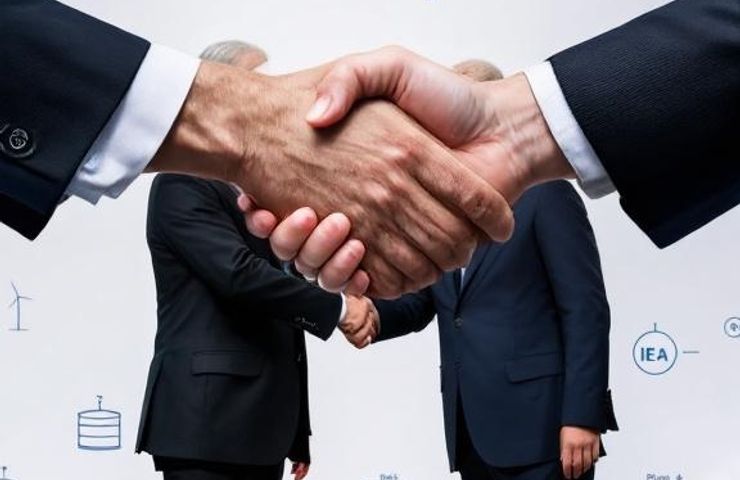
February 24, 2026At this month’s IEA Ministerial Meeting, the Government of Finland and the Government of Germany shook hands on a non-binding Joint Declaration of Intent to team up on hydrogen infrastructure, technology development and targeted investments. Finland’s Minister Sari Multala is steering the charge, aiming to capture 10% of the EU’s clean hydrogen production by 2035 using local hydrogen valleys and new pipeline networks. Germany, for its part, will bring to the table its know-how in large-scale hydrogen storage and its powerful industrial base around the Baltic Sea.
Key takeaways
- They’ll collaborate on electrolysis, pipeline networks and cross-border supply chains.
- Finland’s shooting for a 10% slice of the EU’s clean hydrogen output by 2035, building out valleys and link-ups.
- Germany’s pitching in with storage capacity, industrial decarbonization expertise and Baltic Sea market integration.
- This partnership meshes perfectly with the EU’s drive for industrial decarbonization and sustainable energy.
- Though non-binding, it lays groundwork for projects like the Hy2gen e-fuel plant in Oulu.
How the technology fits
The real powerhouse behind this move is green hydrogen made through electrolysis using renewable electricity. You push electrons through water, split it into hydrogen and oxygen, and end up with a low-carbon fuel that can replace fossil feedstocks in industry and heavy transport. Finland and Germany plan to ramp up electrolyzers in “hydrogen valleys”—clusters of production sites tied together by pipelines and storage—and hammer out common technical standards. We’ll also see pilot schemes for hydrogen storage, from underground caverns to high-pressure tanks, which are crucial for smoothing out seasonal swings in supply and demand. On the R&D front, teams are eyeing next-gen electrolyzer designs to cut capital costs and boost efficiency—because nailing that equation is what will make green hydrogen truly cost-competitive.
Business and strategic angle
By pooling resources, Finland and Germany expect to draw in both private and public capital via the EU’s Clean Hydrogen Partnership and other funding instruments. Finland’s surplus wind and hydropower will feed the electrolyzers, while Germany’s strong track record in industrial decarbonization will help integrate green hydrogen into steel, chemicals and transport. They’re plotting a suite of shared offtake deals and coordinated tenders to speed projects from concept to contract, trimming red tape along the way. To give SMEs a boost, joint innovation hubs and competence centers will offer technical support, pilot lines and investor matchmaking. From ammonia production to synthetic fuels, the goal is to lock in a domestic market and open up export lanes for equipment makers and service providers, building a Northern European hydrogen marketplace that can stand out on the global stage.
Context and next steps
Finland’s been angling for hydrogen production leadership for years, setting its sights on a 10% EU share by 2035 and carving out a homegrown market. A big milestone: Hy2gen has secured land near Oulu for a 200 MW e-fuel project—though final permits are still pending. Germany, meanwhile, has funneled millions into regional hydrogen hubs, including a €54 million research investment in Bavaria. This declaration leans on the EU Hydrogen Strategy, the RePowerEU plan and proposed TEN-E revisions to carve out dedicated hydrogen corridors. Baltic Sea energy initiatives are already scoping cross-border projects, so this pact is the concrete step that ties infrastructure and policy frameworks together across borders.
Regulatory alignment and market impact
One big hurdle is stitching Finland’s and Germany’s existing rulebooks into a seamless cross-border hydrogen market. That means syncing safety regulations for pipelines, standardizing certification for renewable fuels of non-biological origin (RFNBO) under RED II, and harmonizing environmental permits. Dedicated working groups will hash out mutual recognition of CE markings for electrolyzers, joint risk assessments for storage sites, and shared grid-connection processes. They’ll also set up a unified system for guarantees of origin so everyone has a clear read on carbon intensity—and companies can meet voluntary decarbonization targets. Cut the duplicate paperwork, and you cut lead times and costs. If this pilot succeeds, the EU could roll it out as a template for other Cross-Border Renewable Energy Projects. In practice, that opens up pathways for shipping green hydrogen from Finland to Germany via existing Baltic pipelines—or future dedicated hydrogen links—and for Germany to repurpose its gas network, knitting Northern Europe’s energy market ever closer.
Economic and environmental implications
Beyond the big ambitions, this partnership could spark thousands of skilled jobs in manufacturing, engineering and project management. Vocational institutes on both sides are already lining up training programs on electrolyzer maintenance, safety procedures and supply chain logistics. Analysts predict billions in capital could flow in, attracting equipment suppliers, EPC contractors and logistics operators. Economically, shifting low-cost renewable power into higher-value hydrogen derivatives can improve trade balances and cut reliance on imported fossil fuels. For the environment, running electrolyzers when wind and solar output peaks prevents curtailment and drives down lifecycle emissions per kilo of hydrogen. Replacing grey hydrogen and natural gas feedstocks in refineries and steel mills with green alternatives will slash CO₂ in some of the hardest-to-abate sectors. That said, the upfront infrastructure investments are hefty, and success hinges on stable policy signals and a clear, long-term carbon price trajectory.
Looking ahead
Sure, the Joint Declaration isn’t legally binding, but it sends a clear message: both governments are serious about ramping up hydrogen production and knitting together a cross-border hydrogen infrastructure. In the coming months, working groups will map out technical standards and investment timelines, aiming to roll out pilot projects within two years. If all goes to plan, we could see the first integrated hydrogen supply chains up and running before mid-decade.
By combining renewable-rich regions, industrial scale and regulatory cooperation, Finland and Germany are laying a practical foundation for a Northern European hydrogen economy—and maybe a blueprint for others to follow.
Sources: Arctic Today, H2 View, QCIntel.
 With over 15 years of reporting hydrogen news, we are your premier source for the latest updates and insights in hydrogen and renewable energy.