fuel cell technology strengthened by ultra-thin ion-exchange membranes
March 5, 2026It’s no secret that ion-exchange membranes are the real workhorses in gadgets like fuel cell technology, batteries, and electrolysers. For years, makers have been stuck choosing between rock-solid durability and top-tier electrochemical performance. Enter Dr Zhuyuan Wang and Prof Xiwang Zhang at the University of Queensland, who’ve flipped that old trade-off on its head.
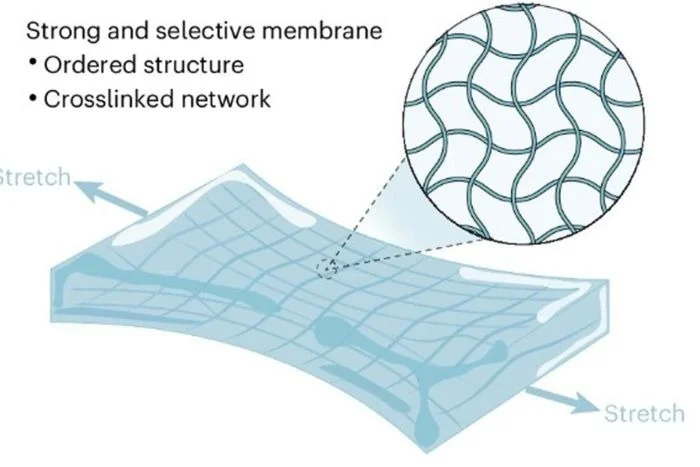
In their latest reveal, the UQ crew unveiled a nanoconfinement polymerisation strategy that spins out hyper-thin, ultra-dense ion-exchange films. These babies boast twice the tensile strength of standard membranes while still delivering about 20% more ion exchange capacity, crisper selectivity, and better conductivity. And get this—they can flex over 100,000 times without a single crack.
How the nanoconfinement trick works
Most membranes get made by bulk polymer casting, which can leave behind tiny voids and weak spots. The UQ approach is more like herding cats on a nano scale: precursor polymers are squeezed into nanoscale channels, forcing chains to pack tighter and bond more uniformly. The result? A seamless, defect-free film only a few microns thick but tough enough to handle the harsh conditions inside fuel cells, batteries, and electrolysers.
Why this matters for green hydrogen
If you’re in the hydrogen production world—especially green hydrogen via electrolysis—you know membranes get pummeled by high pressures, hot temperatures, and corrosive environments. Before now, boosting a membrane’s strength always meant sacrificing conductivity or lifespan. These new UQ films ditch that compromise, paving the way for electrolyser stacks that run longer, cost less to maintain, and churn out purer hydrogen.
Strategic implications for sustainable energy
With global appetite for zero-emission tech surging, more reliable membranes equal big wins in cost savings and carbon cuts. Fewer breakdowns slash downtime and replacement expenses. Higher conductivity trims energy losses in both electrolysers and fuel cell technology setups, cranking up overall efficiency. In short, this could turbocharge the rollout of clean solutions across transport, industrial decarbonisation, and power storage.
Building on established expertise
Dr Wang brings over six years of membrane separation know-how, including a stint at a listed Chinese membrane maker and a Monash University PhD. Prof Zhang, an elected Fellow of the Australian Academy of Technological Sciences and Engineering, has spent 15 years pushing the envelope on membranes and oxidation tech. Together at the UQ Dow Centre, they’ve leveraged wins with 2D materials and MXene films to tackle one of the field’s oldest headaches.
Broader collateral impacts
These ultra-dense films aren’t just a boon for green hydrogen. They could shake up:
- Fuel cells—boosting uptime and nailing cold-start reliability in vehicles and stationary power units.
- Redox flow batteries—tightening ion selectivity to slash crossover losses.
- Water treatment and bioseparation—where lean, robust separators cut energy use and maintenance needs.
No controversies have popped up so far. The next big challenge is industrial scaling. UQ is scouting partners to adapt their nanochannel fabrication into roll-to-roll processes—a must if we want these membranes on commercial production lines.
What’s next?
For anyone building fuel cell technology or crafting electrolysers, this breakthrough spells real gains in reliability and performance. Look for pilot runs in electrolyser modules within the next 12–18 months, followed by integration into commercial hydrogen production plants. Beyond that, expect ripple effects in battery storage, CO₂ reduction reactors, and even portable power packs. By tossing aside the age-old strength-vs.-conductivity trade-off, the UQ team might just deliver a cornerstone for the global clean energy transition. Now it’s up to industry to crank production up to gigawatt scale and meet booming demand.


 With over 15 years of reporting hydrogen news, we are your premier source for the latest updates and insights in hydrogen and renewable energy.