FuelCell Energy Advances Hydrogen Production with Solid Oxide Electrolyzers
February 3, 2026A practical path for green hydrogen
When it comes to moving beyond green hydrogen’s big promises, FuelCell Energy is all about the nuts and bolts: energy efficiency, purity and uptime. Instead of flashy claims about fuel cell technology, this Danbury, Connecticut–based outfit is fine-tuning its high-temperature solid oxide electrolyzer cell (SOEC) setup to show real cost savings and performance boosts. Their pitch boils down to this: tap industrial or nuclear heat to cut electricity use and churn out hydrogen at a competitive levelized cost (LCOH)—all while keeping the quality and reliability heavy industries demand.
Armed with more than 55 patents around its SOEC design, FuelCell Energy isn’t just selling electrolyzers; they’re pitching themselves as a full-stack partner. They handle everything in-house—from advanced ceramic components to final assembly—so they can keep a tight grip on project risks and quality as they ramp up production.
Leveraging nuclear heat at Idaho National Laboratory
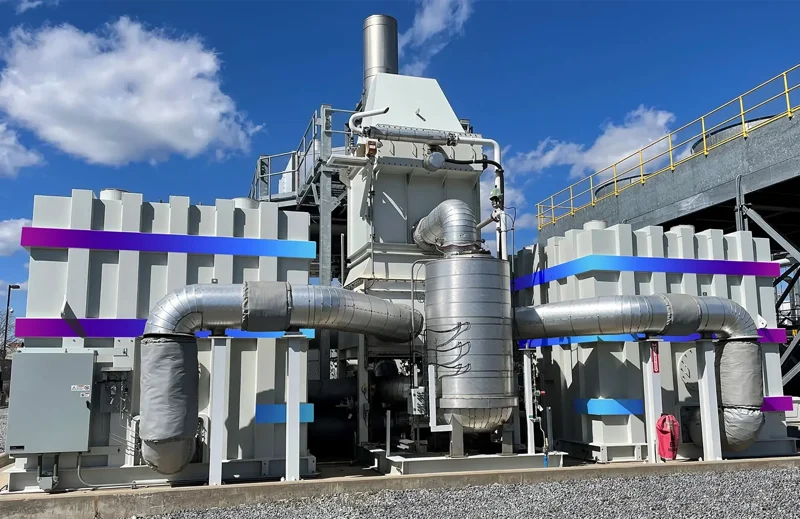
The proving ground? A pilot at the Idaho National Laboratory, run in partnership with the U.S. Department of Energy. Here, a 150 kg/day SOEC system teams up with simulated nuclear waste heat, letting the electrolyzer run hotter. The result: the core stack needs about 34 kWh of electricity to produce one kilogram of hydrogen, and the whole setup—including balance-of-plant gear—uses roughly 40–45 kWh/kg.
Compare that to electrolysis methods relying solely on power for both heating and splitting water—like most proton exchange membrane (PEM) units—and you see the advantage. By tapping into low-carbon heat, SOEC can shave off up to 10 % of the LCOH compared to PEM systems when similar heat streams are available.
Of course, hooking into nuclear or other high-temperature processes isn’t plug-and-play. It demands careful thermal management and regulatory choreography. The run-time data from the INL pilot will be vital to nail down maintenance schedules, stack longevity and true operating costs over extended runs.
High purity and modular scaling
Cutting power use is just the start. The SOEC platform also delivers hydrogen at over 99.85 % purity, hitting the stringent specs needed for refining, ammonia synthesis and fuel cell feedstocks. In sectors like petrochemicals and fertilizer, that level of purity can eliminate extra purification steps—and the costs that come with them.
Flexibility is another win. FuelCell Energy’s stacks are designed to snap together modularly, so you can scale from single-digit megawatts up to the tens-of-megawatts you need for big industrial plants. With more than five dozen patents backing their approach, they can tailor each system—whether it’s retrofitting an existing facility or building a greenfield project.
Target markets and strategic partnerships
Rather than casting a wide net across hydrogen production, FuelCell Energy is zeroing in on “hard-to-electrify” use cases—think heavy transport, marine shipping, steelmaking and synthetic fuels—where on-demand, low-emission hydrogen can command a premium. In the marine world, they’re teaming up with Malaysia Marine and Heavy Engineering to blend green hydrogen with clean ammonia, aiming to shrink shipping’s carbon footprint.
On the fossil side, a joint development deal with ExxonMobil—now extended through 2026—dives into next-generation carbon capture and hydrogen generation. The goal? Combine SOEC’s high-temp strengths with smarter CO₂ scrubbing to give blue hydrogen projects a greener edge. These partnerships highlight SOEC’s adaptability across multiple value chains.
Market context and execution risks
Just like solar and wind had to go from fringe to mainstream, green hydrogen needs to shed its speculative sheen and prove it can deliver on cost, reliability and scale. Early policy support and investment paved the way, but now the market wants hard proof—consistent uptime and bankable performance.
Scaling up from a 150 kg/day demo to multi-megawatt installations isn’t trivial. Supply chains for specialty ceramics and metallic interconnects will be tested, and tying into heat sources raises questions around siting rules, permitting timelines and grid logistics—especially near nuclear sites or heavy-industry hubs.
And don’t forget, electrolysis competition is heating up too. PEM and alkaline systems keep improving and benefit from more mature manufacturing. In regions with cheap electricity and limited process heat, those alternatives could still win on speed of deployment or upfront cost.
Implications for industrial decarbonization
Over the long haul, technologies that link into existing heat streams and produce ultra-pure hydrogen could be game-changers for decarbonizing steel, cement, chemicals and heavy transport. By trimming power needs and maximizing uptime, SOEC systems may push green hydrogen past the tipping point against grey or blue supply.
As global industrial decarbonization targets tighten, the appetite for low-emission feedstocks is only going up. FuelCell Energy’s results at Idaho National Laboratory, backed by public–private partnerships, could lay out the blueprint for turning high-temperature electrolysis from R&D into full-scale reality.
In an industry where words alone won’t cut it, the performance numbers from these SOEC pilots will speak volumes. If those efficiency and purity gains hold true at scale, high-temperature electrolysis could well define the next chapter in practical hydrogen production.
 With over 15 years of reporting hydrogen news, we are your premier source for the latest updates and insights in hydrogen and renewable energy.