German hydrogen network at risk without sufficient supply
March 19, 2026It’s all systems go in Germany’s energy transition, but Ulf Heitmüller, CEO of VNG, has a warning: the ambitious push to build out the German hydrogen network could end up an “empty shell” unless production and supply race to keep pace with pipeline repurposing and new builds. After years spent on blueprints and policy fine-tuning, the real challenge is simple: turn that €6 billion investment into actual green hydrogen flowing through the pipes.
Warning on Empty Infrastructure Risks
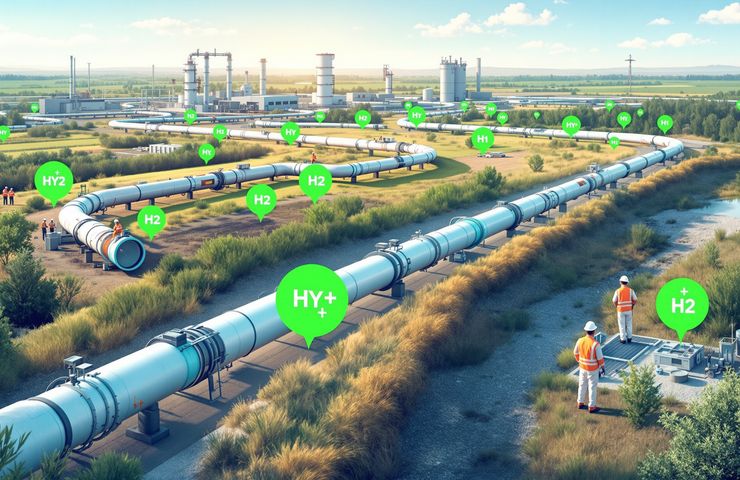
Just this month, the Bundesnetzagentur approved the hydrogen core network, handing out capacity slots to 22 transmission operators. Sounds like a win, but here’s the kicker: approvals and auctions alone won’t shove molecules through the lines. Without a serious scale-up in electrolyzers and new green hydrogen projects, those corridors risk sitting idle—putting the 2045 climate-neutrality goal on thin ice and leaving investors staring at stranded assets.
East Germany’s Pipeline Transformation
Out in Saxony and Brandenburg, Ontras, a subsidiary of VNG, has already given 25 km of old gas pipeline at the Energiepark Bad Lauchstädt a second life. That segment went live earlier this year, marking the first slice of what will become a 600 km hydrogen start network. It’s a solid first step, but remember: empty pipes don’t decarbonize industry.
Linking Infrastructure to Production
There are bright spots on the horizon—like Shell lining up a 100 MW electrolyzer to churn out about 16,000 t/y of green hydrogen by 2027. But nationwide output is still trickling in. Surveys by the German Wholesale Energy Platform (WEB) show distributors eager to buy, yet until electrolyzer capacity picks up, pipeline space will far outstrip supply. And if the molecules don’t materialize, investors will think twice before funding the next wave of projects.
Challenges and Opportunities
Here’s the good news: repurposing 80–90% of existing gas corridors through smart pipeline repurposing slashes cost and slams the door on stranded-asset risk. On the flip side, decarbonizing heavy-industry clusters and heating systems only happens when hydrogen actually flows. The secret sauce? Syncing NEP Gas 2022-2032 with EU IPCEI funding and market-making tools to guarantee offtake for green hydrogen. Nail that alignment, and Germany’s hydrogen core network will finally hum.
EU-Wide Connectivity
Then there’s the grand vision of a North–South European pipeline axis, stitching Germany’s core segments to Benelux and Italy. Think of it as the continent’s circulatory system for hydrogen, boosting supply security and cross-border trade. But let’s be honest: a backbone like this only works if producers can pump enough green hydrogen into it. Otherwise, it’s just a fancy map on a wall.
Market Signals and Capacity Auctions
Capacity reservations kicked off recently, handing out seven-year rights for injections and withdrawals. That’s a strong market signal, but signals alone don’t fill lines. Companies like Gasunie, OGE and Ontras need to lock in solid production partners. When the auction dust settles, we’ll see which regions can back up their slots with confirmed hydrogen supply—and right now, there’s a real gap between pipeline slots and actual volumes.
Industrial Decarbonization Imperative
Industries in Saxony-Anhalt, Saxony and Brandenburg are ready to swap gray hydrogen and natural gas for clean green hydrogen—refineries, steel mills, chemical sites, you name it. They want reliable feedstock, not empty promises. The pipeline network is there, but only if it’s filled with the molecules these industries need to decarbonize.
Bridging the Gap
The fix is straightforward: fast-track electrolysis projects, cut red tape on permitting and tie subsidies directly to off-take agreements. Do that, and the hydrogen core network will be humming instead of echoing. Because, let’s face it, infrastructure without molecules is a hollow victory.
Looking Ahead for a Filled Network
As Germany shifts from approvals to operations, the name of the game is syncing pipeline roll-out with green hydrogen production. The groundwork for the German hydrogen network is laid—now it’s about cranking up projects so those pipes carry the clean gas that powers decarbonization. Ulf Heitmüller’s warning is spot on: get the supply side right, or risk stranded ambitions. Bottom line—this network can become Europe’s clean-energy backbone, but only if policymakers, investors and industry team up to turn empty corridors into a flowing green highway.

 With over 15 years of reporting hydrogen news, we are your premier source for the latest updates and insights in hydrogen and renewable energy.