
Giga PtX: Europe’s Decentralized e-Fuel Initiative
March 12, 2026Imagine fueling up a convoy or an aerial drone with synthetic fuel made just a few kilometers away. That’s the promise of Giga PtX, a game-changing partnership between Rheinmetall and INERATEC. Instead of hauling in diesel or jet fuel from halfway around the world, European forces could tap into a local network of compact, modular plants churning out CO₂-neutral e-diesel, e-SAF, marine diesel and kerosene. It’s a bold move for defence resilience and industrial decarbonization, driven by proven Power-to-Liquid chemistry.
Europe’s dependence on imported fossil fuels has long been a strategic Achilles’ heel. In times of conflict or supply hiccups, pipelines, tankers and convoys become prime targets, putting troops at risk and draining military budgets. On top of that, defence ministries face mounting pressure to slash greenhouse gas emissions without sacrificing readiness. Giga PtX sits right at that crossroads, blending logistical agility with big climate ambitions.
Could decentralized e-fuel hubs reshape Europe’s defence energy security?
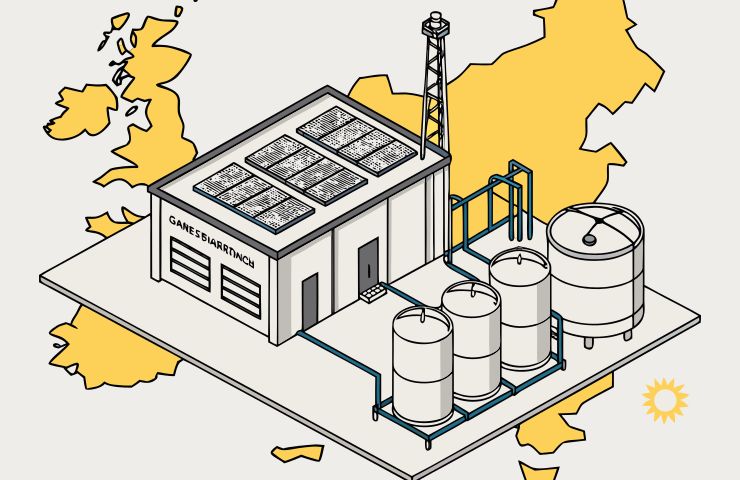
At its core, Giga PtX envisions rolling out several hundred skid-mounted units across Europe, each cranked to produce about 5,000–7,000 tonnes of synthetic fuel per year. These units run on renewable electricity, green hydrogen and captured CO₂. The recipe is familiar to chemical engineers: electrolyse water, feed hydrogen and CO₂ into a Reverse Water Gas Shift (RWGS) reactor to make syngas, then send that through a Fischer-Tropsch synthesis step to build long-chain hydrocarbons. The payoff? Fuels that are chemically identical to their fossil counterparts but live in a closed carbon loop.
INERATEC first debuted a smaller prototype at a defence expo, where a Caracal airborne vehicle ran entirely on its synthetic output. That demo, along with the success of the ERA ONE plant in Frankfurt-Höchst, proves you can go from lab bench to real-world scale with Power-to-Liquid.
Blueprint of Modular Plants
Think of each module as a self-contained refinery tucked into a shipping-container footprint. A typical 50 MW unit integrates:
- Green hydrogen from Sunfire electrolysers—either pressurized alkaline stacks or advanced Solid Oxide Electrolysis Cells (SOEC) that tap process steam for extra efficiency.
- CO₂ supply harvested from nearby point sources (power plants, cement works) or pulled straight from the air using Greenlyte direct air capture units.
- RWGS and Fischer-Tropsch reactors developed by INERATEC, where H₂ and CO₂ combine into long-chain synthetic fuels.
All of this fits into a portable footprint you can park next to airbases, ports or training grounds. Each module is dialed in for 5,000–7,000 tonnes of output annually—enough juice to keep a brigade rolling.
Industrial Heartlands and New Hubs
It makes sense to kick things off in established industrial zones. The ERA ONE facility in Frankfurt-Höchst taps existing research infrastructure and shows that commercial e-fuel production can thrive in a retrofit. Karlsruhe—home base for INERATEC—underscores the tech pedigree, while regions like North Rhine-Westphalia, with Greenlyte and a deep cleantech workforce, could host direct air capture modules. Down the line, expect new sites near former coal basins or renewable-rich grids, spreading jobs and investment far and wide.
Key Numbers to Know
- 2,500 tonnes: annual output of ERA ONE.
- 5,000–7,000 tonnes: design capacity per modular plant.
- 50 MW: power rating of each unit.
- 20–60 litres: estimated daily fuel burn per soldier.
- 20 million tonnes: potential annual output from a Europe-wide network.
Who’s Driving the Initiative?
- Rheinmetall acts as general contractor—designing, building, integrating, maintaining and operating the plants. CEO Armin Papperger calls it a way for Europe to produce strategic fuels locally, sidestepping vulnerable supply chains.
- INERATEC brings its proven PtL expertise. The Karlsruhe-based firm built and runs the ERA ONE plant—Europe’s largest commercial PtL facility, online since early 2025 and turning out up to 2,500 tonnes of synthetic aviation fuel and e-diesel each year.
- Sunfire provides the electrolysis backbone. Its pressurized alkaline and SOEC technologies are key to converting renewable power into green hydrogen.
- Greenlyte offers modular direct air capture solutions, giving future modules siting flexibility beyond heavy emitters.
Why It Matters
This project tackles multiple challenges in one go:
- Defence resilience: Localized production slashes transport distances and convoy vulnerabilities, supplying 20–60 litres of fuel per soldier per day.
- Emissions reduction: Synthetic fuels from Power-to-Liquid processes can cut lifecycle greenhouse gases by over 90%, according to INERATEC data.
- Compatibility: Bundeswehr tests confirm these e-fuels drop straight into existing tanks, vehicles and aircraft—no engine tweaks required.
- Economic impact: Rolling out hundreds of modules could spark new manufacturing jobs, attract renewable power investment and spread industrial capacity more evenly.
Navigating Hurdles
Even with solid tech, the path ahead needs clear rules. Direct air capture permits vary across EU states, and synthetic fuels must meet certification standards like ASTM D7566 for aviation and EN 15940 for marine diesel. Tight coordination between defence ministries, energy regulators and civil aviation authorities will be key to cut through the red tape and unlock funding.
Policy Environment
The EU’s twin goals of strategic autonomy and climate neutrality create a fertile backdrop for Giga PtX. Programs under the European Defence Fund and the Fit for 55 package could supply financial support and technical guidelines, though the details on budgets and timelines are still evolving. Member states will need to harmonize incentives for hydrogen, CO₂ capture and synthetic fuels, and set clear market rules for both civilian and military procurement.
Looking Ahead
Rheinmetall and its partners envision a network delivering over 20 million tonnes of CO₂-neutral fuel each year. Scaling up will demand political backing—streamlined permitting for direct air capture, harmonized fuel standards and cross-border logistics agreements. Once those frameworks are in place, construction can begin in earnest. In the years ahead, these plants will require vast amounts of renewable power, driving fresh demand for wind and solar. Grid integration and storage solutions will be vital to keep the electrolysers humming reliably.
And it doesn’t stop at defence. This blueprint for local, low-carbon e-fuel production could reshape energy supply for commercial aviation, shipping and heavy industry. By proving that resilience and sustainability can go hand in hand, Giga PtX may well kick off a broader shift toward localized, low-carbon fuel production.

 With over 15 years of reporting hydrogen news, we are your premier source for the latest updates and insights in hydrogen and renewable energy.
