Goyang City Advances Hydrogen Production with 9.9 MW Fuel Cell Power Plant
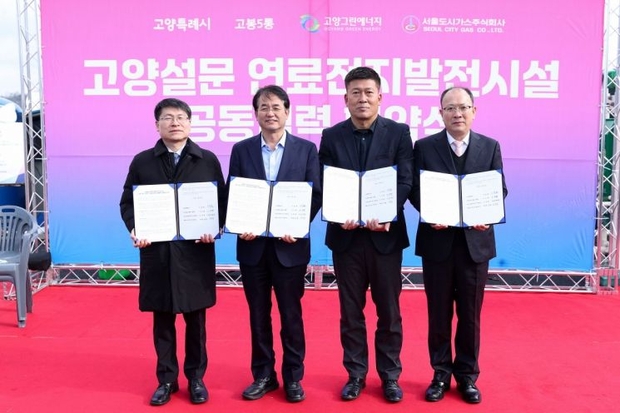
February 13, 2026Goyang City in Gyeonggi Province is stepping up its hydrogen economy game by building a 9.9 MW hydrogen fuel cell power plant on a 4,166 ㎡ site in Seolmundong, Ilsandong-gu. Backed by 58 billion won in private financing, the facility is set to fire up in December 2026 and crank out about 79,000 MWh of electricity each year—enough juice for roughly 16,700 homes. It’s a major leap toward Goyang’s goal of hitting 15.2 MW total fuel cell capacity by 2030 and cements the city as a front-runner for decentralized energy and zero-emission innovation.
Key Project Details
- Capacity: 9.9 MW via hydrogen fuel cells
- Annual generation: around 79,000 MWh (≈16,700 households)
- Investment: 58 billion won in private capital
- Location: 4,166 ㎡ in Seolmundong, Ilsandong-gu, Goyang City
- Construction start: first half of 2026
- Commercial operation: slated for December 2026
- Hydrogen supply: on-site steam reforming of natural gas by Seoul City Gas
- Gas pipeline: 2.5 km extension to Gobong 5-tong village
Technology Overview
This plant runs on hydrogen fuel cells, turning hydrogen and oxygen into electricity, heat and water without any combustion. Goyang will handle its own hydrogen production through steam reforming of natural gas—a proven method that taps into existing pipes and equipment. While it’s not 100% green hydrogen yet, the setup paves the way for future integration of renewables.
Unlike solar or wind farms, fuel cells deliver round-the-clock power in a compact footprint, boosting grid stability and providing steady baseload output. By locating the plant close to demand centers, Goyang cuts transmission losses and shores up resilience against centralized grid hiccups. Down the road, the city plans to link these fuel cells with hydrogen storage and refueling stations for buses and trucks, knitting together a comprehensive urban clean energy and sustainable energy network.
Strategic Implications
This project showcases South Korea’s national push toward a hydrogen economy as part of its climate strategy and energy security playbook. Mayor Lee Donghwan sees hydrogen as critical to hitting both carbon neutrality and municipal energy self-sufficiency by 2030. With 58 billion won of private backing, Goyang hopes to lure more investment and inspire other local governments to follow suit.
Extending the pipeline into Gobong 5-tong village finally fills a decades-long service gap, bringing city gas to households that have been off-grid. Rolling out power and gas infrastructure together creates economies of scale, trims long-term energy costs, and generates jobs during construction and operation. Over the plant’s lifetime, swapping out fossil-fuel-derived electricity for hydrogen will cut greenhouse gas emissions—though the exact savings will depend on grid mix and future green hydrogen sourcing.
Partnerships and Roles
This initiative is a team effort:
- Goyang City Government: sponsor and regulator, overseeing planning and permits
- Seoul City Gas: producing hydrogen via steam reforming and laying the 2.5 km pipeline
- Goyang Urban Management Corporation: managing new-energy projects, including a 1,000 kg/day hydrogen facility under the mini hydrogen-city program
Operational Timeline and Roadmap
It all kicked off when Goyang was picked for Gyeonggi Province’s mini hydrogen-city program in October 2024. By March 2025, the city struck a consignment deal with its energy arm to lead development. Detailed engineering is set to wrap up by late 2026, laying the groundwork for both the fuel cell plant and the hydrogen production assets, with completion expected in 2027. Starting at 9.9 MW and scaling to 15.2 MW by 2030, Goyang is crafting a modular blueprint others can adapt.
Future phases include rolling out hydrogen refueling stations for public transport, adding on-site storage tanks to even out supply, and eventually shifting to green hydrogen via electrolysis once renewable electricity costs drop. This phased approach balances immediate emissions cuts with long-term sustainable energy ambitions.
Local Impact and Beyond
For Goyang residents, that means a sturdier grid and fewer outages. Gobong 5-tong households will finally get piped city gas for cooking and heating. The construction and operation phases are set to create dozens of engineering, operations, and maintenance jobs. At the municipal level, reducing reliance on centralized generation makes the energy system more bulletproof against extreme weather or demand spikes.
On a larger stage, Goyang’s success could spark a wave of mini hydrogen-city projects across the Seoul metro area and beyond. With 58 billion won in private capital committed, investors will see the commercial appetite, and policymakers will gain a tested playbook for urban decentralized energy integration. As hydrogen production, storage, and utilization come together, this initiative helps close technology gaps and accelerates South Korea’s march toward a low-carbon future.
What to Watch Next
Keep an eye on the detailed engineering reports due at the end of 2026 and the progress of the 1,000 kg/day hydrogen facility in 2027. Also watch for plans to blend green hydrogen into the supply mix and the rollout of refueling stations. If Goyang hits its marks, it could well become the most energy-independent, eco-friendly city in the Seoul metro area—a real-world proof that clean energy and sustainable energy can power tomorrow’s urban life.


 With over 15 years of reporting hydrogen news, we are your premier source for the latest updates and insights in hydrogen and renewable energy.