Green Hydrogen Fertilizer: Project Villeta Leading the Charge in Paraguay
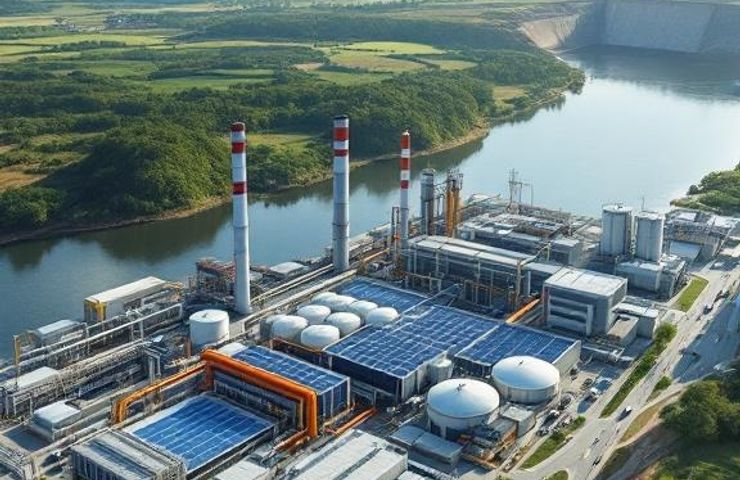
March 17, 2026Imagine Villeta, a river town just downstream from Asunción where the Paraná River rolls by. Paraguay has long ridden the wave of its massive hydroelectric power, so much so that the country runs entirely on clean juice. Now, that renewable edge isn’t just lighting up homes; it’s kicking off a real industrial shake-up.
Enter Project Villeta, a near-$650 million effort to spin that clean current into green hydrogen fertilizer. By tapping roughly 145 MW of dedicated hydroelectric capacity, this plant aims to crank out about 262,460 tons of low-carbon fertilizer a year—specifically calcium ammonium nitrate. It’s not just another factory; think of it as a living blueprint for greener industry, bolstering farms across the region while proving that clean power can reshape how we grow food.
Here’s a jaw-dropping stat: making ammonia the old-school way guzzles around 1–2 percent of all global CO₂ emissions—more than what many small countries emit each year. By contrast, at Project Villeta every spark of hydrogen is born from water and clean electricity, sans carbon footprint. If this takes off, it could flip the script on fertilizer-making everywhere.
From Hydropower to Hydrogen: How It Works
At the heart of the operation are high-efficiency electrolyzers powered by a chunk of that 145 MW of renewable hydroelectric power. They split water into hydrogen and oxygen—no fossil fuels in the mix. That green hydrogen then hooks up with nitrogen in an updated Haber-Bosch routine to form ammonia. Next, it’s a simple chemistry trick: react the ammonia with limestone to produce calcium ammonium nitrate (CAN), the go-to fertilizer on fields from Paraguay to Patagonia. Depending on who you ask, the plant’s capacity floats between about 260,000 and 262,460 tons per year, marking a massive leap toward decarbonizing one of agriculture’s greediest processes.
Financing a Game-Changer
Tackling something this big takes more than nuts and bolts—it needs serious financial firepower. That’s where IDB Invest stepped in, orchestrating a roughly $420 million debt package and anchoring it with about $156 million in loans and concessional support. Riding shotgun were heavy hitters: the European Investment Bank chipped in $135 million of senior debt, Dutch bank FMO added $94.8 million, and the Green Climate Fund committed $50 million on friendly terms. On the equity side, Hy24 leads with around $115 million, while CASALE locked in a $465 million fixed-price EPC contract. The outcome? A layered finance structure built to get this green hydrogen fertilizer venture out of the gate.
Backed by a Network of Institutions
While IDB Invest pilots the debt mix, the International Finance Corporation threw its weight behind the project after greenlighting the package in October 2025. Financial whizzes at Natixis Corporate & Investment Banking stitched together the various debt tranches—senior loans, standby facilities, concessional lines—making sure each slice matched the risk profile. Together, this coalition of public and private players is setting a fresh bar for how we finance clean, large-scale industrial projects.
Regional Impact and Exports
Paraguay isn’t just aiming to feed its own fields. Roughly 90 percent of the plant’s output is earmarked for farmers across Mercosur—from Argentina’s pampas to Brazil’s soy belts. Yara has already locked in a full offtake deal, so every ton finds a home. For import-dependent markets used to fossil-fuel fertilizers, this local supply of low-carbon fertilizer promises more price stability, fewer shipping emissions, and a stronger, more resilient food system.
Building Skills and Innovation
Here’s something that often flies under the radar: Project Villeta doubles as a hands-on training hub. Local engineers and technicians will learn the ropes—everything from running high-tech electrolyzers to tweaking digital control systems and keeping ammonia reactors humming. Over time, that know-how becomes exportable, laying the groundwork for other green hydrogen fertilizer plants to spring up across Latin America.
Climate and Economic Benefits
Swapping out conventional hydrogen for green alternatives kills two birds with one stone: slashing greenhouse gases and bolstering local economies. Estimates suggest the plant could dodge roughly 260,000 tons of CO₂ a year by cutting grey hydrogen out of the picture. On top of that, hundreds of skilled roles—think plant operators, supply chain analysts, maintenance techs—will fill out Paraguay’s workforce, moving it up the value chain beyond just exporting hydroelectric power or soybeans.
Overcoming Challenges
Is it all smooth sailing? Not quite. CASALE has to meet tight engineering specs under its fixed-price EPC deal, and relying on river-fed dams means occasional droughts could test power availability—though Paraguay’s hydro system has proven pretty resilient. Add in volatile fertilizer prices on global markets, and you’ve got another curveball. Fortunately, Yara’s firm offtake contract and the project’s layered finance structure are built to cushion those shocks.
Looking Ahead: A Glimpse into the Future
This isn’t just about one plant on Villeta’s outskirts. It hints at a future where heavy industries—steel mills, chemical complexes, even shipping bunkers—run on green hydrogen and its chemical cousins. Picture cargo vessels fueled by zero-emission molecules or factories powered entirely by renewable currents. If Project Villeta succeeds, it’ll be hard to ignore how clean hydrogen can rewrite the rulebook across every corner of industry.
Keep an eye on this riverfront hub. What’s unfolding in Villeta—where water, hydroelectric power, and chemistry converge to produce next-generation, low-carbon fertilizer—could soon become a go-to playbook for sustainable development around the globe.


 With over 15 years of reporting hydrogen news, we are your premier source for the latest updates and insights in hydrogen and renewable energy.