Green Hydrogen Heating: HYTING Commissions First Catalytic Air-Heating System
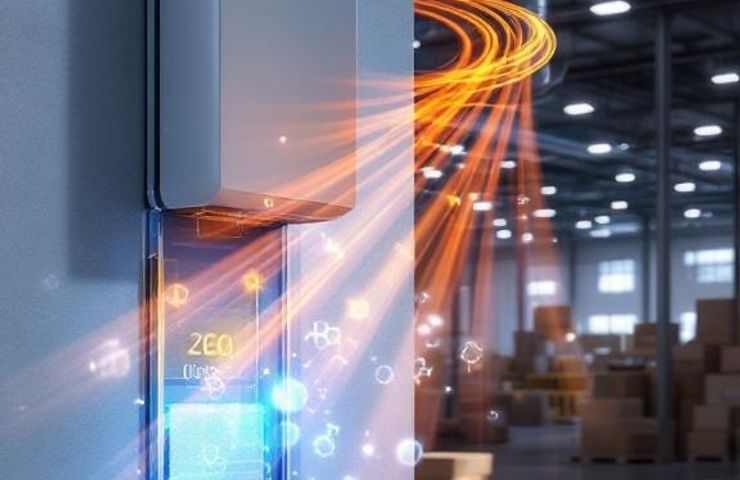
February 9, 2026German innovator HYTING has flipped the switch on the world’s first customer site for its patent-pending Catalytic Hydrogen Air-Heating system. At an undisclosed commercial location, the team rolled out their 10–50 kW modules—branded as AIRFLOX and AirSYS—that sip low-pressure, Grade A green hydrogen and ambient air. Inside, a flameless catalytic oxidation in a proprietary catalyst bed delivers heat at up to 114% efficiency (based on hydrogen’s net calorific value), spitting out nothing but water vapor—no CO₂, NOₓ or particulates. By heating the air directly, these units ditch bulky ductwork and water loops, making them a no-brainer for ventilated spots like warehouses, industrial halls or greenhouse operations.
Strategic Impact
This milestone isn’t just a flashy demo—it’s a game-changer. Packing mixing, heating and controls into a single skid unit slashes upfront capex by about 75% compared to traditional hydrogen or gas-fired boilers, which need secondary heat exchangers and flame-management gear. Facility managers rejoice: smaller budgets and speedier ROI. Retrofitting old heating networks usually means messy pipe rerouting, burner upgrades and safety add-ons. HYTING’s plug-and-play modules, however, slide into existing setups with minimal civil work, cutting commissioning from months to days—and avoiding costly production downtime.
In hybrid setups, AIRFLOX and AirSYS team up with heat pumps to tame winter’s worst. Instead of over-sizing a pump for every cold snap, operators can lean on hydrogen modules for short peak loads, trimming overall system size by 20–30%. Early modeling even suggests up to 15% energy-cost savings over a typical winter run, thanks to the heaters’ rapid thermal response and precise modulation.
On the financing front, early adopters might tap into EU clean-heating grants or national subsidies to cut net equipment costs by 20–30%, and leasing deals are bubbling up among financiers—think data-center-style backups now applying to hydrogen heaters.
Backed by a partnership with ebm-papst, known for reliable fans and motors, HYTING accelerates GAR and CE certification. Their proven rotating-equipment platform guarantees industrial-grade uptime—key as Europe builds out its hydrogen infrastructure under national strategies and net-zero mandates.
Historical Context
Heating with hydrogen used to mean adapted gas burners churning out NOₓ and a labyrinth of flame-supervision systems. Decades of lab work on flameless catalytic oxidation often stumbled on catalyst wear, poor heat transfer and no neat modular design. Sure, patent filings like WO2023139472A1 hinted at boiler-focused catalytic systems, but none hit the sweet spot of efficiency and certification needed for full-scale deployment. HYTING flips the script by fusing a durable, high-activity catalyst with integrated air fans and control electronics—achieving stable, flameless heat without a separate exchanger and topping 100% thermal efficiency (net calorific basis) across a wide temperature range.
Technical Snapshot
The heart of the magic fires at a whisper of 20–60 mbar, where 0.01–1.3 kg/h of hydrogen meets ambient air across the catalyst bed. Thanks to the enthalpy of vaporization, each kilogram of hydrogen releases 37.4 kWh. Integrated fans reclaim 80–89% of that energy, ditching the need for a standalone heat exchanger and keeping the unit compact. Smart controls constantly monitor flows, keeping hydrogen below a 3% threshold to avoid higher-risk ATEX zones. GAR-certified, these units handle inlet temperatures from –20 °C to +40 °C and offer wide load modulation to match dynamic demands—from cozy space heating to tough industrial processes.
Collateral Impacts
- Zero-emission output: Water vapor is the only byproduct, supporting air-quality and carbon-reduction goals.
- Grade A hydrogen feedstock: Tolerates lower-purity inputs, broadening sourcing options from electrolyzers or reformers.
- Minimal electrical draw: Fans sip just 0.5–1.2 kW, lowering operating costs and easing grid strain.
- Fast retrofits: Plug-and-play design avoids lengthy shutdowns, keeping productivity humming.
- Modular scalability: Multiple units link up to handle tens to hundreds of kilowatts of heat.
- Simplified permitting: Sub-3% H₂ streams often sidestep Zone 0 requirements, cutting red tape.
- Direct air heating: Perfect for ventilated spaces—warehouses, greenhouses, industrial halls—without extra ducts or water loops.
For industrial processes like drying, curing or tempering, these units deliver pinpoint, emission-free hot air, eliminating the need for flue-gas ducts or heat-recovery loops and slashing installation complexity.
Supply Chain & Deployment Considerations
These heaters tie into existing hydrogen pipelines at 20–60 mbar, bypassing costly high-pressure upgrades. That low-pressure operation lets you repurpose old gas networks or deploy small on-site electrolyzers for on-demand hydrogen, cutting logistics costs. With ebm-papst’s global manufacturing clout, HYTING is set to scale production—meeting Europe’s needs now and eyeing North American and Asian markets over the next 12–18 months.
Market Landscape
The hunt for low-carbon heating is on from all sides. “Hydrogen-ready” condensing boilers still burn a flame and emit trace NOₓ, while resistive heaters and heat pumps wrestle with slow response and grid bottlenecks during peaks. Academic catalytic heater prototypes never cleared certification or real-world trials. By commissioning AIRFLOX and AirSYS, HYTING bridges bench and boiler room, rolling out the first certified, customer-proven flameless catalytic hydrogen heater. This reference project delivers hard performance and safety data, de-risking future investments and fueling broader industrial decarbonization and district-heating initiatives across Europe.
Key Takeaways
- Commercial Validation: Live installation shows market readiness.
- Cost Efficiency: Up to 75% lower capex vs. conventional solutions.
- Hybrid Capability: Peak-shaving with heat pumps cuts system sizing by 20–30%.
- Zero Emissions: No CO₂ or NOₓ output aligns with net-zero goals.
- Scalable Design: Modules flex to a wide range of heat demands.
- Simplified Compliance: Sub-3% H₂ streams slash permitting hurdles.
Bottom Line
As you chart your path to sustainable energy and net-zero heat, rest easy knowing that flameless, catalytic green hydrogen systems are ready for real-world duty—delivering game-changing zero-emission technology that slots perfectly into your site’s hydrogen infrastructure roadmap.


 With over 15 years of reporting hydrogen news, we are your premier source for the latest updates and insights in hydrogen and renewable energy.