Green Hydrogen Production Leap at StFX with Light-Driven Catalyst
February 11, 2026St. Francis Xavier University researchers have rolled out a light-driven approach to green hydrogen production that doesn’t rely on the grid—and get this, it delivers roughly 100 times more hydrogen than the old light-activated tricks. At its heart is a novel multi-component solid catalyst, and the whole thing hums along under both sunny skies and artificial bulbs—making it a real contender for boosting energy access in remote corners and rural communities.
Breakthrough in Green Hydrogen Production
Most hydrogen these days comes from steam reforming natural gas, guzzling about 2% of the world’s electricity and belching out CO₂ at a rate twelve times greater than the hydrogen it yields. Contrast that with the StFX team’s photocatalytic route, which taps straight into sunlight to split water molecules—no grid juice needed. In lab tests, they clocked hydrogen outputs nearly one hundred times higher than the usual light-activated benchmarks.
Regional Energy Context
Out in Nova Scotia, where power lines don’t always stretch and geography throws up hurdles, being able to whip up hydrogen on-site without hooking into the grid could totally reshape the local energy scene. The province’s past love affair with fossil fuels and big central plants has left off-grid settlements and industries on the back foot. A sturdy solar-powered hydrogen system could hit two birds with one stone: speed up sustainable energy goals and bring reliable power to hard-to-reach places.
How the Catalyst Works
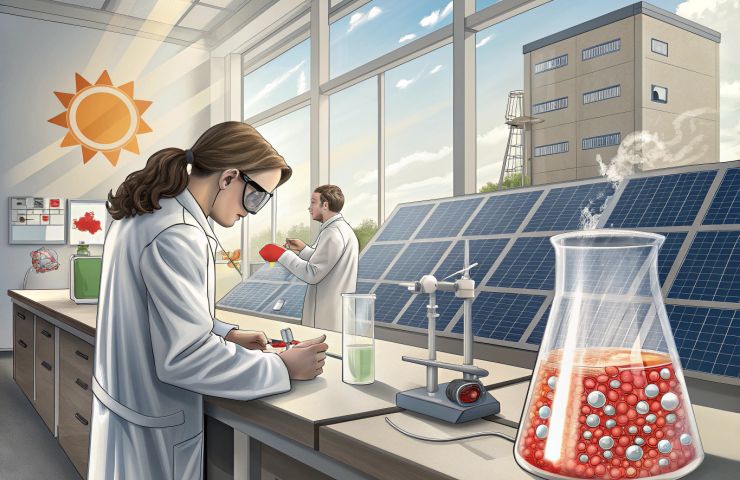
At the core of this innovation is a solid mix of components that, when bathed in light, kick-start the chemistry needed to split water into its parts. Sunlight does the heavy lifting, so there’s zero need for external electricity. Early trials under both sun lamps and real sunshine show consistent gains. The exact recipe for the catalyst is still hush-hush until publication, but initial runs prove it’s stable through multiple cycles.
Accidental Discovery and the Research Team
The story actually starts back in 2022, when former MSc student Yashodha Panagodage spotted unexpected catalyst activity in Dr. Geniece Hallett-Tapley’s lab. “It was just one line in a five-page proposal,” Dr. Hallett-Tapley laughs, recalling that lucky hydrogen note. Teaming up with Dr. Erwan Bertin, who brought advanced gas-detection gear, they double-checked the output and compared it to industry standards.
Funding and Collaborative Support
This project has since attracted backing from Net Zero Atlantic, fitting right into the push for industrial decarbonization and net-zero research in Atlantic Canada. StFX’s Chemistry and Engineering departments pooled their resources, roping in both undergraduates and grad students to get hands-on with experiments and data crunching. It’s a real showcase of how teamwork can move the needle on sustainable energy.
Educational and Strategic Impact
Undergrads have been front and center, getting rare exposure to scale-up thinking and photocatalysis lab work—experience you don’t often find in bachelor’s programs, says Dr. Hallett-Tapley. And with Dr. Brittany MacDonald-MacAulay from Engineering steering reactor design, the project is building bridges between theory and real-world applications.
Scale-Up and Reactor Design
Now, the focus is on a pilot reactor to keep that hydrogen flowing continuously under sunlight. Bench-scale tests hint the catalyst holds up over longer runs, but the ultimate test will be its durability and cost at scale. The team stresses that industrial-scale demos are the next big milestone before anyone can talk commercial rollout.
Potential Impacts and Challenges
If they nail the scale-up, this could drastically cut the carbon footprint of hydrogen production by ditching natural gas reforming. It’s a real hope for off-grid applications too, although we haven’t seen it in action in remote communities just yet. The hurdles? Proving it’s wallet-friendly compared to existing methods, ensuring the catalyst lasts the distance, and plugging it into today’s energy systems and hydrogen infrastructure.
Global Relevance
Photocatalytic hydrogen generation has been kicking around for years, but efficiency has always lagged. This StFX breakthrough—still in pre-commercial stages—is one of the most impressive jumps in yield we’ve seen. As countries hustle to hit climate targets, innovations harnessing abundant sunlight could be central to decarbonizing transport and heavy industries.
Looking Ahead
The team’s lining up Phase 1 industrial trials and chatting with local clean-fuel outfits about partnerships. There’s still a mountain to climb, but this home-grown Canadian innovation proves university labs—even those on modest budgets—can spark transformative advances in the push for sustainable energy and robust hydrogen infrastructure.
source: stfx.ca

 With over 15 years of reporting hydrogen news, we are your premier source for the latest updates and insights in hydrogen and renewable energy.