
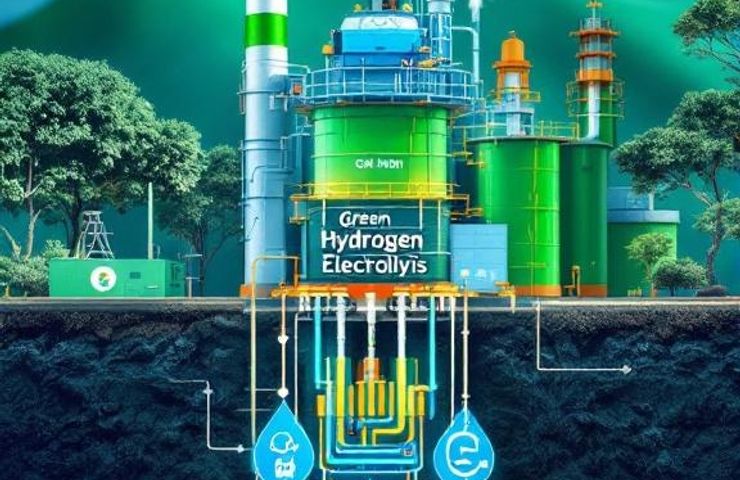
Green hydrogen production: MNRE guidelines tackle water-linked emissions
March 5, 2026This month, India’s Ministry of New and Renewable Energy (MNRE) rolled out draft guidelines for its Green Hydrogen Certification Scheme (GHCI) that finally bring water drawal and treatment emissions into the picture. By syncing the scheme with ISO 19870:2023, the MNRE is covering its back on full lifecycle accounting—paving the way for clearer green hydrogen certification and giving a big boost to the credibility of hydrogen production.
Core update
The new drafts—open for public comments until mid-March—say producers must tally up the greenhouse-gas footprint from any water they pull outside their electrolysis setup. Whether you’re using surface water, seawater, municipal supplies or recycled wastewater, you’ll factor in the energy and chemicals needed to treat it. For instance, tapping municipal water means applying a benchmark of 0.603 kgCO₂e per cubic meter. If you’ve got solid primary data for your own well or desal unit, by all means use that; otherwise, lean on similar benchmarks.
Technical deep dive
Under these rules, GHCI will follow the ISO 19870:2023 well-to-gate framework, pushing greenhouse-gas accounting upstream to cover water-treatment steps. The guidelines spell out five common water-sourcing scenarios and walk you through how to divvy up emissions when infrastructure is shared—pretty handy for cluster-based producers. Recycled water gets a special nod: you only count the extra energy and chemicals needed to hit your purity targets for electrolysis, nudging everyone toward circular water use. Daily record-keeping is non-negotiable, and if you’re using a mix of sources, logs must show each share and its emissions. Whenever grid electricity powers treatment, you plug in national grid emission factors.
Policy and market implications
By plugging this blind spot, MNRE is sharpening India’s edge in the global green hydrogen arena. A GHCI stamp now carries more weight with buyers in Europe, East Asia and the Middle East who demand iron-clad proof of low-carbon credentials. Nailing water emissions can slash future “scope creep” risks in GHG accounting and help Indian exporters grab more market share. On the flip side, smaller players without established water-treatment baselines might feel the pinch from higher compliance costs. The ministry’s keen to get feedback and could ease in benchmarks or adjust phasing to make the switch smoother.
Several states are already pitching in with sweeteners: Rajasthan and Maharashtra, for example, are dangling capital subsidies up to 50% for electrolysis plants and water-treatment gear. That kind of support can really help cover the upfront costs of meeting the new reporting rules.
Mission context
This move ties directly into India’s National Green Hydrogen Mission, launched in early 2023 with a bold goal: crank out 5 million metric tonnes per year of green hydrogen by 2030. Backed by big renewable capacity targets and investment pledges, it marks a serious pivot away from grey hydrogen made from fossil fuels. Right now, India’s hydrogen demand—around 6–7 million tonnes annually—comes almost entirely from grey sources, but GHCI is a cornerstone policy tool to build trust in homegrown green hydrogen.
Broader impacts
Nailing water-related emissions ripples far beyond certification. By incentivizing recycled wastewater, the guidelines help ease freshwater stress in parched regions. Fair emissions allocation in industrial clusters can also prevent squabbles over who foots the treatment bill. In the long haul, full lifecycle accounting supports India’s decarbonization drive—potentially slashing up to 50 million tonnes of CO₂ equivalent by 2030—and solidifies the country’s role as an export hub. Plus, it’s a crucial piece in the larger puzzle of sustainable energy and industrial decarbonization.
Next steps
Stakeholders have until mid-March to weigh in on the draft. After MNRE sifts through the feedback, expect final guidelines to drop in the second quarter. Now’s the time for producers and investors to scan the benchmarks and data demands so they’re not caught off-guard when the rules land. It’s a clear signal that as India ramps up electrolysis capacity, it’s dead serious about certifying genuinely low-carbon hydrogen and playing by global rules.
Closing insight
By tying water-related emissions into certification, MNRE is making GHCI more robust and trustworthy. It’s a pragmatic alignment of policy and technical standards, sending a loud-and-clear message: India wants its green hydrogen to stack up on the global stage—from production halls to fuel-cell plants abroad. Keep an eye on how international buyers react; transparent, end-to-end accounting could be the secret sauce that gives Indian producers the competitive edge.

 With over 15 years of reporting hydrogen news, we are your premier source for the latest updates and insights in hydrogen and renewable energy.