Green Hydrogen: Spanish AeH2 Signs Five MoUs to Boost International Hydrogen Production Collaboration
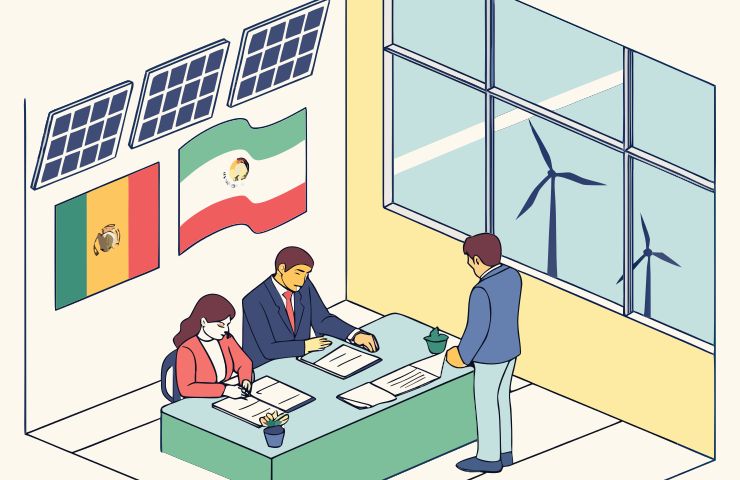
March 27, 2026On March, 2026, in Seville, the Asociación Española del Hidrógeno (AeH2) sealed five memorandums of understanding with the Hydrogen Energy Association (UK), GIZ (Germany), H2 Peru, the Mexican Hydrogen Society and Hydrogen Colombia. These agreements are all about boosting international collaboration on green hydrogen, dovetailing with Spain’s roadmap to install 12 GW of electrolysis capacity by 2030 and backing EU industrial decarbonization under the Clean Industrial Deal.
Strategic Impact
By teaming up with partners from Europe to Latin America, AeH2 is staking Spain’s claim as a central hub for green hydrogen. We’re talking joint R&D, swapping expertise, syncing supply chains and fast-tracking new projects. This network really supercharges the H2Med corridor—linking Spain with France, Portugal and Germany—while shoring up energy security in the wake of the Ukraine crisis.
Looking ahead, these partnerships will tackle everything from digital monitoring systems and unified hydrogen quality standards to workforce training programs, making sure each initiative scales smoothly across different rulebooks. Finance teams are already cooking up co-financing models that blend public grants with private equity to pin down solid offtake agreements.
By anchoring collaboration in mature markets and emerging economies alike, AeH2 and its partners aim to drive down the cost curve for electrolyser technology. Bulk-buying critical components—like catalysts, membranes and power electronics—should unlock real economies of scale, cutting capex per MW and helping hit those 2030 targets.
Investment and Policy Framework
The EU’s Clean Industrial Deal is pouring cohesion and recovery funds into hydrogen projects, and Spain has cleverly stacked national subsidies, EU grants and certification standards to streamline permitting, grid access and market entry. On top of that, the European Hydrogen Bank auctions offer price hedges for producers, dialing down investment risks and paving the way for bankable offtake contracts.
At home, Spain’s Recovery and Resilience Facility has earmarked €1.5 billion for renewables and hydrogen, while the Just Transition Mechanism is retraining workers from former coal regions. Fiscal perks—discounted electricity tariffs for electrolysis, accelerated depreciation schedules and tax credits for green hydrogen offtake—round out a package designed to close financing gaps and get commercial roll-outs moving at pace.
Technical Overview
So, how does green hydrogen actually work? This form of hydrogen production leans on electrolysis—tapping renewable electricity to split water into hydrogen and oxygen. Andalusia’s abundant sun and wind make Seville a prime location for large-scale electrolysers. Current schemes back up to 382 MW, and more than 100 project proposals across Spain total over 26 GW of capacity, supported by upwards of €3 billion in public funding.
Once produced, this carbon-free hydrogen will tie into Enagás’ emerging pipeline network, creating a domestic distribution backbone and export routes. That infrastructure won’t just soak up renewable oversupply and stabilize the grid—it’ll also set the stage for maritime shipments.
The electrolysers arriving on site range from proven alkaline units to swift proton exchange membrane (PEM) systems with rapid ramp-up times. Recent efficiency gains have driven operating costs down to around €3–€4 per kilogram in pilot facilities. Smart digital controls now let operators monitor electrolyte composition, pressure and temperature in real time, and pairing electrolysers with battery energy storage keeps everything balanced when renewables fluctuate.
Historical Context
Spain’s hydrogen journey kicked off in 2020 with a national roadmap targeting 4 GW of electrolyser capacity by 2030. The early focus was on pilot projects, public–private partnerships and feasibility studies, particularly in Andalusia—where a strong industrial heritage meets ideal solar conditions. The 2022 Ukraine crisis underlined Europe’s reliance on gas imports, so Spain tripled its ambition to 12 GW and unlocked more than €3 billion in grants for over 100 projects.
When the European Commission approved Spain’s €440 million aid scheme and the European Hydrogen Bank held its first auctions, that strategy really gained traction. In 2021, Andalusia’s Hydrogen Cluster—backed by the University of Seville, Iberdrola and Acciona—launched early demo plants. Under Spain’s Renewable Energy Plan 2030, public tenders steered capacity toward green ammonia and power-to-gas applications. And the European Hydrogen Backbone study mapped out a continent-wide pipeline network, cementing Spain’s H2Med corridor as a priority export route.
Regional Context
Home to 8.3 million people and with a per-capita GDP around $28 500, Andalusia has pivoted from traditional agriculture and industry toward a sustainable energy future. Sevilla, the regional capital, now hosts research centers and demo plants testing hydrogen in transport, storage and power systems. Regional incentives—like expedited permits and cluster support—have drawn in developers, turning Andalusia into a blueprint for other EU regions chasing green hydrogen.
The Regional Government’s Renewable Energy Plan 2030 channels EU structural funds into the “Andalucía Hydrogen Valley,” a dedicated zone for electrolyser manufacturing, hydrogen storage and technician training. Test-beds such as the Seville Renewable Energy Campus showcase dual uses of green hydrogen—in mobility and heating—proving it’s not just for heavy industry.
Collateral Benefits
Scaling up green hydrogen brings wider energy and economic wins. Reaching the 12 GW mark could cut CO₂ emissions by up to 1.79 million tonnes each year. Electrolysers double as flexible loads, soaking up renewable oversupply and stabilizing the grid. Plus, new facilities and supply chains will spark job creation—especially in former coal regions benefiting from Just Transition funds.
And it doesn’t stop there: export revenues from green hydrogen could top €500 million a year by 2030. Spain could also produce green ammonia for global fertilizer markets under a low-carbon label. Building out supply chains for electrolyser components will spawn specialized manufacturing clusters, spreading economic gains far and wide.
Parallel Developments
Spain isn’t alone in forging hydrogen ties. Germany’s H2Global has off-take deals with Norway and Morocco; Portugal and Chile are ironing out exports across the Atlantic; and Mexico just launched its national hydrogen consortium. Meanwhile, Japan is importing green ammonia from Australia, South Korea opened a terminal in Ulsan, and California’s HyDeal project is eyeing a 3 GW pipeline by 2030. AeH2’s network slots right in—harmonizing standards, sharing best practices and smoothing out logistics across continents.
Key Takeaways
- Five MoUs connect AeH2 with organizations in the UK, Germany, Peru, Mexico and Colombia.
- Spain targets 12 GW of electrolysis capacity by 2030 under its updated hydrogen roadmap.
- EU tools—like a €440 million aid scheme and European Hydrogen Bank auctions—are backing the push.
- The H2Med corridor and Enagás pipelines will anchor domestic distribution and exports.
- Over 26 GW of project proposals are in the pipeline, supported by more than €3 billion in public funds.
- Full-scale deployment could avoid up to 1.79 million tonnes of CO₂ yearly and generate jobs in transition regions.
- International cooperation accelerates technology transfer, financing models and regulatory alignment.
Looking Ahead
These MoUs are just the opening act of a transatlantic green hydrogen ecosystem. From 2026 to 2027, we’ll dive into joint feasibility studies; by 2028–29, pilot plants should be up and running; and come 2030, we expect full commercial roll-out. AeH2 plans to convene an international steering committee in late 2026 to keep all these projects on track. Meanwhile, EU Council meetings will be the stage for ironing out guarantees of origin, certification norms and cross-border transport rules—critical steps to make this vision stick.
 With over 15 years of reporting hydrogen news, we are your premier source for the latest updates and insights in hydrogen and renewable energy.