
Green Hydrogen Supply Record for Lower Thames Crossing Project
February 26, 2026We’ve been talking about green hydrogen for a while, but GeoPura’s newest deal proves it’s no longer a fringe player in the world of industrial decarbonization—it’s right up front. The UK-based innovator is set to deliver the largest volume of green hydrogen ever used on a construction site, powering work on the massive Lower Thames Crossing.
The Deal
Just earlier this month, GeoPura locked in a landmark agreement with National Highways, agreeing to supply record-scale green hydrogen for the Lower Thames Crossing project. According to FuelCellsWorks, this renewable fuel will replace diesel generators across the site. They haven’t shared the exact figures, but one thing’s clear: it’s the biggest green hydrogen arrangement we’ve seen on a UK infrastructure build.
Why It Matters
This isn’t tokenism. By swapping out diesel for hydrogen made via electrolysis powered entirely by renewables, the project cuts out generator and tailpipe emissions. National Highways even dubs it Britain’s “greenest road,” and they’ve backed that up with plans for six times more green space than road footprint, seven wildlife bridges, plus new parklands and wetland habitats. Bringing clean power on-site from day one underlines their carbon-neutral construction promise.
Tech Spotlight: HPUs
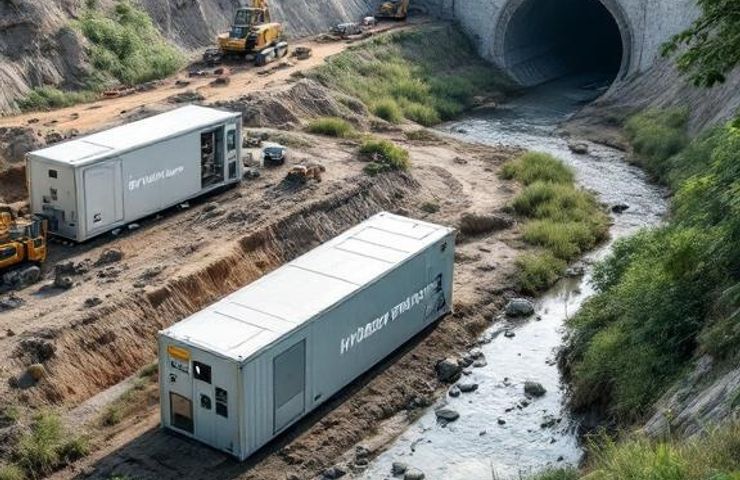
Hydrogen Power Units (HPUs) are GeoPura’s secret weapon. Imagine plug-and-play containers that pack electrolysers for onsite hydrogen production and storage tanks into a rugged, skid-mounted module. Hook them to a renewable energy source, and they’ll churn out hydrogen on demand for fuel cells or generators. No tanker trucks, no complex bunkering—just local, zero-emission energy with fast deployment and easy scaling.
Project Backdrop
The Lower Thames Crossing has been kicking around since 2018 as the cure for Dartford traffic jams. A 2020 application fizzled, but after a 2022 resubmission, it finally won development consent in early 2025. The plan lays out a 14.3-mile route linking the M25 near North Ockendon to the A2 by Thong, featuring twin 2.6-mile tunnels under the Thames. With costs now north of £10 billion and groundworks starting this year, the stakes—and price tags—couldn’t be higher.
Maverick Analysis
You’ve got to wonder if hydrogen can stay cost-competitive against cheap diesel generators, or if straight-up renewable electricity might have been enough. But on a £10 billion mega-project winding through delicate estuarine wetlands, off-grid green power makes perfect sense. GeoPura’s HPUs sidestep lengthy grid connections, shaving off early delays. It feels like a smart move in industrial decarbonization, even though we’re still waiting to see the real costs per kilowatt-hour.
What’s Next?
If GeoPura pulls this off without a hitch, hydrogen will score serious street cred for heavy-duty construction sites. National Highways will be watching delivery performance and cost impacts like a hawk. The real test? Whether this record-scale rollout sparks similar deals on other major projects. If it does, we could be looking at the dawn of a big wave in hydrogen infrastructure.
Image prompt: A containerized hydrogen power unit humming away at a riverside construction site, tunnel-boring machines in the background, and lush wetlands nearby to highlight biodiversity enhancements.


 With over 15 years of reporting hydrogen news, we are your premier source for the latest updates and insights in hydrogen and renewable energy.