
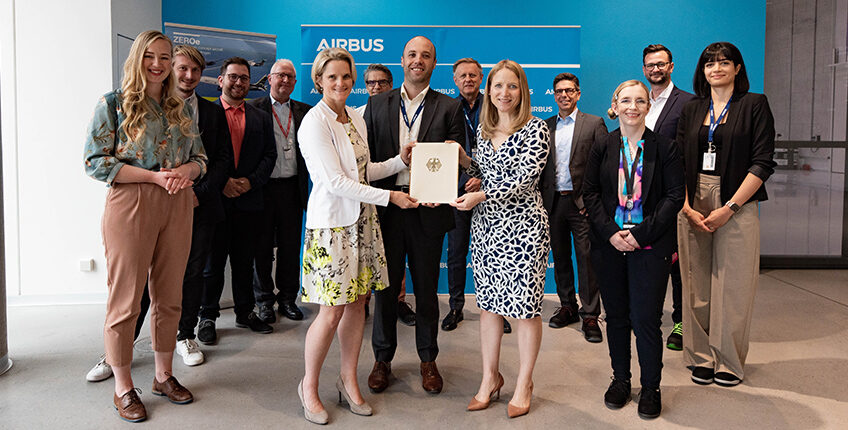
Hydrogen aviation advances with H2Sky PEM fuel cell stack
March 30, 2026Setting the Scene in Baden-Württemberg
This month, right in the heart of Germany’s industrial powerhouse, Baden-Württemberg, the H2Sky project consortium rolled into Dettingen an der Erms to celebrate a major milestone. Nestled among Europe’s top research hubs—from Stuttgart’s automotive giants to Freiburg’s materials science wizards—this small town played host to the grand finale of a years-long push to turn hydrogen aviation from theory into reality. With folks from the Federal Ministry for Digital and Transport (BMDV), experts from NOW GmbH and more than thirty engineers on the ground, you could practically feel the buzz in the air.
Since kicking off back in 2007, Germany’s National Innovation Programme (NIP) has poured over €75 million into hydrogen aviation and PEM fuel cell research, entering its second phase in 2017. As part of that wave, the H2Sky project snagged €26.5 million in public support—handed over at a high-profile ceremony at Airbus’s Finkenwerder site—and attracted another €18 million in private backing. It’s exactly the kind of heritage-meets-high-tech success story that could shake up global aviation.
A Game-Changer for Sustainable Aviation
Imagine medium-haul flights silently gliding on electricity derived from pure hydrogen, with nothing but water vapor trailing behind. That’s the vision driving the H2Sky project. Launched in 2022, the team set out to pre-industrialize a 100–200 kW class PEM fuel cell stack specially tweaked for aircraft propulsion. Building on ElringKlinger AG’s proven automotive platform, they re-engineered key components to hit aviation’s strict power-to-weight targets. The goals were lofty—exceed 2 kW per kilogram, surpass 60% system efficiency, and prove durability well past 300,000 operating hours across varying flight profiles—all while nailing rigorous safety certifications. Hit those marks, and you’re on the fast track to zero-emission flight that could shave millions of tonnes of CO₂ off the planet’s balance sheet every year.
Collaboration Fuels Innovation
No single player can crack a challenge this complex alone. Leading the charge is Aerostack GmbH, the joint venture launched by Airbus and ElringKlinger AG under their ZEROe strategy. Airbus chipped in around €17 million in equity, while ElringKlinger brought its core stack design and manufacturing chops. Together, they teamed up with seven more partners:
- EKPO Fuel Cell Technologies GmbH, sharpening automotive-optimized stack expertise;
- Fraunhofer Institute for Solar Energy Systems ISE, advancing catalyst research;
- Center for Solar Energy and Hydrogen Research Baden-Württemberg (ZSW), fine-tuning membranes;
- Technical University of Munich, leading electrochemical modeling;
- Albert Ludwig University of Freiburg, overseeing life-cycle and durability testing;
- Hahn-Schickard, crafting lightweight micro-system components;
- NOW GmbH, coordinating the consortium under a competitive BMDV call.
Meeting Aviation’s Rigorous Demands
Let’s be real: aviation doesn’t cut you any slack. A fuel cell must deliver steady power at 30,000 feet, kick off quickly in sub-zero temps, and handle extremes of humidity and heat—all without dragging the aircraft down with extra weight. The H2Sky project squad tackled these head-on:
- Membrane Electrode Assembly (MEA): New ionomer formulations that keep protons moving smoothly even at –40 °C.
- Bipolar Plates & Flow Fields: Advanced composites and 3D-printed channels boosting power density toward 2.5 kW/kg.
- Cooling Systems: Micro-channel heat exchangers slashing system mass by 15 percent compared to standard radiators.
- Durability Protocols: Over 5,000 hours of accelerated tests, including 10,000 ft altitude sims and rapid-cycle conditions.
- Leak Detection & Safety: Integrated sensors with automatic shutdowns to meet CS-25 airworthiness rules.
These tweaks not only nudged efficiency well past 60% but also validated reliability metrics that lay the groundwork for full certification.
Ripples Beyond the Runway
The payoff from H2Sky goes far beyond one power unit. By streamlining stack manufacturing and proving performance, the project plants seeds for a thriving European hydrogen aviation ecosystem:
- Green Hydrogen Scaling: Electrolyzer makers can ramp up production, aiming to deliver hundreds of tonnes annually to regional airports.
- Infrastructure Growth: Fast-fill hydrogen stations become viable investments at smaller airfields.
- Supply Chain Development: New business for catalyst suppliers, composite fabricators, and sensor manufacturers.
- Skilled Workforce: Training programmes across partner universities prepping engineers for hydrogen aviation careers—supporting over 200 specialist jobs in Baden-Württemberg alone.
And since aviation accounts for about 2–3 percent of global CO₂ emissions, every kilo of green hydrogen that replaces conventional jet fuel nudges Europe closer to net-zero. When you add it all up, H2Sky really does matter.
A Glimpse into the Future
Looking ahead, as part of Airbus’ broader ZEROe roadmap targeting production-ready hydrogen aircraft by 2035, H2Sky is a crucial stepping stone. The lessons learned—from ionomer chemistry and flow-field tweaks to micro-system cooling and life-cycle management—will inform the next-gen, multi-megawatt fuel cell systems for wide-body airliners. Certification talks are already underway, setting the stage for demonstration flights in the coming years.
On the big-picture side, H2Sky shows how strategic public-private partnerships—coordinated by NOW GmbH and backed by Germany’s NIP—can deliver breakthrough innovations in hard-to-abate sectors. For policymakers, researchers, and aviation enthusiasts alike, it’s a game-changer offering a sneak peek at the future of zero-emission flight.
 With over 15 years of reporting hydrogen news, we are your premier source for the latest updates and insights in hydrogen and renewable energy.