
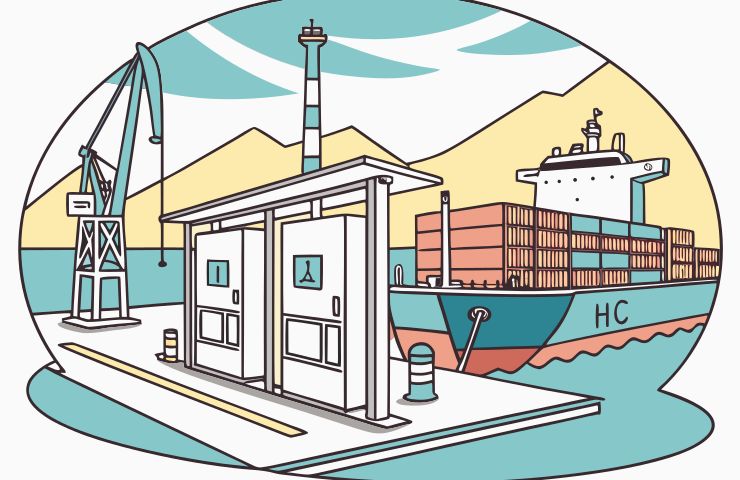
Hydrogen Bunkering at Port of La Spezia Paves the Way for Maritime Decarbonization
April 3, 2026A coastal hub turned green tech frontier
In the heart of the Ligurian coastline, the bustling port city of La Spezia is embracing a fresh wave of sustainable innovation. With roughly 92,500 residents and deep roots as a major naval base in the 19th century, La Spezia has grown into Italy’s third busiest container port. The port handles significant container volumes each year, linking goods from Shanghai to Rotterdam with Italy’s manufacturing heartland. Despite limited natural resources, its strategic Mediterranean location has long linked northern Europe with global trade lanes. Today, the city is leveraging that position to showcase how ports can pivot from heavy industry toward clean-energy leadership, offering an inspiring model for maritime hubs worldwide.
A game-changer on the water
This month, the Port of La Spezia achieved what many have been calling a genuine game-changer in maritime fuels. It completed Italy’s first hydrogen bunkering operation for a vessel, using a pioneering low-pressure hydrogen transfer system. The operation focused purely on the transfer process itself, ensuring that crew training, hose integrity, and monitoring protocols were rigorously tested. This proof-of-concept shows hydrogen can be delivered safely and efficiently to ships without bulky compressors or reinforced pipelines. For ship owners and environmental advocates alike, it signals that green maritime fuels are shifting from promising theory to actionable reality—and that Italy is now leading the charge in this critical transition.
Aligning with Europe’s decarbonization goals
It’s easy to get caught up in the technical novelty, but the real payoff is climate impact. Right now, the shipping industry accounts for roughly 3% of global CO2 emissions, and Europe has set its sights on cutting greenhouse gases to meet net-zero targets by mid-century. By demonstrating a viable hydrogen fueling model, La Spezia is giving ports and ship lines a clear blueprint to reduce their carbon footprint. Beyond CO2, offering an alternative to marine diesel or heavy fuel oil helps cut SOx, NOx, and particulate emissions, improving air quality in coastal communities. This initiative directly supports the EU Hydrogen Strategy and the continent’s broader push to make green shipping the new standard.
A proof-of-concept for low-pressure transfer
Traditionally, hydrogen bunkering conjures images of massive compression units and heavily fortified infrastructure. The approach in La Spezia flips that script. A custom-designed transfer system allows gaseous hydrogen to flow at reduced pressures, cutting down on energy costs and equipment strain while maintaining rigorous safety standards. The system uses proven safety valves and remote monitoring tools to track pressure in real time, giving operators confidence that they can react instantly to any irregularity. From an operator’s perspective, that translates to lower upfront investments and simplified handling procedures. It’s a blueprint that could unlock broader hydrogen use across maritime networks with far less complexity than previously assumed.
Collaboration drives innovation
No single player could pull off a milestone like this alone. The Port of La Spezia joined forces with regional government agencies, national regulators, and hydrogen technology experts to bring the project to life. By tapping into EU funding mechanisms and aligning with European best practices, each stakeholder brought critical expertise—whether in risk management, system integration, or safety certification. The project also included safety drills involving local emergency responders, ensuring spill response plans are fully tested. This kind of public-private collaboration underscores how effective partnerships can accelerate the deployment of clean-energy solutions at scale.
Impacts across the maritime value chain
Think of this milestone as a catalyst with far-reaching ripples. For ship operators, having access to hydrogen bunkering opens the door to zero-emission voyages powered by fuel cells or hydrogen engines. For port service providers, it builds vital know-how in storing, transferring, and monitoring hydrogen safely. Whether for container ships, car carriers, or ferries, having a zero-emission fueling option in port reduces the need for auxiliary generators running on diesel, cutting noise and local pollution. Equipment manufacturers and engineers, meanwhile, get clear market signals that demand for hydrogen-compatible infrastructure is heating up. All told, this project lays groundwork that could transform everything from maritime logistics to marine-engine design.
Building a regional green hydrogen ecosystem
La Spezia has all the makings of a green hydrogen hub. Its deep-water berths and established industrial zones provide ready sites for future expansion, while the existing shipping traffic guarantees demand. By integrating hydrogen bunkering into daily operations, the port is creating a template for a broader network of green-fuel stations across Liguria. Liguria’s chemical plants and manufacturing firms could also tap green hydrogen for onshore applications, creating economies of scale that benefit both maritime and land-based energy users. As vessels traveling between the Mediterranean, North Sea, and Baltic routes seek cleaner options, having reliable hydrogen stops will be a game-changer for routing and refueling strategies.
Scaling up for wider adoption
Looking ahead, the plan is to refine the transfer process and ramp up capacity. While specific details on pressure ratings and volumes transferred haven’t been publicly disclosed, the port authority emphasizes that this is just the first step. Future phases will likely involve automated loading systems and predictive maintenance algorithms, giving operators real-time insights into system performance and identifying wear or leaks before they become issues. Other Italian ports and European harbors are watching closely—if La Spezia’s model continues to prove cost-effective and safe, we could see low-pressure bunkering spread rapidly without each port having to reinvent its infrastructure.
A glimpse into the future
It’s not hard to imagine what comes next. Shipbuilders could start offering hydrogen-ready engines as a factory option, and terminal operators might designate dedicated hydrogen berths alongside conventional diesel ones. Bunker barges and onshore storage facilities will adapt, giving rise to a true green corridor from Spain to Greece. This shift would not only shrink maritime emissions but also foster jobs in engineering, vessel retrofitting, and port operations—anchoring new economic opportunities in coastal regions. As more ports adopt similar setups, shipping lines will have the confidence to commission new zero-emission vessels, knowing they can refuel efficiently at every major hub.
Conclusion
At its core, the achievement at La Spezia is a testament to what happens when vision, collaboration, and technology converge. The Port of La Spezia has taken a concrete step toward slashing maritime emissions, offering a replicable model for ports around the world. For coastal communities, industry leaders, and policymakers alike, this project provides a glimpse into a future where clean energy propels global trade. As European policy evolves, we may see incentives or carbon pricing mechanisms that make hydrogen bunkering even more attractive for shipowners weighing fuel options. If you’re looking for a real-world example of hydrogen’s power on water, keep your eyes on Liguria—because this port is just getting started.

 With over 15 years of reporting hydrogen news, we are your premier source for the latest updates and insights in hydrogen and renewable energy.
