

Hydrogen-Electric Business Jet Reaches Preliminary Design Review
March 23, 2026You’ve probably never heard a bigger buzz in hydrogen aviation circles than now—Toulouse-based Beyond Aero just nailed their Preliminary Design Review for a hydrogen-electric business jet. This isn’t just a pat on the back; it’s proof that their core design—everything from the 700-bar tanks to the electric propfans—lines up with EASA certification standards and the FAA’s Part 25 rules. Certification worry? Consider it tackled. Next stop: diving into the nitty-gritty of detailed design and testing.
Hitting the PDR doesn’t just tick a box—it shows this zero-emission flights dream is actually doable. Picture six folks hopping on board and zipping up to 800 nautical miles on pure hydrogen mojo. It’s the blend of beefy, high-pressure tanks, next-level fuel-cell propulsion propfans, slick thermal management system, and safety layers that paves the way under EASA CS-25 and FAA Part 25. And let’s be honest: lithium batteries can’t even come close to that range, nor can they get you back in the sky as fast as filling up with hydrogen.
Built for the Future: A Certifiable Architecture
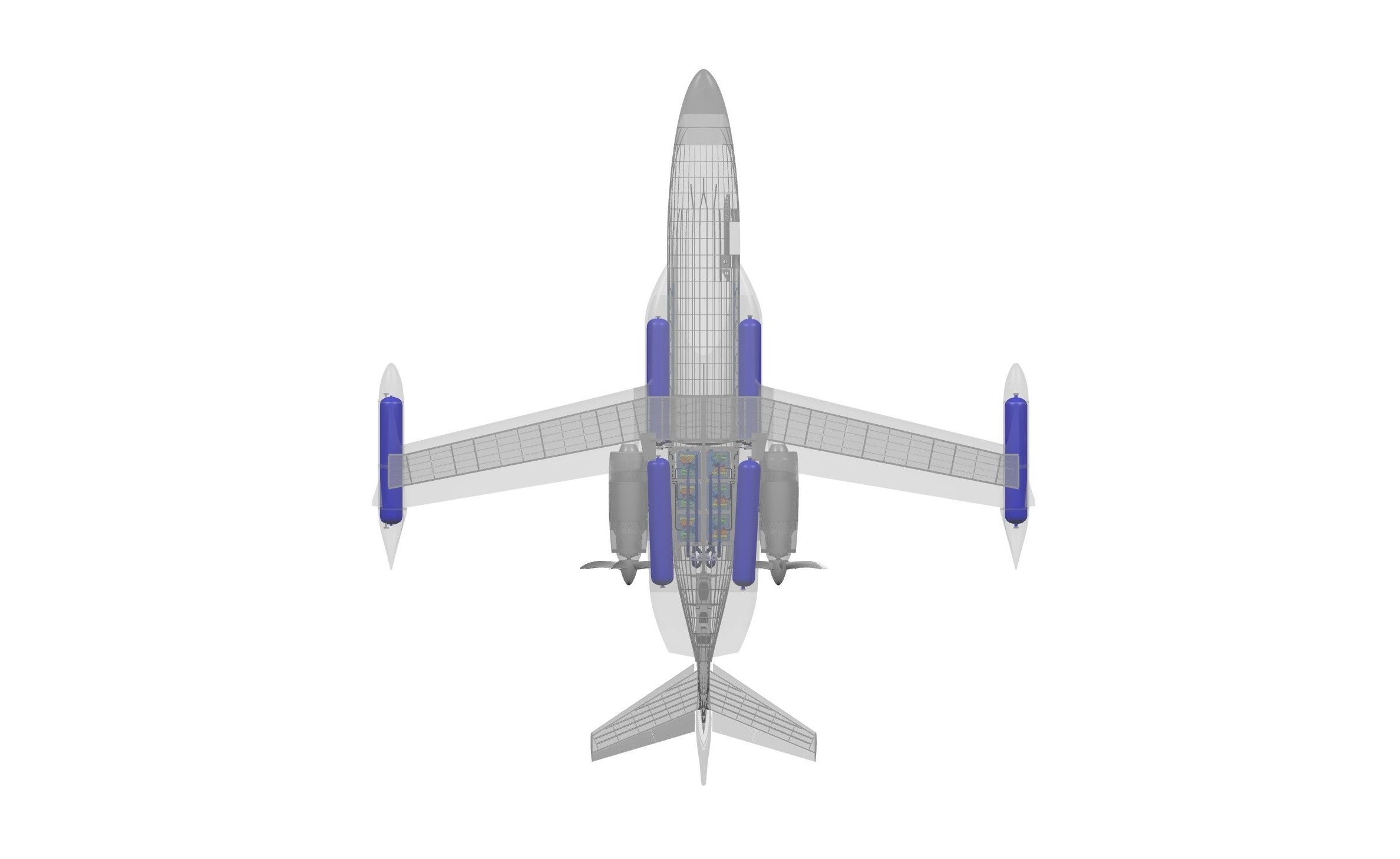
At its core, the design is built like a Swiss watch: everything’s got its place and purpose to meet transport-category demands. The plane’s split into three big chunks—gaseous hydrogen storage, fuel-cell electric propulsion, and a top-notch thermal management system. Those 700-bar tanks snug up above the wing with air flowing around them (no need for tricky cryo equipment). Down below, a twin-propfan pusher setup takes juice from the fuel cells and spins propellers that are as quiet as they are powerful. It’s all about nailing performance, safety, and ease of upkeep.
The Secret Sauce: Hydrogen Fuel-Cell Propulsion
If there’s a cherry on top, it’s the propulsion. Two propfans, each hooked up to a fuel cell, churn out roughly 800 kW together. Those fuel cells gulp hydrogen gas and spit out electricity whenever the props demand it, all without a whiff of CO₂. This isn’t pie-in-the-sky stuff either—they’ve run 85 kW bench tests, then cranked it up to 1,200 kW in lab trials. It really shows how fuel-cell propulsion can leap from garage experiments to genuine, certified aircraft use.
Tested and Validated: From Lab to Wind Tunnel
Talk is cheap, so they put it to the test. From mini mock-ups to full-blown propulsion runs, plus a wind tunnel marathon pushing 288 km/h, they’ve left no stone unturned. Those trials dialed in the cooling pathways around the tanks, proved the wings could take the load, and even tuned the propfans so they’re not ear-splitting. Throw in real flight data from their manned, all-hydrogen hops (the first in France!), and the team’s ready to charge into the next design phase.
Kicks Battery Limits to the Curb
Let’s talk batteries: heavy, range-challenged, and slow to juice up. Hydrogen? It’s the opposite story. The BYA-1 aims to haul six passengers 800 nm—that’s miles beyond any lithium beast out there. And topping off the tanks? It’s about as fast as tossing your bags onboard, thanks to standard 700 bar and 350 bar fueling rigs. In short, hydrogen fuel-cell propulsion packs the punch and the convenience that business flyers crave.
Beyond Aero: A Startup on a Mission
Since kicking off in late 2020, Beyond Aero has blossomed into a tight-knit crew of 80+ aerospace buffs spread between Toulouse, Paris, and L.A. They’ve pulled in over $50 million from backers like Giant Ventures, Bpifrance, Initialized Capital, Female Founders Fund, and 7 Percent Ventures—and even graduated from Y Combinator in 2022. They snapped up tech and flight intel from Universal Hydrogen, penned more than ten MOUs with airports, and joined heavyweight groups like the World Economic Forum’s First Movers Coalition and the Alliance for Zero Emission Aviation.
Serious About Certification
These folks don’t wing it when it comes to certification—it’s front and center from day one. They’re already in Phase 2 of their EASA certification pre-app and chased down a Design Organization Approval in early 2024. Chief Engineer Luiz Oliveira says the PDR feedback is now steering the deep-dive into detailed design and hardcore validation plans. It’s that kind of hustle that gives investors and regulators the warm fuzzies, proving that hydrogen-electric propulsion can hit all the safety and performance marks.
Challenges on the Road to Zero Emissions
Of course, the road to zero-emission flights isn’t all sunshine and rainbows. High-pressure H₂ gear needs extra babysitting to dodge leaks and handle those temperature swings from the Joule-Thomson effect. The tanks pack more punch per weight, but they’re bulkier than batteries. And sure, hydrogen stations are popping up, but they’re not everywhere yet. The good news? Teams from EKPO, FEV, AVL, Aeronnova, TAT Technologies, Airbus Protect, and Bureau Veritas are elbow-deep in smoothing out supply-chain snags and locking down safety checks.
Building an Ecosystem
You won’t find Beyond Aero flying solo on this journey. They’ve inked over a dozen MoUs with hydrogen suppliers and teamed up with airports to build out the fueling network. Meanwhile, their industry pals are ramping up tank production, scaling fuel-cell stacks, and mapping out certification routes. By the time the BYA-1 is ready to roll, the whole support system—from H₂ generation to delivery—will be standing by.
A Real-World Solution for Business Aviation
Here’s the bottom line: this PDR win shows that hydrogen-electric business jet tech isn’t just a science fair project—it’s the real deal for clean, long-haul biz travel. Ditching kerosene for H₂ flips the script on aviation’s carbon footprint, syncing perfectly with global net-zero goals. Armed with a certifiable blueprint and a battalion of partners, Beyond Aero is speeding toward detailed design and test flights. If all goes to plan, we’ll soon be watching hydrogen-fueled jets slice through the sky.
Future Outlook: Charting the Flight Path
So, what’s next on the runway? The team’s diving into detailed design, ironing out how every system plays together, squeezing out peak performance, and beefing up safety tests that mimic real flight. Heavy hitters like Bureau Veritas will sign off on structure and safety margins, while digital twins and fancy simulations hone the thermal, noise, and aerodynamic bits. After that, it’s time for step-by-step flight trials—cranking up speed and payload—before the final EASA certification and FAA seal of approval. With regulators warming up to new propulsion tech, this project could light the fuse for a whole fleet of hydrogen aviation birds, rewriting the script for zero-emission flights worldwide.

 With over 15 years of reporting hydrogen news, we are your premier source for the latest updates and insights in hydrogen and renewable energy.
