Hydrogen fuel cell news: Air-Cooled Stack Boosts Drone Endurance to New Heights
A hydrogen fuel cell stack from DICP tripled drone endurance in a test flight over Dalian, setting new global performance benchmarks in hydrogen fuel cell news.
Ever thought about how far a drone could go if it swapped out those hefty batteries for something lighter, cleaner, and more powerful?
Well, here’s the exciting part: just this month in Dalian, Liaoning Province, a drone powered by a hydrogen fuel cell stack flew further than any battery-driven drone ever. Talk about a breakthrough in hydrogen news!
What’s the Big Idea?
Typically, drones are bogged down by their lithium batteries. These batteries limit them to just a few hours of flight time and contribute to all that unnecessary weight. That’s a serious problem for delivery services trying to cover more ground, for engineers inspecting miles of pipelines, and for emergency teams racing to disaster sites. This innovation comes from the need for a power source that's lightweight, durable, and dependable when it counts.
Enter a specialized hydrogen fuel cell system designed for industrial-grade unmanned aerial vehicles. This isn’t just wishful thinking—it’s the answer to the demand for longer flights and bigger payloads without all the bulk.
The Magic Ingredient?
Let me introduce you to the high-specific-power cathode-closed air-cooled fuel cell stack, developed by the Dalian Institute of Chemical Physics under the Chinese Academy of Sciences. Here’s why it's so revolutionary:
- Ultralight design: using advanced composites and membranes keeps the weight down.
- Record power density: with nearly 2,000 watts per kilogram, it delivers impressive thrust-to-weight ratios.
- Air-cooling system: the airflow that fuels the reaction also cools it down, eliminating the need for bulky cooling systems.
To break it down, hydrogen enters the anode and splits into protons and electrons. The electrons wind their way through an external circuit, powering the motors, then reunite with protons and oxygen at the cathode to create pure water. It’s that straightforward—no complicated piping or liquid coolant tanks, just smooth sailing.
Setting the Stage in Dalian
Dalian is a prime location on the Bohai Sea, making it a hotspot for chemical research and shipping. With heavy industries like oil refineries and shipyards nearby, plus a focus on low-altitude economic initiatives, the city is ready for drones that leverage green hydrogen production and advanced fuel cell technology to leap from prototypes to everyday use.
Behind the Scenes
Fuel cell research at DICP has roots going back to the 1960s, but recent breakthroughs have paved the way. They demonstrated a methanol-based drone power unit that soared for 12 hours. Building on that success, researchers targeted enhanced catalyst efficiency, membrane longevity, and heat management. The result? A plug-and-play stack design that strikes an ideal balance between power and durability.
Real-World Flight Test
Onlookers gathered near Dalian’s skyline to witness the test flight. The drone’s control system managed power from the hydrogen stack, working through onboard sensors and flight computers while a backup lithium battery stood by for strategic bursts of power during takeoff. Engineers were monitoring hydrogen pressure, voltage changes, and heat in real-time. The operation passed its evaluation by the China Petroleum and Chemical Industry Federation, which confirmed the stack's independent IP and impressive performance metrics.
Among those stats were a specific power of 1,970 W/kg and an area power density of 1.15 W/cm²—figures that firmly place this stack at the forefront of hydrogen energy news.
Why It Matters
Longer flight times open the door to services that used to be out of reach:
- Delivering parcels across suburban and rural spaces without needing mid-flight battery swaps
- Extended inspections of power lines and pipelines, keeping ground crews safer
- Quick-response medical deliveries and search-and-rescue in disaster areas
- Crop health checks and environmental surveys over remote farms and forests
It goes beyond just endurance—since hydrogen generates only water as a byproduct, it aligns perfectly with broader goals for clean hydrogen news. Operators are looking at potential cost savings per flight hour, while drone manufacturers can pitch these systems as hybrid options that merge efficiency with peak performance.
Strategic Angle
At the core of this innovation is Chen Zhongwei, the technical lead at DICP’s State Key Laboratory of Catalysis and head of the power battery research unit. His lifetime of expertise, supported by multiple State Key Labs, allows the team to progress quickly from lab concepts to flight demonstrations. Official endorsement from the Chinese Academy of Sciences and approval from regulatory bodies highlight a move toward self-reliance in hydrogen fuel news.
Other countries, particularly in the US and Europe, are taking note as they track China’s strides in securing key patents and ramping up production that could outfit drone fleets with standardized stacks on a massive scale.
Tech Specs in Plain English
- Drop-in compatibility: designed to fit existing UAV power setups without major reconfigurations
- Dual power system: hydrogen for cruising, battery support for takeoff and rapid maneuvers
- All-weather resilience: ensures consistent output even in cold or hot climates
- Minimal noble metals: low platinum content keeps material costs manageable
This blend of simplicity and firepower changes the game for drone power, allowing operators to eliminate those heavy cooling systems and lighten their loads.
Looking Ahead
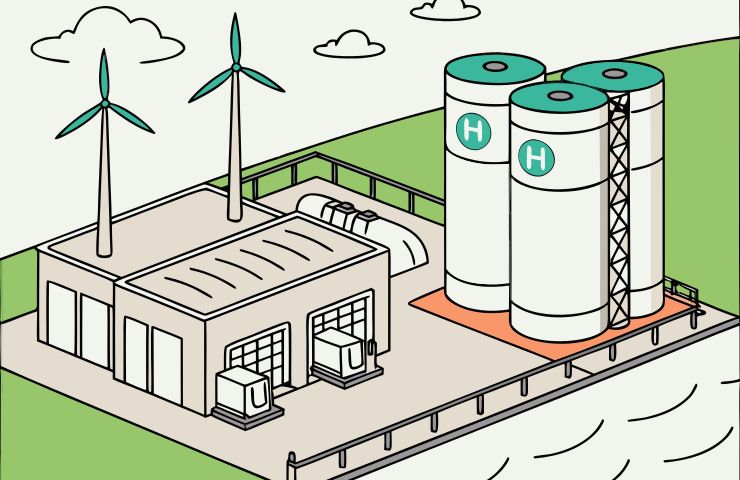
To scale these stacks from testing phases to full-fledged deployments, we need robust hydrogen infrastructure. That means local production facilities, safe storage options, and mobile refueling stations strategically located along drone routes. China’s latest Five-Year Plan has spotlighted the low-altitude economy as a vital growth sector, suggesting potential subsidies and safety standards for handling hydrogen.
Energy companies and infrastructure firms are poised to capitalize. Picture micro-refueling stations at logistics hubs and farm co-ops. Over time, a network of clean fueling stations could support everything from drone taxis to cargo drones transporting heavy equipment across industrial sites.
Economic Ripples
Be prepared for a surge of new opportunities! The extended flight endurance could reshape cost structures:
- Lower operational costs per flight hour with hydrogen instead of battery replacements
- Better payload efficiency means fewer trips to complete the same tasks
- New services like aerial agriculture become viable as paid offerings, along with inspection contracts and emergency response subscriptions
- Investment opportunities in catalytic materials, membranes, and compressor technologies
Experts predict the global low-altitude economy could blossom into a multi-billion-dollar sector in the next decade. Local manufacturers, fuel suppliers, and service providers stand to gain a first-mover advantage.
Global Race
The successes in Dalian have intensified the global race for hydrogen-powered flying. In the U.S., companies and research groups are developing similar fuel cell stacks, while European startups focus on hydrogen drones to serve logistics needs. There's even increased military interest in quiet, long-endurance surveillance drones. The team in Dalian isn’t just racking up records—they're establishing a foothold in a future market where range, payload capacity, and reliability can make or break the competition.
Looking Beyond the Horizon
The environmental benefits hinge on the methods used to produce hydrogen. Currently, much of it is generated from natural gas, but real breakthroughs will happen when green hydrogen from renewable-powered electrolysis takes over. That shift would mean these drones not only fly farther but do so with completely zero carbon footprints.
Final Shot
This isn’t just a one-time experiment—it’s a glimpse into a new world where drones rely on hydrogen storage and innovative fuel cell stacks to revolutionize logistics, inspections, and emergency responses. Are you ready to rethink flight? Buckle up—the skies are about to get busier, cleaner, and a whole lot more capable.