Hydrogen Fuel Cell News: Federal Pacific to Supply Switchgear for Bloom Energy SOFCs in AI Data Centers
Federal Pacific will supply medium-voltage switchgear and engineering services to integrate Bloom Energy’s SOFC systems into AI data centers, marking a step forward for hydrogen fuel cell-powered on-site generation.
AI data centers are shaking things up in the power infrastructure scene, and fuel cell technology is rising to meet the challenge. Just earlier this month, Federal Pacific snagged a contract with Bloom Energy to provide medium-voltage switchgear and engineering services for a big AI data center project. This deal is a game changer—it shows that as the demand for computing power skyrockets, the traditional power grid just can’t keep up, pushing companies to look for on-site power sources like solid oxide fuel cell (SOFC) systems.
With this agreement, Federal Pacific will roll out specialized switchgear that’s designed to link Bloom's SOFC power modules straight into the electrical networks of data centers. Instead of twiddling their thumbs waiting for years for new transmission lines or upgrades, operators can get on-site generation up and running in a fraction of the time. This nimbleness cuts down on permitting delays and lessens dependence on utility timelines. Clearly, hydrogen infrastructure and decentralized energy models are picking up steam in the data center industry.
Bridging the Gap in Power
These hyperscale data centers consume hundreds of megawatts continuously, which is like powering tens of thousands of homes! Recent research indicates that U.S. data center energy usage could nearly double in just a few years as AI workloads grow. That’s creating a bottleneck for utilities: new generation and transmission projects generally take years to build, while data center operators need power *right now*. Enter distributed generation.
SOFC systems are pretty nifty. They generate reliable, continuous power by converting fuel—think natural gas, hydrogen, or biogas—into electricity through electrochemical reactions, all while avoiding grid limitations. For AI data centers that operate around the clock, having a steady baseload of power is a major selling point. But just slapping in these generators isn’t enough; you need robust distribution gear to manage variable outputs, protect against faults, and integrate smoothly with the grid.
Getting to Know SOFC
Solid oxide fuel cells operate at impressively high temperatures—up to around 1,000°C. They use a ceramic electrolyte that allows oxygen ions to flow from the cathode to the anode. At the anode, these ions react with hydrogen or reformed hydrocarbons, creating electricity by releasing electrons. Plus, with heat recovery, the overall system efficiency can exceed 70%, making SOFC one of the leading hydrogen fuel cell technologies out there.
Unlike many fuel cells that depend on pricey metal catalysts, SOFCs use more readily available ceramic materials. This not only drives down material costs but also offers longevity that’s perfect for mission-critical data center environments. And let’s not forget the minimal emissions produced during this process. When hydrogen is the feedstock? You’re looking at near zero-emission operations—something that’s becoming increasingly important for companies aiming to meet sustainability goals.
Switchgear: An Unsung Hero
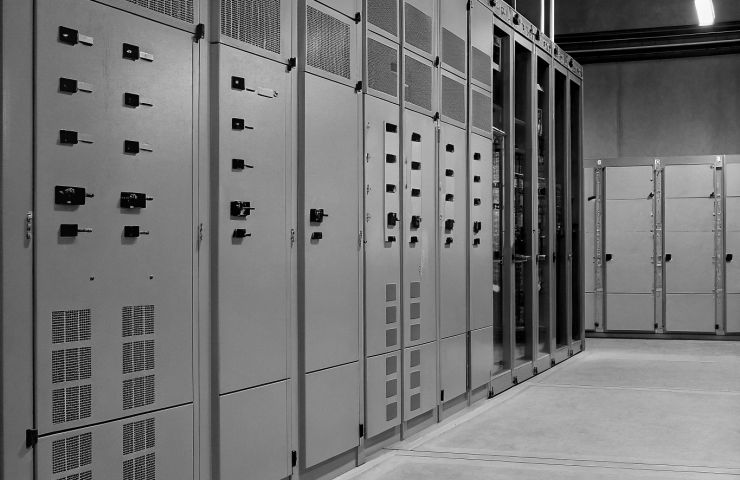
Switchgear is essential in any electrical system; it controls, protects, and isolates circuits. In a hybrid setup that combines SOFC and grid power, medium-voltage switchgear must be able to handle fluctuations in generator output, detect faults rapidly, and reroute electricity on the fly without causing interruptions. Federal Pacific’s equipment includes circuit breakers, protective relays, and reclosers that automatically restore power after minor hiccups.
By supplying modular switchgear units made for distributed energy resources, Federal Pacific empowers operators to smoothly bring fuel cell arrays online. The equipment also supports voltage regulation, syncs with grid frequency, and allows for maintenance isolation—meaning parts of the system can be serviced without taking down the entire data center. In short, effective hydrogen infrastructure isn’t just about having fuel cells; it’s about creating a seamless electrical interface that prioritizes high reliability.
Market Trends and Financing
This contract comes on the heels of several significant deals for Bloom Energy. Earlier this year, American Electric Power (AEP) expanded its commitment to snap up up to 1 GW of SOFC capacity in a multi-billion-dollar agreement, while Oracle turned to Bloom for nearly 3 GW to support its cloud and AI services. Plus, with a solid financing framework from Brookfield Asset Management, companies can switch to power-as-a-service models, transforming hefty upfront investments into manageable operating expenses.
All these developments highlight a broader wave of investment in decentralized energy. Investors and equipment suppliers are eager to tap into the value of hydrogen production, distributed power, and hydrogen storage solutions. For Federal Pacific, landing this switchgear contract is more than just a victory for one project—it’s a strategic position in a rapidly expanding space where fuel cell technology meets the demands of large-scale computing.
The Growing Importance of Hydrogen
While many SOFC units still run on natural gas, the path to green hydrogen is becoming clearer. As electrolyzer deployments ramp up and renewable energy costs continue to decrease, it’s getting more practical to mix in or completely substitute hydrogen feedstocks. This shift could transform data centers in remote areas into almost zero-emission facilities—turning a purely performance-driven solution into a crucial element in industrial decarbonization.
Moreover, on-site SOFC installations can take advantage of hydrogen storage systems to buffer supply, ensuring smoother operations during grid outages or fluctuations in fuel supply. The seamless integration of hydrogen production, storage, and distributed generation lays the groundwork for robust, zero-emission energy hubs that could not only power data centers but also serve microgrids, industrial parks, and critical infrastructure networks.
In the end, this partnership between Bloom Energy and Federal Pacific underscores how the different components of the hydrogen and fuel cell puzzle are beginning to fit together. We’re moving beyond pilot projects; this is about mainstream deployment, supported by financing, engineered for integration, and driven by an urgency to tackle power bottlenecks.
Looking ahead, expect more players to get involved. Traditional switchgear manufacturers, electrolyzer producers, and grid operators are all investigating how to align themselves with this new energy landscape. Those who act quickly to develop compatible products and services could find themselves at the forefront of the hydrogen infrastructure build-out—one that’s changing the way we power our most demanding applications.
About the Companies
Bloom Energy is a U.S.-based company focused on solid oxide fuel cell power generation for on-site electricity. Based in Sunnyvale, California, they’ve experienced remarkable growth serving AI data centers and other enterprises.
Federal Pacific, a part of Electro-Mechanical Corporation, manufactures medium-voltage switchgear and electrical control products for power generation, transmission, and distribution. Located in Bristol, Virginia, the company is setting itself up as a key supplier for renewable energy infrastructure.