
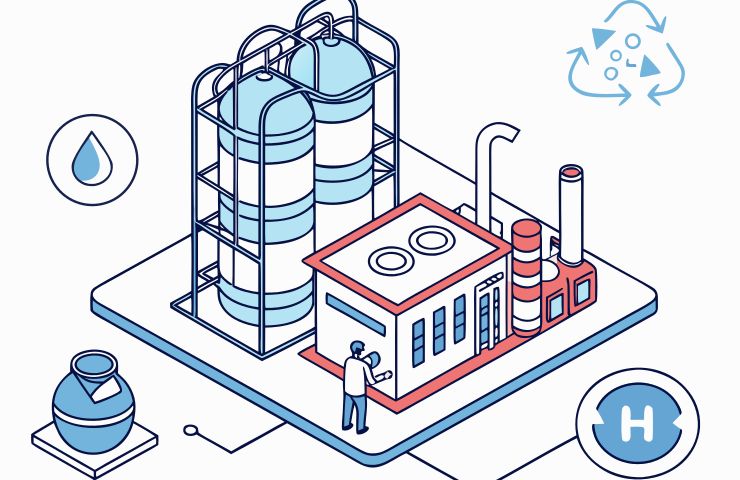
Hydrogen Fuel Cell Recycling Market Expands to Meet PGM Demand
March 27, 2026Ever wonder what happens when those shiny fuel cell stacks in EVs or backup generators finally call it quits? In the world of clean energy transition, building up fuel cell technology is only half the story; the real magic lies in how we handle them at end-of-life. That’s where hydrogen fuel cell recycling swoops in, turning yesterday’s tech into tomorrow’s treasure through critical materials recovery and keeping our circular economy dreams alive.
Core Numbers
Recent figures from BCC Research peg the hydrogen fuel cell recycling market at roughly $358.7 million in 2024, with eyes on the prize growing to $762.4 million by 2030. That’s a solid 14.5% CAGR, driven by more and more stacks retiring from transport, stationary power sites, and portable units—all feeding into recycling streams.
Heads up, though: some analysts are even more bullish, forecasting a leap from about $740 million today to north of $2 billion by the mid-2030s. Methodologies vary, so if you’re in the camp that loves a safe bet, stick with BCC’s baseline—unless you’ve got a high tolerance for hope-fueled scenarios.
Market Drivers
By the end of 2025, global deployments of fuel cell technology topped 1.2 million units, with over 70,000 hydrogen-powered vehicles on the road in 2024. As warranties run out and fleets or backup generators retire, recycling steps up to reclaim precious platinum group metals—namely platinum and palladium—while ticking off stricter decarbonization rules that reward circular practices.
Sure, transportation gets the spotlight, but don’t sleep on stationary setups for data centers and telecom towers or portable power packs for off-grid adventures. They all contribute to the feedstock, making critical materials recovery not just a buzzword but a necessity.
Historical Context
Believe it or not, fuel cell technology isn’t fresh off the lab bench—it dates back to the 1960s when NASA banked on it for space missions. Fast-forward to the 2010s, and commercial models hit the road at scale. Now, those pioneers are aging out, sparking the first real wave of recycling demand.
Process Snapshot
First things first: technicians go hands-on with manual or semi-automated disassembly, peeling off the membrane electrode assemblies (MEAs) from the bipolar plates. From there, it’s a choice between high-temperature smelting (pyrometallurgy) or acid leach baths (hydrometallurgy) to set free the precious metal catalysts.
Each retired cell can yield about 30–60 grams of platinum, plus smaller chunks of palladium and rhodium. The extracted salts then get cleaned up, converted back into catalyst precursors, and looped into new MEA production—literally closing the loop in our circular economy.
Regional Focus
Asia Pacific is the undisputed frontrunner. Japan’s been piloting recycling schemes for years, South Korea just greenlit large-scale hydrometallurgical plants, and China—the biggest adopter of fuel cells—is fast-tracking standards to lock in domestic PGM supplies.
Meanwhile, Europe is busy weaving strict recycling mandates into its Green Deal playbook, and North America is still hashing out incentive programs. That policy patchwork can turn cross-border material flows into a bureaucratic maze unless stakeholders unite around harmonized rules.
Benefits & Strategic Importance
Resource conservation: Tapping recycled PGMs can shave thousands of ounces off new mining quotas, sparing sensitive ecosystems. Cost savings: Secondary platinum often runs 20–30% cheaper than virgin metal, boosting margins on fresh MEAs.
Environmental gains: Lifecycle analyses show recycling can cut greenhouse gas emissions by up to 50% compared to digging and processing ore. Plus, it sidesteps tricky waste disposal scenarios, giving operators a lighter footprint.
Supply chain security: With about 80% of global platinum coming from just Russia and South Africa, having a domestic hydrogen fuel cell recycling pipeline is like an insurance policy against price spikes and geopolitical hiccups.
Challenges Ahead
Process efficiency is a big one—legacy smelters weren’t built for today’s thin-film catalysts, and hydrometallurgical setups can choke on mixed-chemistry feeds. We need R&D to crank out higher-throughput, lower-energy extraction methods.
Then there’s the mess factor: spent membranes and leftover chemicals can pose environmental or safety headaches, demanding strict handling protocols and compliant waste management.
On top of that, regulatory fragmentation means shipping end-of-life cells across borders can be a logistical and legal headache, undercutting the economics unless we get global standards in place.
Finally, precious metals aren’t just for fuel cells—automotive catalysts and electronics are in on the hunt, driving up demand and muddying price forecasts for recycled PGMs.
Analyst Take
If you ask me, the real bottleneck in the hydrogen game isn’t building huge electrolyzer farms or laying fuel lines—it’s the back end: scaling up hydrogen fuel cell recycling to keep materials flowing. Otherwise, we risk project delays and sticker shock as metal supplies tighten.
Policymakers should step in with recycling quotas and fund next-gen R&D, while companies form alliances to share best practices, standardize processes, and bankroll industrial-scale recycling hubs before supply squeezes bite.
Final Insight: Nailing the clean energy transition means playing the long game. The next breakthrough in fuel cell technology won’t come from stacking more cells; it’ll come from perfecting the closed-loop recycling that fuels them with the metals they crave.


 With over 15 years of reporting hydrogen news, we are your premier source for the latest updates and insights in hydrogen and renewable energy.