Hydrogen Fuel Cells: Hyundai Debuts HTWO Platform in Japan
March 23, 2026If you’ve been keeping an eye on hydrogen fuel cells in Japan, Hyundai Motor Group’s latest reveal at the H2&FC EXPO was impossible to miss. Over three action-packed days at Tokyo Big Sight, Hyundai rolled out HTWO, its brand-new hydrogen platform, showcasing everything from hydrogen production and storage to real-world mobility and utilization. It was a clear signal: they’re all in on sustainable energy.
HTWO: A Full-Chain Hydrogen Ecosystem
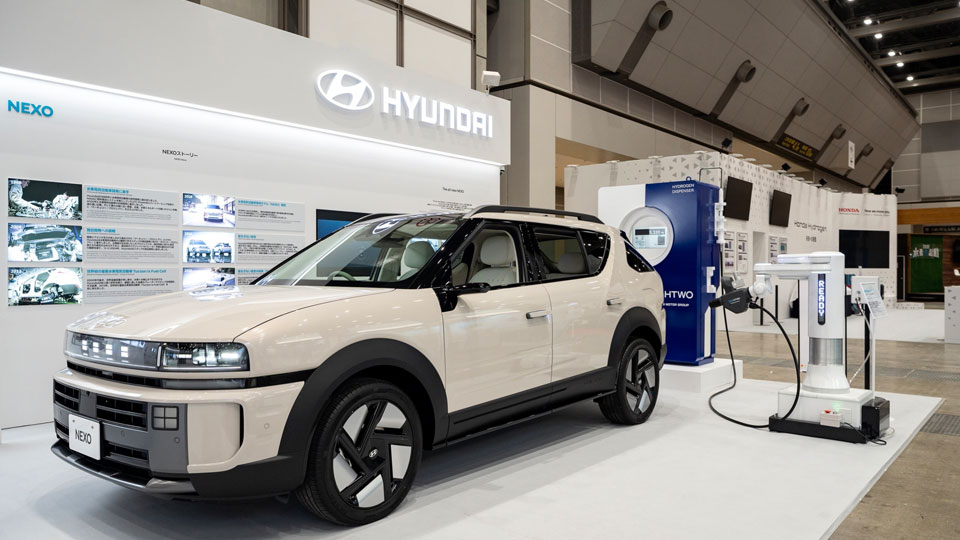
HTWO isn’t just a collection of standalone products—it’s a seamless ecosystem built to handle hydrogen infrastructure from A to Z. On the expo floor, you could see water electrolyzers pumping out green hydrogen, compression units stuffing it into high-pressure tanks, and sleek refueling stations primed to deliver fuel at the exact flow rates modern vehicles demand.
But the real magic happens behind the scenes. HTWO layers in digital monitoring, predictive maintenance and remote diagnostics so fleets stay on the road with minimal fuss. Once hydrogen hits the tank, it feeds into the fuel cell stack’s membrane electrode assembly, where a catalyst kicks off an electrochemical reaction that produces electricity (and a bit of water). That clean power then drives electric motors, powers cabin systems or even runs industrial robots like Hyundai’s ACR-H inspection platform.
Hydrogen Production and Storage: The Electrolysis Edge
At its core, HTWO relies on green hydrogen made by electrolysis—splitting water with renewable juice. While Japan’s electrolyzer capacity is still ramping up, Hyundai’s showcase suggests big growth is on the horizon. They highlighted tanks holding hydrogen at up to 700 bar, ticking off all the requirements for next-gen fuel cell electric vehicles.
Pressure’s just part of the story: the right materials and engineering make all the difference. Those composite overwrapped pressure vessels cut weight and slash contamination risks, so fuel cell efficiency stays rock-solid after countless fill-ups. Hyundai’s team has fine-tuned sealing and thermal controls to ensure stability, whether you’re darting through city streets or hauling freight cross-country.
Fuel Cell Stack Innovations
Peek under the hood of any FCEV and you’ll find the fuel cell stack—the beating heart of fuel cell technology. Hyundai’s latest design trims back on platinum-group metals to bring costs down, while intelligent water and heat management keeps performance steady under all sorts of load conditions. The expo’s cutaway models let attendees eyeball each layer—from the polymer electrolyte membrane to the gas diffusion layers—showing how efficiency, durability and scalability come together.
These stacks aren’t one-size-fits-all. They can crank out just a few kilowatts for shuttle buses or scale up to several hundred kilowatts for coaches and trucks. That flexibility lets OEMs pick the perfect system for stop-and-go city routes or marathon logistics runs.
NEXO’s New Role in Disaster Resilience
One of the expo’s standout demos was the Japan-spec NEXO SUV, revamped for 2026. It still uses hydrogen to generate electricity, but now boasts an impressive 720 km range and a five-minute refuel time. Even cooler? It packs Vehicle-to-Home (V2H) capability, so in a blackout it can power a household grid. In quake-prone regions, it’s basically a mobile backup generator.
Strategic Entry into Japan’s Hydrogen Market
Japan has championed hydrogen since the Fukushima crisis exposed the risks of centralized power. With limited domestic fuels, the country imports most of its energy and sees hydrogen as a path to energy security and decarbonization. By launching HTWO here, Hyundai taps into incentives under the Basic Hydrogen Strategy and syncs up with efforts to expand hydrogen infrastructure nationwide.
Held twice a year as part of Smart Energy Week, the H2&FC EXPO attracted around 300 exhibitors and hosted 21 conference sessions. Hyundai’s booth felt like a magnet for partners and investors eager to see how HTWO could fit into their own plans. On day two, Duckwhan Kim, VP of Hydrogen and Fuel Cell Engineering Design Group 1, was slated to walk through Hyundai’s fuel cell journey and detail its FCEV lineup.
Building on a Decade of Fuel Cell Leadership
Hyundai’s no stranger to this space. Back in 2013, they rolled out the Tucson ix35 Fuel Cell—the world’s first mass-produced FCEV. The NEXO arrived in 2018 with better range and efficiency, and in 2020 they launched the Xcient fuel cell truck, the first mass-produced hydrogen-electric heavy-duty vehicle. In 2024, they introduced HTWO globally, and now they’re bringing that expertise back to Japan after more than a decade of R&D and real-world testing.
Partnerships and Collaboration Models
What really sets HTWO apart is its open-platform philosophy. Hyundai is inviting energy producers, infrastructure specialists and municipal authorities to plug into the network. It’s a team sport—one Hyundai champions as co-chair of the Hydrogen Council, where industry leaders work on standards and policies to scale up the market.
At the expo, they even demoed a cloud-based dashboard that pulls in real-time data on hydrogen purity, station uptime and fuel cell performance. Operators can get alerts on pressure dips or temperature spikes and schedule maintenance before things go sideways. Bundling hardware with software like this smooths out the bumps that often slow down hydrogen rollouts.
Market Impacts and Future Outlook
Hyundai’s timing couldn’t be better. While battery electric vehicles flood the passenger car market, hydrogen fuel cells really shine in heavy-duty transport and backup power—areas where batteries struggle with energy density and long recharge times. By offering buses, trucks and V2H-capable cars, Hyundai is positioning hydrogen as a versatile pillar of the sustainable energy mix.
Plus, the need for refueling stations equipped with electrolyzers, compressors and storage gear creates fresh opportunities for equipment makers. Hydrogen producers stand to gain from long-term offtake agreements through HTWO. In effect, Hyundai isn’t just selling vehicles; they’re scaffolding an entire ecosystem spanning production, logistics and end use.
We’re expecting pricing details for the redesigned NEXO to land in the first half of next year, along with test drives for registered expo attendees. And the real acid test will be watching Hyundai’s hydrogen buses and Xcient trucks in commercial service—proof that fuel cell technology is truly ready for prime time.
What Lies Ahead
As the world steers toward a carbon-neutral future, the HTWO launch in Tokyo shows how far fuel cell technology and hydrogen infrastructure have come. It’s a reminder that the race to net-zero runs on both electrons and molecules—and that hydrogen is gearing up to play a starring role.
 With over 15 years of reporting hydrogen news, we are your premier source for the latest updates and insights in hydrogen and renewable energy.