
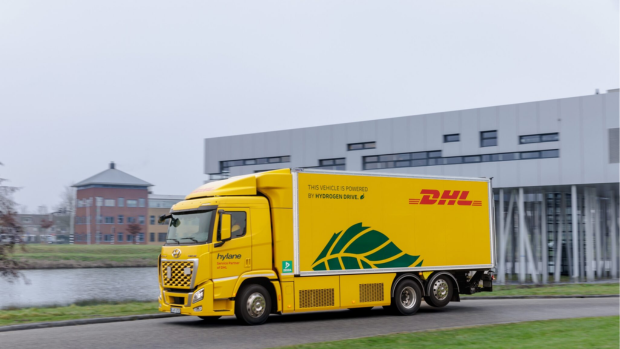
Hydrogen Fuel Cells Power DHL Freight’s Diesel-Free Truck Pilot in the Netherlands
March 1, 2026Back in January 2026, DHL Freight kicked off its first hydrogen-powered truck pilot at the Eindhoven terminal in the Netherlands. Covering roughly 300 kilometers each day, it’s all about putting hydrogen fuel cells through their paces in a real-world logistics setting—and gathering the insights needed to go fully diesel-free by the end of the year. The truck’s on loan from hylane under a transport-as-a-service setup, run day-to-day by Schuurman Logistics, and it fills up at a station managed by Teal Mobility—the joint venture of Air Liquide and TotalEnergies. It’s a neat fit with DHL Group’s net-zero 2050 goals and its commitment to the Science Based Targets initiative.
Pilot Details
The hydrogen truck is based at the Eindhoven hub in North Brabant, a logistics hotspot thanks to its highway connections. Each day, it makes trips into the provinces of Overijssel and Gelderland, racking up roughly 300 kilometers—just the right stretch to see how range holds up, how fast it can refuel, and how well it slots alongside diesel schedules. Drivers put it through its paces on quiet country lanes, in industrial estates, and around city outskirts. By mirroring the day-to-day grind, any insights we unpack here can feed straight into a larger fleet rollout.
Strategic Implications
On the business side, this pilot is all about building a solid case for industrial decarbonization. By logging real-world numbers—fuel use per kilometer, refueling station uptime, and maintenance intervals—DHL Freight can crunch total cost of ownership (TCO) figures against traditional diesel trucks. Quick fill-ups and reliable range cut down on wasted time, keeping deliveries on track. Plus, proving it works day in, day out could nudge procurement teams, shape customer contracts, and open doors with EU regulators as they tighten greenhouse gas targets. Carriers showcasing zero-emission technology might snag public funding or green-zone perks, and clients chasing sustainability brownie points will see hydrogen solutions as a real competitive edge.
Technology Spotlight
This trial leans on a few core components:
- Fuel Cell Powertrain: The on-board stack converts compressed hydrogen into electricity, so the only thing coming out of the tailpipe is water vapor. It covers 300+ kilometers a day and refuels in under 15 minutes.
- High-Pressure Storage: Tanks hold hydrogen at 350–700 bar, balancing energy density with safety. They’ve undergone rigorous European transport testing.
- Refueling Station: Managed by Teal Mobility, this station nails hydrogen purity and pressure consistency for seamless fueling cycles.
- Safety Systems: Leak detectors and automatic shutoff valves meet strict European standards, so safety’s always front and center.
- Data Telemetry: Sensors stream real-time data on pressure, temperature, and efficiency to a platform that powers predictive maintenance and performance tweaks.
Transport-as-a-Service Model
Since hylane provides the truck under a transport-as-a-service deal, DHL Freight avoids a hefty upfront investment and the headaches of residual value. Payments are per kilometer, which pushes teams to map out routes efficiently. The package also includes maintenance support and integrated telematics from hylane, so there’s less juggling of vendors. With most of the financial risk on the service provider, DHL Freight can zero in on testing performance and making on-time deliveries without tying up its own balance sheet.
Infrastructure and Partnerships
This pilot doesn’t fly solo; it relies on a solid hydrogen infrastructure ecosystem. Teal Mobility—the JV between Air Liquide and TotalEnergies—handles hydrogen supply and keeps the station humming. Building and running these hubs takes serious capital and know-how, so teaming up means DHL Freight taps a proven network, while Schuurman Logistics brings local carrier expertise and trained drivers. It’s a blueprint any carrier could borrow to slash planning times and dial down technical risks.
Historical Context
This isn’t DHL Group’s first rodeo with hydrogen trucks, but it marks the shift from lab bench to commercial roads. Back in 2021, DHL Express piloted a fuel cell truck in the Benelux under the Interreg NW Europe H2-Share program, logging about 200 kilometers a day with Apple. That early run proved the basics—fueling logistics and vehicle integration—could work. Today’s Eindhoven pilot scales things up, aiming to show hydrogen isn’t just a neat experiment but a practical near-term solution for heavy-duty routes, especially where battery charging can’t keep up.
Key Takeaways
- Zero-emission technology is already practical for medium-haul operations, filling the gaps left by pure battery-electric trucks.
- Strong hydrogen infrastructure, powered by Teal Mobility, is non-negotiable for reliable daily service.
- Transport-as-a-service lowers barriers to entry by shifting costs and risk off the operator.
- Real-world data will drive DHL Freight’s decarbonization strategy and raise the industry bar.
- Scaling up could unlock fresh investment in green hydrogen production and speed deployment across Europe.
Looking Ahead
Over the rest of 2026, all eyes are on uptime, TCO, emissions cuts, and driver feedback. If the numbers stack up, expect a wave of hydrogen truck orders and new station builds at DHL Freight sites across Europe. Down the road, the big question is whether these trucks can match up to diesel and battery-electric alternatives on cost—especially as green hydrogen scales up. Whether that hydrogen comes from renewable-powered electrolysis or blue hydrogen with carbon capture will be key to the overall environmental payoff. For shippers and investors alike, this pilot underlines hydrogen’s rising role in sustainable logistics and its promise for genuine industrial decarbonization.

 With over 15 years of reporting hydrogen news, we are your premier source for the latest updates and insights in hydrogen and renewable energy.
