
Hydrogen Fuel Cells Training System Strengthens South Africa’s Green Hydrogen Skills
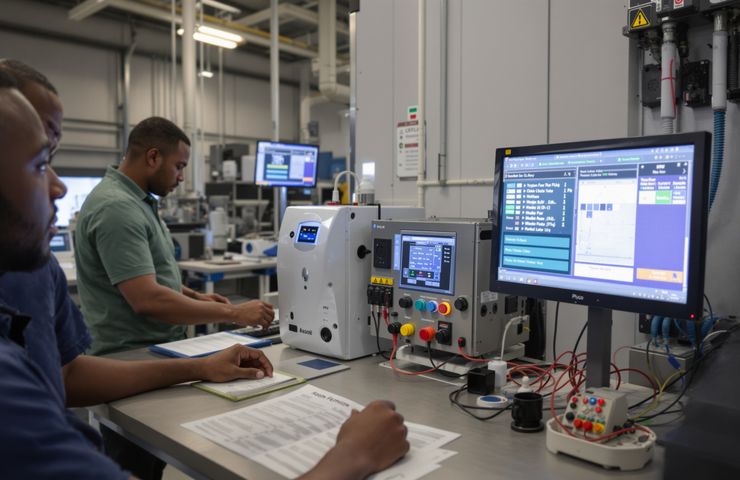
April 13, 2026This April, in a real boost for skills development in the green hydrogen arena, CHIETA and Sasol quietly rolled out a brand-new industry-integrated Green Hydrogen Fuel Cell Training System at Sasol’s Sasolburg facility in South Africa’s Free State. Partnering with Germany’s go-to fuel cell education whizzes at Heliocentris, they’ve built a hands-on playground centered on a working 50W hydrogen fuel cells unit and solar PV modules. The goal? Give learners a genuine feel for how renewable electricity and gas tech mesh—an essential step as South Africa steams ahead on its journey to sustainable energy and robust hydrogen infrastructure.
Hands-On Learning at the Core
At the heart of the setup sits a live 50W PEM fuel cell. Trainees hook up hydrogen lines, snap membrane electrode assemblies into place, then watch voltage, current and temperature dance in real time. They tweak pressure or humidity on the fly to see exactly how performance shifts. Solar panels feed an electrolyser emulator, so you can simulate everything from off-grid power on a remote farm to grid-tied installations in a city. Switching between gas and electric inputs, learners get a holistic view of hydrogen production, storage and use. And because safety’s non-negotiable, the curriculum covers gas purging, leak detection, emergency shutdowns and routine cell stack upkeep—stuff you rarely get in a textbook lecture.
Adapted to Local Needs
Fuel cell training isn’t brand-new—Europe and Asia have had similar rigs for a while. What makes Sasolburg special is its local flavour. Heliocentris tweaked the hardware to meet IEC and SANS standards that South African industry lives by. That means students aren’t wrestling with imported gear that doesn’t match local wiring rules or safety regs. Instead, they’re learning on a system built for the market they’ll actually work in, smoothing the path from “classroom” to “control room.”
Partnership Model and Funding
This whole thing sprang from a partnership inked in April 2024, when CHIETA—the statutory body steering skills development in South Africa’s chemical and related sectors—teamed up with Sasol to draft a curriculum for a budding hydrogen economy. With R1.8 million in government backing secured last year, they moved fast from proposal to practical reality. It’s a textbook public–private mash-up: public funds to clear the runway, private assets to build and operate the jet.
By hosting the trainer at Sasolburg, they tapped into decades of operations in synthetic fuels and chemicals. Sasol’s engineering teams, safety protocols and specialized labs are on hand, giving trainees exposure few standalone colleges could match.
Bridging the Skills Gap
South Africa aims to export boatloads of green hydrogen and derivatives like clean ammonia, but there’s a catch: the country needs thousands of skilled technicians, engineers and compliance officers to install and maintain electrolysers, storage tanks and fuel cell systems. CHIETA’s 2022 skills study flagged a big hole in practical training on gas handling, system integration and performance tuning. This platform plugs that gap, letting participants assemble systems, run diagnostics and troubleshoot—so they hit the ground running in renewable energy companies, utilities or consultancies.
Plus, with modules on gas analysis, digital sensors and data logging, trainees get comfy with the software and hardware pros use in the field. And beyond the tech, there’s a real push on safety culture—handling high-pressure hydrogen isn’t for the faint-hearted, so best practices become second nature.
Regional and Economic Impact
Sasolburg has been an industrial powerhouse ever since Sasol started turning coal to liquids in the mid-20th century. Today it’s a chemical and energy hub, making it the perfect testbed for decarbonization. By planting this training system here, CHIETA and Sasol hope to spark local supply chain growth—from component assembly to specialized maintenance services.
On the national stage, South Africa’s hydrogen strategy targets thousands of tonnes of green hydrogen by decade’s end, fueled by a carbon tax and renewable energy auctions. Training rigs like Sasolburg’s are mission-critical if the country’s going to staff and maintain electrolyser plants, fuel cell power assemblies and the wider hydrogen infrastructure needed to hit those goals.
Technical Deep Dive: Fuel Cell Operations
The 50W unit uses a polymer electrolyte membrane (PEM) as its solid electrolyte, shuttling protons from anode to cathode. At the anode, hydrogen gas splits into protons and electrons. Protons sail through the membrane, electrons take the scenic route via an external circuit—voilà, electric current. Over at the cathode, protons, electrons and oxygen reunite to form water. A suite of sensors tracks pressure differences, membrane humidity and cell voltage, sending data to a controller so trainees can see efficiency swings and degradation in action. Tweaking gas flow or temperature, they explore the trade-offs that bring textbook theory to life.
About the Partners
CHIETA (Chemical Industries Education and Training Authority) steers skills programs in South Africa’s chemical sectors. Their 2022 hydrogen-economy skills study laid bare the need for hands-on, practical modules—gaps this training system plugs.
Sasol is a South African energy and chemicals giant that cut its teeth on coal-to-liquids before branching into cleaner pathways like hydrogen. As a CHIETA partner, Sasol offers industrial-scale safety systems, engineering expertise and its Sasolburg campus for real-world learning.
Heliocentris, based in Germany, crafts educational fuel cell and hydrogen training platforms worldwide. Their gear meets international standards—and this Sasolburg deployment is one of their first custom fits for African industry norms.
Scaling and Next Steps
Looking forward, CHIETA plans to roll the curriculum out to vocational colleges, private training centres and accredited providers across South Africa. While the Sasolburg rig currently handles small cohorts—around a dozen learners per session—future builds could feature multiple fuel cell stacks, larger electrolysers and cloud-based data dashboards. They’re even eyeing digital twins for remote labs and virtual simulations to complement the hands-on work.
Sasol will track graduate metrics—course completions, job placements and on-site performance boosts. Early feedback shows participants love working with live gas flows and capturing dynamic responses. If these wins translate into smoother project starts and fewer safety hiccups, this model could catch on in other sectors eager to upskill their teams.
Broader Implications for Industrial Decarbonization
As nations race toward net-zero, gearing up the workforce is just as crucial as deploying the tech. Hands-on platforms like Sasolburg’s give technicians real-world chops before they hit commercial sites. They also spark collaboration between statutory bodies, global technology providers and private industry—proof that smart partnerships can smooth the road to sustainable energy transitions.
With similar setups on the horizon in coastal provinces—key for export logistics—the ability to standardize training nationwide will become a strategic edge. In the end, the trio of policy support, targeted funding and hands-on expertise could be what pushes South Africa from importing skills to exporting clean energy solutions.


 With over 15 years of reporting hydrogen news, we are your premier source for the latest updates and insights in hydrogen and renewable energy.