

Hydrogen Fuel Cells: UK’s First Zero-Emission HydroShunter Hits the Tracks
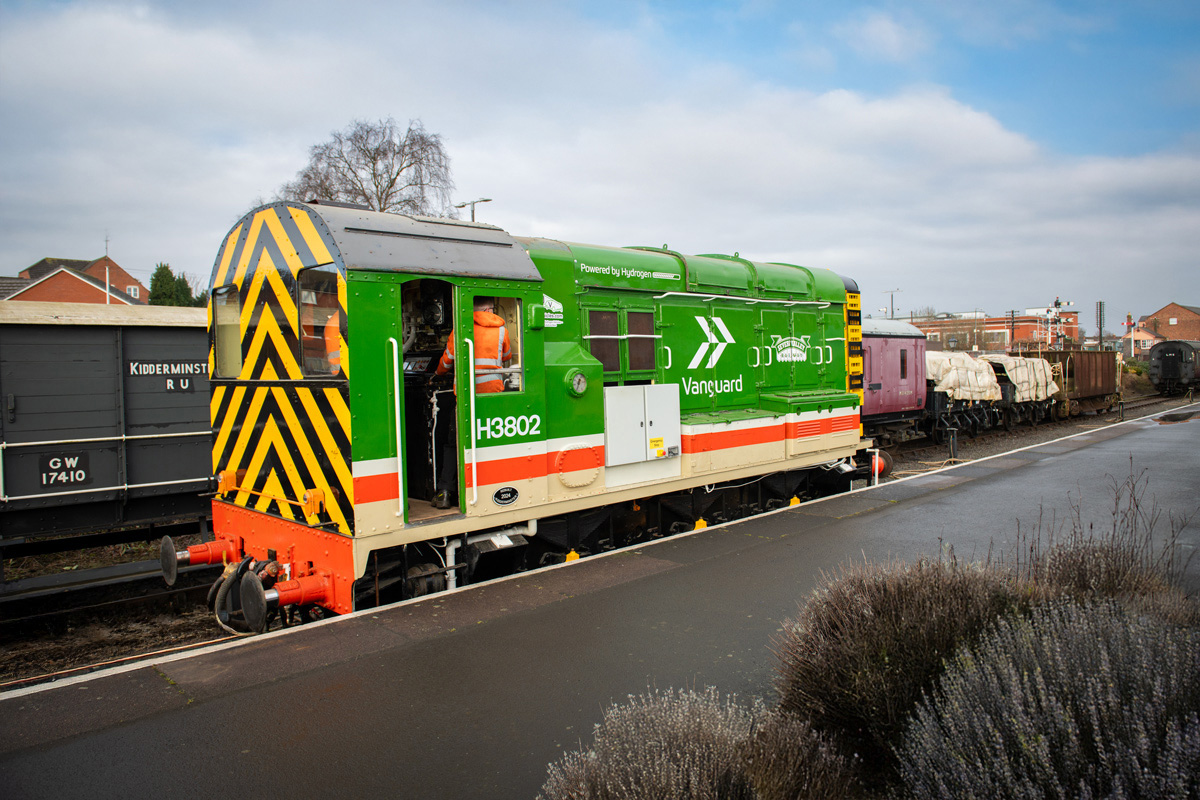
March 5, 2026Just now, Vanguard Sustainable Transport Solutions and the volunteer-run Severn Valley Railway celebrated a real milestone at Kidderminster Town station in the West Midlands: the unveiling of the HydroShunter, the UK’s very first commercial hydrogen-powered shunting locomotive. A clever retrofit of a classic Class 08 diesel, this project underscores what’s possible when you marry proven machinery with cutting-edge hydrogen fuel cells and modern fuel cell technology. It’s a proof-of-concept for decarbonising shunting fleets cost-effectively by breathing new life into heritage assets.
Key Facts at a Glance
- Who’s behind it: Vanguard Sustainable Transport Solutions + Severn Valley Railway
- Base model: 1950s-built Class 08, 50 tonnes, 1,435 mm gauge
- Powertrain: modular NEO1 system with an 80 kW hydrogen fuel cell, 230 kWh battery, up to 60 kg of H₂
- Performance: 250 kW peak traction power, top speed of 15 mph, roughly 20 hours runtime
- Mission: slash emissions and costs by extending service life of existing units
From Legacy Diesel to Zero-Emission Shunter
Those reliable Class 08 shunters—chugging around rail yards since the 1950s—were starting to show their age. Vanguard’s engineers stripped out the old diesel prime mover, kept the mechanical drive and control systems, and slid in the modular NEO1 powertrain. After a round of battery-only commissioning to fine-tune the electronics, the team brought the hydrogen fuel cell stack online under stringent new safety protocols. The result? A depot-ready locomotive that’s silent, smokeless, and free of the familiar roar and clatter of diesel—delivering true zero-emission technology for yard duties.
The Retrofit Journey
It all kicked off with a detailed survey of Severn Valley Railway’s donor Class 08 in their volunteer-run workshops. Engineers mapped every mechanical, electrical, and control interface to fit Vanguard’s NEO1 architecture. Structural changes were kept minimal—mainly reinforcing mounting points for the hydrogen tanks and fitting new ventilation ducts. From the initial strip-out to that first fuel cell start-up, the conversion took about six months. Along the way, rigorous safety checks and leak tests guaranteed compliance with the freshly drafted rail hydrogen standards.
Testing Regime and Performance Data
Commissioning followed a two-stage test programme. First up were battery-only trials to validate the control electronics and drivetrain integration. Once those ran smoothly, engineers introduced the fuel cell, running it under varying loads—including back-to-back shunting cycles over a 12-hour shift. They tracked hydrogen consumption, system temperatures, and power delivery to confirm the design really met day-to-day needs. The verdict? The HydroShunter sails through a full operating day without needing a mid-shift refuel, putting reliability on par with its diesel predecessor.
Maintenance and Lifecycle Considerations
One of the smartest moves was keeping the original traction motors and drive components. Maintenance teams can keep using existing spare parts and draw on decades of depot expertise. Meanwhile, Vanguard’s modular fuel cell and battery containers are designed for quick swap-outs during scheduled overhauls, minimising downtime and slotting neatly into established yard procedures.
Decarbonisation Without Heavy New Investment
Replacing entire shunting fleets can be a heavy capital hit. Retrofitting, by contrast, slashes upfront spend, extends asset life, and delivers immediate emissions cuts—putting industrial decarbonization within reach for more operators. Vanguard’s numbers suggest that once you tally up fuel savings and lower maintenance, the total cost of ownership could rival—or even undercut—a straight diesel switch, though a full TCO analysis is still under way.
Voices from the Field
Dr Alexander Burrows, CEO of Vanguard Sustainable Transport Solutions, says the commercial interest has been overwhelming: “We’re seeing genuine demand for zero-emission technology conversions, from heritage lines to industrial depots.” Gus Dunster, managing director of Severn Valley Railway, adds, “Our volunteers were indispensable—adapting heritage-focused workshops to modern hydrogen systems and proving that passion and expertise can drive real innovation.”
Regulatory Collaboration
Hydrogen in rail is still new territory, so Vanguard teamed up early with the UK Office of Rail and Road and the Rail Safety and Standards Board (RSSB). Together they co-wrote protocols for tank mounting, ventilation, fire detection, and emergency response. Those guidelines for the HydroShunter are expected to feed directly into forthcoming RSSB hydrogen rail standards—paving a smoother path for future retrofit and greenfield hydrogen locomotive projects.
Challenges and Pathways Forward
The HydroShunter proves the concept works, but wider rollout hinges on beefing up hydrogen infrastructure. Today, most depots rely on trucked-in H₂, which ups costs and logistics complexity. Installing depot-based electrolyzers or forging local supply chains will be critical. Plus, aligning safety standards across England, Scotland, and Wales could slash approval times—a big win for operators.
Policy and Market Signals
The UK’s rail decarbonisation strategy targets phasing out diesel-only traction by mid-century, with interim goals for zero-emission depot operations and branch line services. Public funding streams specifically support low-emission retrofit projects, meaning the HydroShunter’s early success could unlock grants and incentives—making upgrades even more affordable.
Global and Comparative Context
Europe’s regional hydrogen trains—Alstom’s Coradia iLint being the poster child—show mainline feasibility. The HydroShunter, however, is breaking new ground in low-speed, high-intensity yard applications. It’s also serving as a testbed for advanced storage materials like metal hydrides, which promise to boost hydrogen packing density by up to 50% on future locomotives.
Economic and Environmental Benefits
By cutting out nitrogen oxides, particulates, and CO₂ at the source, zero-emission shunters support UK net-zero targets and boost local air quality. They’re quieter—so yards can operate later without disturbing nearby communities—and the reduced wear on mechanical parts translates to lower maintenance bills. Scaling retrofits across dozens of units could eliminate thousands of tonnes of CO₂ emissions each year—a major stride for both rail operators and regional air quality.
About the Organisations
Vanguard Sustainable Transport Solutions spun out of the University of Birmingham around 2020, backed by UK Research and Innovation’s clean growth programme. The West Midlands–based SME has quickly become a leader in fuel cell technology for traction, with the NEO1 powertrain now proven on the HydroShunter. Severn Valley Railway, powered by over 200 volunteers, operates preserved steam and diesel locomotives between Kidderminster and Bridgnorth. Their blend of heritage expertise and modern hydrogen safety protocols made this retrofit possible.
Looking Ahead
Full hydrogen commissioning is slated for Q4 this year, with the first commercial contracts expected early next year. Vanguard is already in talks with industrial clients across Europe—from Germany to Spain—to roll out similar retrofits. Severn Valley Railway plans public demonstration runs during peak summer months, complete with static displays and live commentary from the technical team. On the horizon, Vanguard envisions fitting onboard electrolyzers powered by low-cost, off-peak electricity—producing green hydrogen in situ, further reducing supply-chain headaches, and strengthening operational resilience. As hydrogen infrastructure matures, the hum of fuel cells may soon share depots with the echoes of steam and diesel, marking a significant chapter in the rail industry’s shift to a cleaner, greener future.


 With over 15 years of reporting hydrogen news, we are your premier source for the latest updates and insights in hydrogen and renewable energy.