
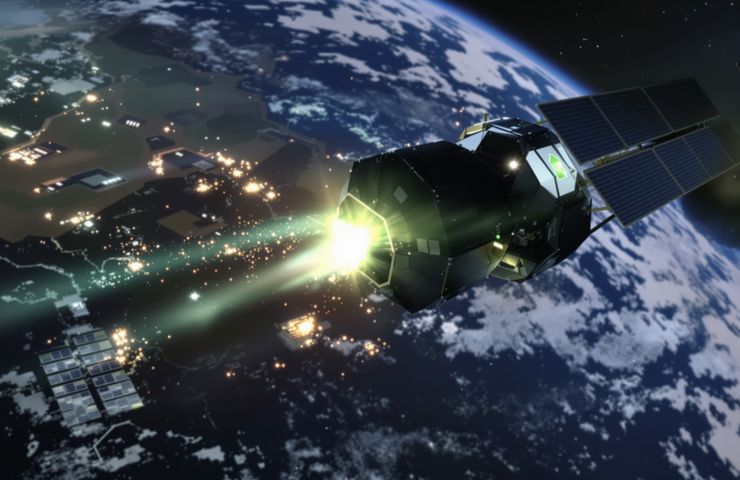
Hydrogen in space: Green Hydrogen Hub in Castellón Fuels Europe’s First Commercial Hydrogen-Peroxide Satellite Propulsion
June 15, 2026Imagine a scenario where the future of sustainable space travel is powered not by conventional hydrogen, but by its lesser-known cousin: hydrogen peroxide. In a charming nook on Spain’s Mediterranean coast, a team of engineers is taking a gamble that high-concentration hydrogen peroxide could lead to greener and safer maneuvers in low Earth orbit. This exciting shift is the result of a collaboration among three key players: Arkadia Space, Reflex Aerospace, and SpaceX. Each brings something unique to the table, and they’re gearing up for a big launch in 2027.
At the heart of this partnership is a contract to provide a complete propulsion system based on hydrogen peroxide. The plan is to send a 200-kilogram satellite, crafted by Reflex Aerospace in Germany, into low Earth orbit aboard SpaceX’s Transporter-20 rideshare mission. Once it’s up there, it will rely on Arkadia’s thrusters to maneuver and orchestrate a well-timed deorbit when it reaches the end of its life cycle. Unlike the traditional hydrazine systems that require complicated safety protocols and specific ground facilities, this “green” option is expected to simplify handling while matching the performance of more toxic propellants.
A New Spin on Green Propulsion
So, how does hydrogen peroxide fit into the picture? In Arkadia’s innovative monopropellant setup, tanks filled with high-concentration peroxide are fed to TRITON 5N thrusters. Inside these thrusters, a catalyst bed breaks down the peroxide into hot steam and oxygen. The end result? An expanding gas plume that delivers about five newtons of thrust per engine, providing the necessary power for station-keeping, orbit raising, and controlled burns. By swapping out hydrazine for peroxide, operators can dodge carcinogenic risks and speed up fueling schedules significantly, especially since many launch sites aren’t equipped for hydrazine handling.
Flight Heritage and Funding Momentum
This isn’t Arkadia’s first rodeo. Their two-year-old demonstration, called the DARK system, already took to the skies on a D-Orbit vehicle in 2025, showcasing Europe’s first in-orbit test of peroxide propulsion. The results from those firings aligned perfectly with ground predictions, boosting confidence in this technology. Meanwhile, Arkadia has secured around €14.5 million from the European Innovation Council Accelerator, which will help ramp up production, enhance testing facilities at Castellón Airport, and hasten their market entry.
For Reflex Aerospace, teaming up is a strategic move into the realm of chemical propulsion. Their CEO, Walter Ballheimer, emphasizes that Arkadia’s system has proven its flight readiness and can be customized to suit specific mission requirements on a tight timeline. This aligns with Reflex’s mission of delivering rapid, flexible satellite buses. By incorporating green thrusters, they signal their commitment to deorbit-capable solutions, especially in a market that’s increasingly focused on sustainability and debris mitigation.
Expanding Europe’s Green Hydrogen Hub
The fact that all this is happening in Castellón is no coincidence. The coastal city is home to a 25-megawatt green hydrogen electrolyzer developed by BP and Iberdrola and is quickly becoming a hotspot for hydrogen innovation. This facility is anticipated to produce about 2,800 tonnes of carbon-free hydrogen each year, primarily for local industrial users, like a nearby refinery. Not only does this plant create valuable knowledge and regulatory experience, but it also fuels supply chains suited for next-generation technologies. Arkadia Space is leveraging this local expertise in handling pressurized hydrogen and operates a unique orbital engine test center at Castellón Airport—a one-of-a-kind asset in Europe.
The synergies don’t stop there. Engineers skilled in hydrogen infrastructure and electrolyzer operation bring a treasure trove of practices in safety protocols, leak detection, and certification—all of which are transferable to managing high-strength peroxide. Plus, the nearby renewable energy sources provide the perfect setting for any future pilot production of hydrogen peroxide to draw from truly low-carbon electrons, effectively tying together green hydrogen production and in-space propulsion.
Implications for Debris and Policy
As satellite launches continue to ramp up, regulators and insurers are pushing for solid end-of-life disposal strategies. Propulsion systems designed for controlled deorbit burns are becoming a must-have under emerging European and international frameworks aimed at reducing space debris. By integrating a deorbit-capable tech from the start, Reflex’s satellite can meet these requirements without any last-minute add-ons. If this mission shows successful in-orbit performance next year, it could further validate the safety and reliability of peroxide propulsion, which may even lead to lower risk models—and insurance costs—for other operators exploring similar eco-friendly options.
This collaboration also aligns with the EU’s goal of building independent capabilities in space technology. Relying on foreign suppliers for hydrazine presents geopolitical, supply chain, and environmental risks. Supporting startups like Arkadia through grants and accelerator programs underscores that hydrogen-peroxide propulsion is not just a niche research project, but potentially a cornerstone of a thriving European ecosystem connecting energy, chemicals, and aerospace.
Of course, there are still hurdles to clear. While hydrogen peroxide is less toxic than hydrazine, it’s still a reactive substance that demands careful material selection to prevent corrosion or decomposition. Ensuring catalyst longevity, storage stability, and thermal management are key areas where real-world data will be more telling than simulations. People in the industry will certainly be keeping a close eye on the telemetry from Reflex’s mission to see if those thruster firings are as predicted and free of surprises.
Beyond the Horizon
So, what happens if everything goes as planned? We could see the emergence of a new market where satellite operators start specifying green chemical propulsion in their bids—not just as an eco-friendly option but as a standard requirement. Labs and testing facilities might pop up in Spain, Germany, and elsewhere, perfecting monopropellant and bipropellant technologies. The line could blur between using green hydrogen for industry and hydrogen-derived fuels for spacecraft, paving the way for collaborations that connect terrestrial energy decarbonization with orbital services.
For now, the engineers in Castellón are busy fine-tuning their flight hardware, knowing full well that the world will be watching when those hydrogen peroxide thrusters ignite against the dark sky. What began as a laboratory concept decades ago could soon transform into the norm for safe, cost-effective, and environmentally conscious space travel—powered by the unassuming H₂O₂ molecule, backed by renewable energy and a booming wave of green hydrogen momentum on the ground.


 With over 15 years of reporting hydrogen news, we are your premier source for the latest updates and insights in hydrogen and renewable energy.