Hydrogen Infrastructure: Cavendish Hydrogen and BHDT Forge NOK 52 Million Equity Deal
Norway’s Cavendish Hydrogen ASA secured NOK 52 million from Austria’s BHDT GmbH for a 15 percent stake, pairing its H2Station™ solutions with BHDT’s high-pressure expertise.
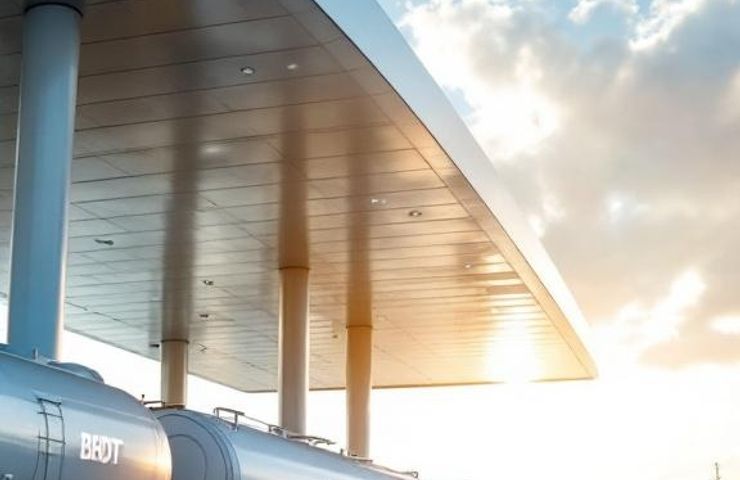
Back in early May, Cavendish Hydrogen ASA made a pretty exciting announcement about a strategic investment from BHDT GmbH. This move really strengthens Cavendish's foothold in the growing world of hydrogen infrastructure. As part of the deal, Cavendish is issuing about 5.94 million new shares, priced at NOK 8.73 each. That adds up to roughly NOK 52 million, or around USD 5.6 million, which gives BHDT a solid 15 percent stake in the company after the investment.
Injecting Capital for Growth
This cash boost is aimed at speeding up project deliveries, ramping up research and development, and scaling up their operations in Europe and North America. The company has laid out plans to use some of this funding for contracts in Italy expected to wrap up in the second quarter, plus an engineering, procurement, and construction (EPC) contract in Germany that's worth between EUR 4 and 5 million. With a beefed-up balance sheet, Cavendish is in a much better position to secure additional hydrogen project financing and compete for infrastructure tenders that are on the horizon.
Here’s a snapshot of how they plan to allocate the funding:
- Advancing research and development for cutting-edge 700 bar compressors and dispensers
- Boosting production at their Oslo headquarters to keep up with demand
- Locking in supply agreements for high-pressure hydrogen storage vessels
- Increasing working capital to tackle an existing backlog of contracts nearing €5 million
A Winning Partnership
This partnership is a great match, combining Cavendish's know-how in designing and deploying hydrogen refueling stations with BHDT’s expertise in high-pressure engineering. BHDT is no stranger to the game, manufacturing pumps that go beyond 10,000 bar and specialized valves for chemical plants. This collaboration opens the door for them to dive into mobility markets by offering high-pressure tanks and piping specifically made for storing and transferring gaseous hydrogen. For Cavendish, having a major industrial player on board boosts credibility for tackling larger projects in the UK, Germany, and Italy.
Some of the key technical synergies include:
- Seamless integration of H2Station™ modules along with on-site electrolysis
- High-pressure pumps capable of handling up to 10,000 bar for compact hydrogen storage
- Modular, skid-mounted designs for quicker deployment and easier maintenance
- Joint development of fatigue-proof valves to reduce leakage
Innovative Integration and Technical Advancements
Cavendish’s top-notch H2Station™ platform is all about integrating electrolysers, compressors, and dispensers, delivering an impressive 260 kg of fuel every hour at pressures between 350 and 700 bar. What's more, BHDT’s materials and designs are built to tackle fatigue issues, allowing for greater storage density without compromising safety or lifespan under stress. Here’s how it works: hydrogen is delivered via tube trailers or generated on-site through electrolysis, flows into high-pressure vessels (like 80 kg capacity ones), and is then compressed to 700 bar while being cooled to as low as –40 °C at the dispensers. This setup allows for fast and safe refueling of hydrogen cars, vans, buses, and heavy-duty vehicles, tackling significant challenges in hydrogen storage and distribution.
Market Trends and Policy Directions
Europe is on a mission to decarbonize transport with the REPowerEU initiative aiming for 2,000 public hydrogen stations by 2025, although there are only about 200 in operation right now. Heavy-duty fleets are a particularly ripe opportunity for hydrogen fuel cell technology, especially where batteries can fall short in terms of range and weight. Norway’s national strategy focuses on green hydrogen for both maritime and road transport, while Austria’s roadmap sets its sights on climate neutrality by 2040. The ongoing discussion about hydrogen vs batteries highlights the critical need for robust dispensing infrastructure where range and refueling times are essential.
- Delays in the REPowerEU rollout show there's a clear need for private investment
- Truck fleets in Germany and Italy are eyeing over 100 hydrogen vehicles by 2028
- The UK’s H2 mobility roadmap plans for zero-emission buses and taxis
Project Portfolio and Global Footprint
Cavendish, based in Oslo but with branches in Europe, North America, and Asia, has successfully rolled out over 140 stations since it started up. One notable operational asset is a station in London that can commission 1,200 kg a day. Upcoming projects are set to take place in Italy and Germany, along with ongoing bids in Scandinavian countries and North America.
In Italy, Cavendish is gearing up to install a station with a 500 kg/day capacity specifically for municipal transport fleets, featuring integrated PEM electrolyser technology. As for the German project, it will involve civil works, system integration, and rolling out a 700 bar refueling hub for logistics operators in the Rhine corridor. BHDT, rooted in Kapfenberg, Austria, is leveraging this network to bring high-pressure systems into the mobility space, paving the way for fast rollouts along key transport routes.
Challenges and Considerations
Despite the potential for growth, there are some bumps on the road ahead. High initial capital costs—often hitting €1–2 million per station—can definitely squeeze cash flow until usage picks up. Plus, demand predictions remain a bit dicey in various regions, raising concerns about underutilized assets in less-trafficked areas. On top of that, hydrogen supply also needs to rise in tandem, with renewable green hydrogen production pathways that avoid straining the grid and prevent carbon lock-in. Supply chain issues with high-grade steel for pressure vessels could delay deliveries for months, and while incentives like Germany’s IPCEI and Norway’s NOx fund help lower operating costs, they do require matching equity investments. Not to mention, the regulatory and permitting maze can throw a wrench in plans, especially when it comes to cross-border refueling networks.
Looking Back
The first public hydrogen refueling station opened its doors in Germany back in 2004, but growth really hit the brakes due to soaring capital costs and limited vehicle availability. Fast forward to 2021, and partnerships like H2 Mobility in Germany were operating around 100 stations. Today, Europe has about 200 public refueling stations with plans for nearly a tenfold increase to hit mobility targets. Collaborations between equipment manufacturers and systems integrators are viewed as essential for expanding hydrogen infrastructure.
What's Next?
Cavendish is looking to bring a BHDT representative on board for their upcoming Annual General Meeting, which hints at some solid long-term governance alignment. As they look down the road, the two companies may seek EU funding through Horizon Europe and other grant programs to keep future projects lower risk. This partnership comes at a time when investor interest in clean hydrogen news is vital, showing that integrated, industrial alliances are crucial for scaling the hydrogen economy.
By joining forces, Cavendish’s solid track record in deployment meshes perfectly with BHDT’s expertise in managing pressure systems. This partnership highlights how engineering collaboration can tackle game-changing obstacles in hydrogen infrastructure. With fresh capital and complementary technology at their fingertips, these two companies are well-equipped to accelerate the roll-out of heavy-duty refueling networks, making zero-emission fleets a real possibility on Europe’s roads.