
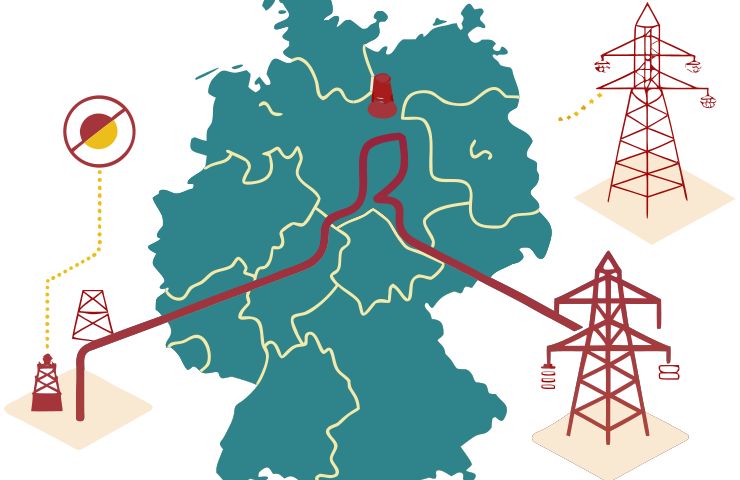
Hydrogen Infrastructure: Germany’s First Integrated Gas and Hydrogen Network Development Plan 2025
March 25, 2026In a big step for Europe’s largest economy, KO.NEP dropped the first draft of its Network Development Plan (NEP) for Gas and Hydrogen 2025 on March 6, 2026. Thanks to tweaks in Germany’s Energy Industry Act (EnWG) from 2023 and 2024, it’s the first legally binding blueprint for both methane and hydrogen infrastructure. The plan lays out investments and timelines through 2037, balancing supply security with industrial decarbonization goals and mapping a pragmatic path for the Energiewende.
Core Proposals and Investment Scale
Here’s what’s on the table:
• 364 km of new or upgraded methane lines, backed by about €2.9 billion through 2037.
• 7,007 km of hydrogen pipelines needing roughly €20.1 billion.
• Another 2,199 km of hydrogen transport routes at around €4.1 billion.
All in, that’s €27.1 billion set aside to expand Germany’s gas grid and hydrogen infrastructure. FNB Gas and Wasserstofftransportnetzbetreiber (WTNB) coordinated under KO.NEP, following a scenario framework BNetzA approved on April 30, 2025, with three pathways for 2037 and 2045 plus a 2030 gas-security fallback.
Real-World Progress to Date
Talk is cheap, but steel doesn’t lie. By the end of 2025, operators had already strung together over 500 km of the planned hydrogen core network. That early push proves it’s often smarter—and kinder to your wallet—to repurpose existing gas corridors for hydrogen rather than blaze entirely new trails. It’s a clear win for cost efficiency and jump-starts a robust hydrogen infrastructure.
Historical Context: From Fragmentation to Integration
Up until 2023, hydrogen projects in Germany were a patchwork—each region doing its own thing. Then, on November 29, 2023, the EnWG amendment kicked off a dedicated Wasserstoff-Kernnetz, and by May 16, 2024, another tweak mandated integrated gas-hydrogen planning every two years from 2025. Now, this NEP is the first real fruit of that framework, signaling a shift from scattered pilots to a unified roadmap that weaves hydrogen production into the existing grid.
Key Technologies Under the Microscope
• Hydrogen Transport Networks: High-pressure pipelines—new builds or converted lines—will ferry clean hydrogen from production hubs to industry and markets.
• Converted Gas Infrastructure: Teams are sizing up which methane pipelines can switch over to hydrogen, looking at steel grades and compressor upgrades.
• Integrated Network Planning: Scenario modeling keeps short-term gas needs aligned with long-haul hydrogen ramp-up.
• Hydrogen Storage: Though the draft skirts details, BNetzA wants storage capacity mapped out to smooth seasonal and daily swings.
Strategic Rationale and Collateral Impacts
Why does this matter? It locks in hydrogen as a cornerstone of industrial decarbonization—from steel yards to chemical plants—by spelling out pipeline rollouts. That €27.1 billion pot will shift financing, likely unlocking state support and new debt. A clear, unified plan gives investors and end-users the confidence they need. On the flip side, patchy builds or slow hydrogen production could leave stretches underused or slow down decarbonization in key sectors.
Next Steps and What to Watch
KO.NEP is now gathering feedback on this draft through mid-2026, then it’ll put out a refreshed version—this time with 2045 scenarios baked in—before sending it off to BNetzA for the official thumbs-up. Once that regulator sign-off lands, work ramps up. The beauty of this two-year cycle is that it stays flexible: if market signals shift, the 2027 NEP can tweak pipelines and priorities. For anyone following Europe’s race to sustainable energy, adaptability is the name of the game.
Sources: KO.NEP press release (March 6, 2026); FNB Gas statements; BNetzA scenario framework approval (April 30, 2025).


 With over 15 years of reporting hydrogen news, we are your premier source for the latest updates and insights in hydrogen and renewable energy.