
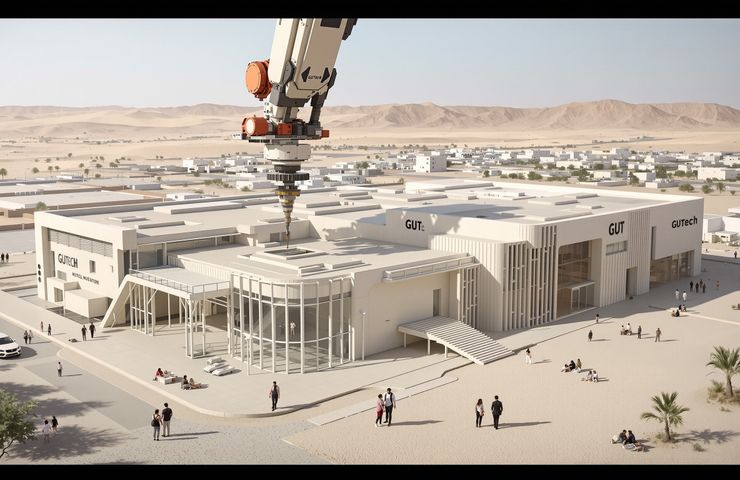
Hydrogen News: GUtech Unveils 3D-Printed Green Hydrogen Lab in Muscat
June 29, 2026The German University of Technology in Oman (GUtech) revealed something pretty exciting: Oman’s very first 3D-printed hydrogen lab on its campus in Muscat. Spanning around 322 square meters, this innovative space merges 3D construction printing with cutting-edge research and education on clean hydrogen technologies. This move comes at a crucial moment as Oman ramps up its efforts for economic diversification under Oman Vision 2040. They’re really doubling down on building a solid foundation in green hydrogen production and the necessary hydrogen infrastructure. Now, engineers, students, and policymakers have this hands-on hub to dive into everything from equipment layouts to safety protocols, all while keeping track of the environmental impact of both the building and the fuel paving the way for a zero-emission future.
A Living Lab at the Heart of Oman’s Energy Transition
This new facility isn’t just some fancy showcase; it’s a fully operational lab where environmental engineering students are already getting their hands dirty with the 3D-Printed Green Hydrogen Lab project. They’re working hard on assessing energy efficiency and doing life-cycle impact studies. Feedback from students on GUtech’s website shows they’re excited about tackling real-world challenges, like measuring the embodied carbon in the printed structures and checking how things perform in conditions that mimic actual hydrogen refueling stations. GUtech has set up a platform where learners can study thermal flows through the 3D-printed walls, integrate sensor networks, and test various safety protocols. This setup also encourages teamwork across different fields—whether that’s architecture, mechanical engineering, or materials science—creating a rich learning environment that bridges the gap between what students learn in the classroom and what’s actually needed in the changing hydrogen markets.
3D Printing Meets Hydrogen Research
At the heart of this lab is 3D construction printing, a method where a computer-controlled nozzle lays down layers of a special concrete mix. This technique not only cuts down on material waste and speeds up construction time, but also opens up the door to entirely new shapes and designs—perfect for creating custom conduits, mounting points, and insulation zones right in the structure. When it comes to hydrogen research, these advantages mean they can prototype storage vessels, run integrated piping networks, and develop experimental cell housings more quickly and efficiently. The lab’s size—322 square meters—demonstrates that it’s totally possible to scale up 3D-printed facilities for serious research purposes. While GUtech hasn’t spilled all the details about the specific 3D printer model or the electrolysers in play, they’ve made it clear that the building is adaptable and can be modified in the future, allowing for new hydrogen production methods to be tested and explored.
Building Domestic Capacity
The Omani government has been vocal about the need to cultivate national expertise as it navigates the shift towards low-carbon solutions. By planting a dedicated hydrogen research lab right within a private institution, they’re making it possible to train local engineers, technicians, and safety officers without sending them overseas. This lab also strengthens connections with industry stakeholders—take GUtech’s collaboration with Oman LNG, for example. They’re working on a study that looks into blending hydrogen with existing natural gas networks. Such partnerships can pave the way for future projects, like adjusting pipelines, creating export terminals, or even building refueling stations that meet local regulations and the challenges of desert climates.
Geopolitical and Market Synergies
In the Gulf region, there’s a lot of competition to host large-scale green hydrogen projects, all aiming to tap into the abundant solar and wind resources available. Oman’s entrance into this scene is marked by initiatives like the GUtech lab, which can provide vital data on equipment performance in arid environments—a key consideration often overlooked in hydrogen storage and handling. Furthermore, having a local research hub can really help mitigate risks for international investors who may be wary about engineering standards and operational costs. As global off-takers search for reliable supply chains that are backed by solid testing and data, Oman’s ability to certify protocols at home could give it a significant advantage in the emerging clean hydrogen economy.
Aligning with Oman Vision 2040
Historically, Oman has relied heavily on oil and liquefied natural gas exports, but diversifying its energy mix is now a major part of its long-term strategy. Oman Vision 2040 emphasizes the expansion of knowledge-based industries, putting green hydrogen front and center in policy talks. By 2026, Oman’s GDP per capita was around USD 24,000—yet officials understand that to ensure future resilience, it’s crucial to cut carbon footprints and foster a strong R&D ecosystem. GUtech’s lab, developed alongside RWTH Aachen University from Germany, showcases the kind of international collaboration Oman hopes to cultivate, blending local investment with foreign expertise to turn ambitious policy goals into tangible outcomes.
Looking Ahead
The launch of GUtech’s 3D-printed hydrogen lab marks a significant milestone, but this is just the tip of the iceberg. As research progresses, this facility could become a flagship example of sustainable lab design, illustrating how digital construction and renewable energy research can harmoniously coexist. Graduates from this program might go on to lead pilot projects, work as hydrogen safety consultants, or even design the next generation of refueling stations for hydrogen vehicles. Ultimately, if the insights gained here lead to scalable solutions, Oman could solidify its position as a notable exporter of green hydrogen, successfully merging its oil and gas history with a future focused on low-carbon innovation.
While we might not know all the details yet regarding capacity and timelines, the GUtech project clearly points towards an exciting trend: research institutions are stepping up as key players in the energy transition, actively driving tech deployment. With hydrogen infrastructure development on the line and the regional market set to grow, facilities like this 3D-printed lab will play a crucial role in shaping the technical, regulatory, and educational frameworks that define the clean energy landscape of tomorrow.

 With over 15 years of reporting hydrogen news, we are your premier source for the latest updates and insights in hydrogen and renewable energy.