Hydrogen News: OMV Invests €65 Million in Schwechat Innovation Hub to Scale Green Hydrogen Production
OMV is investing €65 million in an 8,120 m² Innovation Hub at Schwechat refinery to accelerate green hydrogen production, chemical recycling, CO₂ utilization and sustainable aviation fuel development as part of its net zero Strategy 2030.
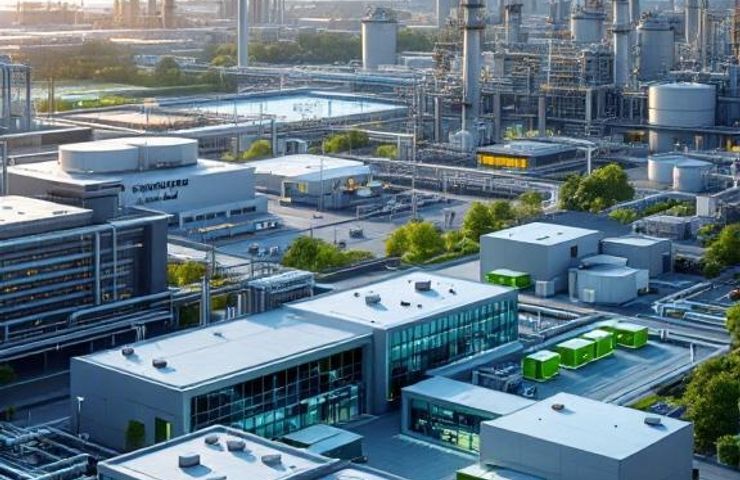
In late October, OMV Aktiengesellschaft made a significant move by confirming a hefty €65 million investment to kick off the construction of their brand-new Innovation Hub Schwechat at the Schwechat refinery, located just southeast of Vienna. This isn't just any facility—it's designed to be a cutting-edge accelerator that will fast-track efforts in green hydrogen production, circular economy processes, CO₂ utilization research, and the development of sustainable aviation fuel. With a sprawling 8,120 m² footprint, the hub boasts 50 lab workstations, a technical center featuring 15 pilot test units, and a direct link to a live 10 MW electrolyzer, paving the way for a project that aims to roll out a 140 MW green hydrogen plant in Bruck an der Leitha. This ambitious effort is supported by up to €123 million in hydrogen project financing from Austria Wirtschaftsservice (aws), and it builds on OMV's recent achievement of launching Europe’s first refinery-integrated electrolyzer, firmly positioning the company at the forefront of Europe’s growing hydrogen infrastructure.
Key Drivers
- Regulatory Imperatives: With the EU pushing for net zero targets, plus the RED II directives and stricter carbon standards, there’s a growing demand for renewable hydrogen and chemicals—it’s a necessity rather than a choice.
- Strategic Transformation: Under their Strategy 2030, OMV is pivoting from traditional upstream hydrocarbons to a more integrated approach focusing on sustainable energy, fuels, and chemicals, aiming for net zero emissions by 2050.
- First-Mover Advantage: By establishing dedicated innovation infrastructure, they’ll speed up the journey for low-carbon solutions—from lab tests to real-world industrial application.
- Integrated Scaling: Being co-located with refining operations means they can conduct real-world trials under industrial conditions, improving everything from pilot reactors to utility integration.
- Market Potential: There’s a rising global demand for sustainable aviation fuel, renewable polymers, and CO₂-derived chemicals, unlocking new, lucrative business lines.
Focus Technologies
The backbone of OMV’s hydrogen strategy is PEM Electrolysis. Their operational 10 MW unit at Schwechat churns out an impressive 1,500 tonnes of green hydrogen each year, running efficiently at pressures up to 30 bar with a 70–75% efficiency rate. This unit, compliant with the RFNBO under RED II, supplies hydrogen to the nearby refinery for creating both sustainable aviation fuel and renewable diesel (HVO). And there’s more on the horizon—the planned 140 MW installation in Lower Austria, recognized as an Important Project of Common European Interest, aims to produce 23,000 tonnes per year while testing grid flexibility and hydrogen storage methods, setting the stage for injecting hydrogen directly into Europe’s network.
Then there's Chemical Recycling (ReOil®). This innovative process takes end-of-life plastics that can’t be recycled mechanically and transforms them into valuable circular feedstocks through advanced methods like pyrolysis and depolymerization. They’re currently piloting operations that handle 16,000 tonnes of material per year with optimized catalysts, and the goal is to scale this up to 200,000 tonnes annually, helping OMV reach their target of producing 2 million tonnes of sustainable polymers by 2030.
When we dive into CO₂ Utilization & Biotechnology, it gets even more exciting. This encompasses everything from directly converting industrial CO₂ into useful chemicals like methanol and formic acid using renewable hydrogen to utilizing engineered microbes for fermenting CO₂ into biopolymers. They’re running tests in laboratory reactors and pilot bioreactors to refine these processes further.
As for Sustainable Aviation Fuel via HEFA, OMV is upgrading waste oils, used cooking oil, and fats through hydrodeoxygenation, cracking, and isomerization, all while using green hydrogen to produce jet fuel that meets ASTM D7566 standards. Their approach supports up to 50% SAF blending with standard kerosene and is aiming to eventually achieve 100% blends as certification processes evolve, significantly lowering emissions by as much as 80% compared to traditional fossil fuels.
Integration at Schwechat
Lower Austria’s Schwechat region has been an industrial hub since the refinery’s inception in the 1960s. Now, this new facility is nestled within a vibrant energy and chemical cluster, tapping into established utilities, transport connections, and a skilled talent pool drawn from a nearby population of 1.5 million. The hub’s pilot plants are situated next to operational furnaces and storage tanks, and they’re further connected via hydrogen pipelines, compression units, and buffer storage, seamlessly integrating with Europe’s growing hydrogen infrastructure. Plus, its proximity to research institutes and universities in Vienna strengthens collaboration on innovations in hydrogen production and hydrogen storage methods.
Economic & Environmental Impacts
OMV expects to create around 100–150 construction jobs over the next 18 months, along with more than 50 permanent R&D positions once everything is up and running. This initiative is part of a broader €700 million investment plan aimed at building that massive 140 MW electrolysis plant, bolstered by €123 million from aws. On the environmental front, switching from grey hydrogen to green hydrogen at the 10 MW level is projected to cut about 15,000 tonnes of CO₂ emissions yearly; ramping this up to 140 MW could see those savings soar to an impressive 150,000 tonnes. Plus, their chemical recycling efforts will prevent an estimated 36,000–48,000 tonnes of CO₂ emissions from 16,000 tonnes of plastic, climbing to anywhere between 450,000 and 600,000 tonnes when fully scaled. Producing SAF not only displaces fossil jet fuel but also contributes to integrated CO₂ utilization that could trap hundreds of thousands of additional tonnes in various materials and chemicals.
Of course, managing resources is crucial—especially regarding water demand, which is expected to be around 100–150 m³ daily for the 10 MW unit and over 1,400 m³ for the larger facility. They also need to ensure a reliable source of renewable power to maintain a low carbon intensity in line with EU regulations.
Looking Ahead
As they work towards completing the hub, this marks an important milestone, with full commissioning set for early 2027. OMV sees this innovation platform in Schwechat as a key part of their Strategy 2030, intending to apply what they learn and the technologies they develop to OMV Petrom in Romania and Borouge in the Middle East. If they succeed at Schwechat, it could really show whether a traditional energy giant can effectively leverage integrated hydrogen production methods, circular chemistry, and CO₂ utilization to carve out a competitive edge in an ever-evolving, decarbonizing market.
About OMV
OMV Aktiengesellschaft is an integrated energy, fuels, and chemicals company based in Austria. Founded back in 1956, it runs one of Europe’s largest refineries at Schwechat and holds majority stakes in OMV Petrom and Borouge. With reported revenues nearing €24 billion and around 22,300 employees, OMV is publicly traded on the Vienna Stock Exchange and OTCQX. Through their Strategy 2030 initiative, they’re committed to achieving net zero emissions by 2050, focusing on investments in green hydrogen, circular economy practices, and CO₂ utilization technologies.