Hydrogen-Powered Trucks: Volvo’s New Combustion Engine Bridges Zero-Emission Technologies
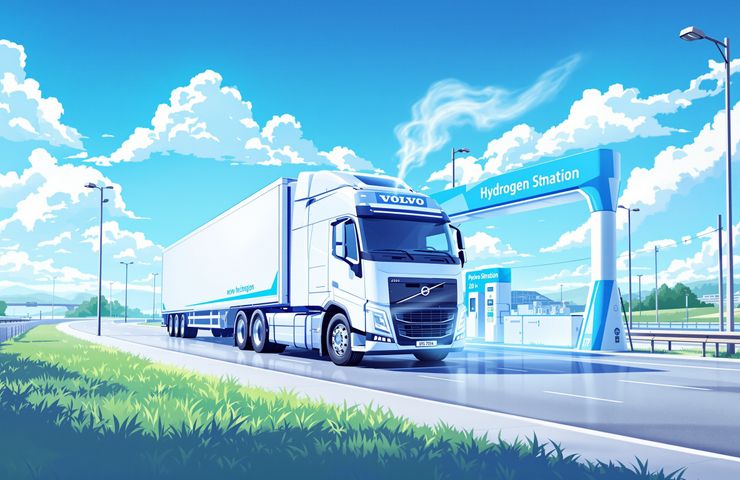
April 3, 2026This month, Volvo Trucks surprised the industry by revealing a brand-new hydrogen combustion engine truck—another twist in its growing family of battery-electric trucks and fuel cell electric trucks. Instead of gulping down diesel, this engine injects and ignites hydrogen, so what puffs out the tailpipe is basically water vapor. It’s Volvo’s way of offering another tool in the toolbox for long-haul runs that stretch beyond the practical reach of batteries or wait on wider hydrogen infrastructure. With this move, the company is staking its claim in zero-emission technology while making sure fleets have real choices on the road.
Multi-Pathway Zero-Emission Strategy
Rather than betting everything on one solution, Volvo Trucks has been steadily building out a suite of green options. Back in 2021, a proof-of-concept fuel cell electric truck tackled a 500 km stint on public roads. Then, in 2022, the FH Electric rolled out as a fully battery-driven hauler. Now, the hydrogen combustion variant slots right in, covering the gap where quick refueling and nonstop power matter most. Fleet managers often hesitate to go all-in on batteries for heavy payloads or round-the-clock runs, and this latest launch could bridge that divide. It’s a clear sign Volvo sees no single approach solving all the challenges of industrial decarbonization.
How the Hydrogen Combustion Engine Works
Under the hood, the setup still looks a lot like a classic diesel engine—but it’s been retooled to burn hydrogen gas. Hydrogen is injected into the combustion chamber, mixed with air, then ignited with a modified spark system. Engineers had to tweak injection timing, beef up cooling circuits, and swap in special seals to handle hydrogen’s faster flame speed and lower energy density. Though it follows the same thermodynamic cycle as a diesel engine, key bits—pistons, injectors, and control software—are fine-tuned for hydrogen’s quirks. The payoff? A traditional internal combustion ride that spits out mostly water vapor, cutting out carbon dioxide and particulates right at the tailpipe. Volvo points out that leveraging decades of engine know-how could make production smoother than designing a fuel cell from scratch.
Strategic Rationale
The big sell here is flexibility. Today’s batteries work wonders on short to mid-range routes, but their weight and recharge times can be a real bottleneck on longer hauls. Meanwhile, fuel cell technology delivers true zero-emission range, yet it’s still waiting on a full-scale refueling network. A hydrogen combustion powertrain, by comparison, could slot into existing service stations with only modest tweaks—giving fleets an easier path to pilot hydrogen without completely overhauling their maintenance playbook. Fast fill-ups and familiar upkeep routines could even drive down total cost of ownership for certain use cases. In short, it’s a hedge against unpredictable hydrogen production ramps and distribution rollouts, offering fleets multiple roads to meet their decarbonization goals.
Historical Context and Industry Trends
Volvo’s hydrogen story actually kicked off around 2020, when a prototype 44-tonne fuel cell tractor hit the road for early trials. By 2021, those public road tests taught them plenty about storage, range, and thermal management. Now, they’re taking that experimental spirit and branching into hydrogen combustion. They’re not alone—companies like Cummins have been tinkering with hydrogen-burning engines, and giants such as Toyota and Isuzu have run their own fuel cell pilots. Still, the broader picture hinges on growing green hydrogen production—ideally via clean electrolysis. Today most hydrogen comes from natural gas, but new renewable-powered facilities are popping up across Europe, North America, and Asia under frameworks like the EU Green Deal. The result? A global ecosystem where multiple zero-emission technologies will jostle for the spotlight.
Collateral Impacts and Challenges
On the upside, hydrogen combustion engines could slash CO₂ in heavy-duty cycles, serve routes where batteries can’t keep up, and lean on existing engine supply chains—easing the transition for parts makers and technicians. Fleets might even kick off pilot programs without reinventing their garage setups. But there’s a catch: truly sustainable operation demands green hydrogen. If you’re burning hydrogen made from fossil feedstocks, upstream emissions still bite. Plus, the sticker price of hydrogen-ready engines and new filling stations will likely top today’s diesel costs. European operators will juggle those costs against incentives, the pace of infrastructure build-out, and ever-improving battery alternatives. Policies under the EU Green Deal and similar regulations could tip the scales, but price parity and timing remain open questions.
What’s Next
Right now, Volvo’s hydrogen combustion prototypes are still in the workshop, with real-world testing set for later this year. Details on horsepower, efficiency, and production timelines are under wraps. If the trials hit their marks, Volvo plans a phased rollout—probably starting with niche long-haul corridors before going broader. Partnerships on fueling infrastructure and pilot fleets will shape the journey. Meanwhile, Volvo’s multi-technology lineup ensures they can pivot as green hydrogen scales up and battery systems advance, giving customers a true menu of zero-emission technologies.
About the Company
Volvo Trucks, a pillar of the Volvo Group since 1928, has built its reputation on heavy-duty commercial vehicles and engine expertise. In recent years, it’s broadened its horizons with battery-electric and fuel cell electric models—and now, hydrogen combustion engines—to press toward a fossil-free future by 2050. As they mix traditional know-how with cutting-edge innovation, they’re betting that a diverse toolkit is the best way to decarbonize global freight transport.

 With over 15 years of reporting hydrogen news, we are your premier source for the latest updates and insights in hydrogen and renewable energy.