
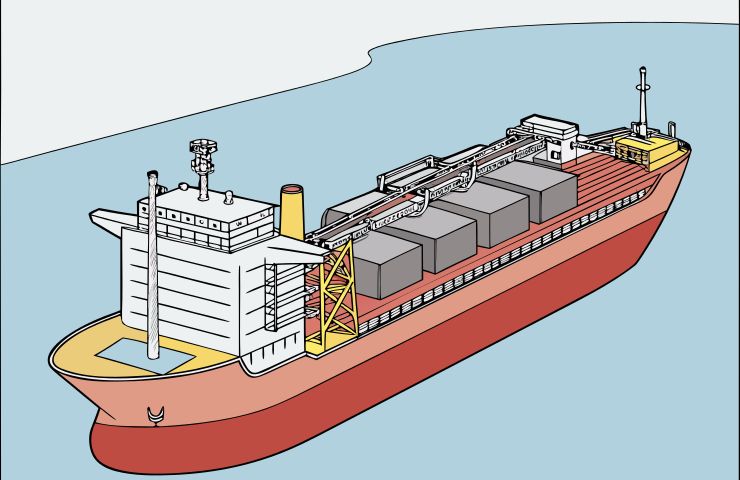
Hydrogen production at sea with floating blue ammonia FPSO concept
February 24, 2026Ever thought about turning leftover natural gas into clean ammonia without ever setting foot on land? Well, that’s exactly what kicked off earlier this month when BW Offshore and McDermott International rolled out a floating blue ammonia FPSO concept. Picture it: up to 3 million cubic metres of gas a day, 99% of the CO₂ captured, and more than a million tonnes of ammonia production—right offshore, sidestepping the usual permit headaches, land grabs, and midstream bottlenecks.
Imagine an offshore factory that handles both hydrogen production and ammonia production in one slick package. Gas flows in through subsea pipes, hits a synthesis plant on deck, and ends up as chilled, liquefied fuel in storage tanks. Meanwhile, a hideaway compression system bundles up the CO₂ and ships it off to nearby storage fields. With a carbon intensity sitting at roughly 0.5 tonnes of CO₂ per tonne of ammonia, it ticks all the boxes for international low-carbon criteria and echoes the IEA’s forecasts for ammonia as a power and maritime fuel.
Building on FPSO heritage
BW Offshore—born in Norway back in 1982 and now based in Singapore—has been running FPSOs around the globe for decades. They’ve handled everything from design to financing to operations, all under the sustainable energy umbrella of the broader BW Group. Lately, they set up a New Ventures arm to chase down energy transition ideas. Pair that with McDermott International—the US EPC whizzes known for nailing offshore engineering—and you’ve got a dream team. McDermott brings the nuts-and-bolts execution and tech integration, while BW Offshore calls the deepwater playbook.
Collaboration in this realm isn’t exactly new. Firms like KBR have been chatting with big shipyards about offshore ammonia since the early 2020s. But let’s be real: none of those projects have pushed into a full-scale prototype. This new FPSO concept feels different—it’s more than a slide deck, hinting at a move into front-end engineering design (FEED).
Why offshore ammonia?
Let’s tackle the big question: why go offshore? For starters, it unlocks those stranded gas pockets that are just too small or too far out for a traditional onshore plant. Everything stays at sea, so you dodge onshore builds, storage tanks near towns, and CO₂ pipelines running through neighbourhoods. Oh, and leasing an FPSO? That can seriously cut an operator’s risk compared to dropping big bucks on fixed platforms.
Then there’s the handling angle. Ammonia production offers a storage and transport edge over pure hydrogen, especially for remote power stations or vessels. Ships can either burn ammonia directly or crack it back into hydrogen onboard. It’s become the go-to bridge fuel for those tough-to-decarbonize areas—particularly when you factor in on-deck carbon capture.
Balancing economics and regulations
No sugarcoating it: taking this show offshore has its challenges. Onshore plants benefit from long-standing supply chains and big economies of scale. Plus, the rulebook for offshore chemical processing is still filling in—permits, safety regs, you name it. And don’t forget: you need nearby CO₂ storage sites or enhanced oil recovery fields to make the pipeline export piece work.
Still, the modular setup and FPSO leasing model do a lot to chip away at upfront cost. That’s music to the ears of investors chasing industrial decarbonization projects. It also lines up with what we’re seeing across the industry: a push to diversify revenue streams as traditional oil and gas markets shift gears.
Ripples across the energy landscape
Floating blue ammonia units could really shake up regional gas markets, turning fields once written off as uneconomical into revenue machines. It’s a neat way to beef up energy security with underutilized gas resources. And if you’re chasing net-zero targets, this paves a clear path to clean ammonia—which, by the way, the IEA flags as a key player in power generation and maritime transport.
Down the road, you could even marry the FPSO’s power needs with offshore renewables or plug into a low-carbon grid, knocking carbon intensity down even further—nearly to zero.
On the tech side, the Blue Ammonia FPSO is basically an offshore remix of proven onshore units. Modules for reforming, shift conversion, ammonia synthesis, and low-temp separation get stacked on deck. Meanwhile, the hull hides turbo-expanders and heat exchangers that squeeze every bit of energy out of the system. This modular approach can seriously trim delivery schedules and tame the complexities of hooking up offshore.
The carbon capture piece wraps around the reformer furnace and synthesis loop, grabbing CO₂ at its source. The goal? Up to 99% emissions captured, then compressed and piped offshore to storage or EOR sites, depending on what makes sense economically. It’s a neat, closed-loop setup that keeps both production and emissions out at sea.
From an investment standpoint, the FPSO leasing play is tried-and-true in oil and gas. By slotting ammonia units into that same charter framework, BW Offshore taps a familiar model: operators pay rent instead of front-loading capital outlay. That alone could make a big difference for players wary of hefty greenfield costs.
Environmental groups have given a cautious nod—any move toward lower-carbon ammonia gets points, but the real deal is in the full supply chain. Tracking the footprint of liquefaction, shipping, and final combustion or cracking is crucial. Expect new standards and certification schemes to spring up alongside concepts like this one.
At the crossroads of maritime engineering and industrial chemistry, the floating blue ammonia idea is a real hybrid. It borrows from decades of FPSO know-how and land-based ammonia plant expertise, then packages it all in a floating shell. Think of it as moving the refinery right to the reservoir, with millions of dollars’ worth of pipes and catalysts riding the waves.
What’s next? The partners haven’t pinned down exact dates yet. We’re talking front-end engineering design, chats with partners and regulators, and locking in a host field with the right gas and CO₂ storage. If all goes well, a final investment decision could drop in the latter half of this decade, paving the way for the first offshore ammonia FPSO.
Will it catch on? That’ll depend on ammonia prices, carbon credit rules, shipping demand—the usual market forces. But in areas where pipelines or onshore plots are at a premium, floating production might just become the default route to industrial decarbonization.
By steering capital toward modular, offshore plants, companies like BW Offshore and McDermott International are charting a course for more nimble hydrogen production and ammonia production supply chains. It’s a solid reminder that sometimes, the smartest way to unlock a cleaner future is rethinking where the chemistry actually happens.

 With over 15 years of reporting hydrogen news, we are your premier source for the latest updates and insights in hydrogen and renewable energy.