
Hydrogen Production Confirmed in Nova Scotia: QIMC’s West Advocate Discovery
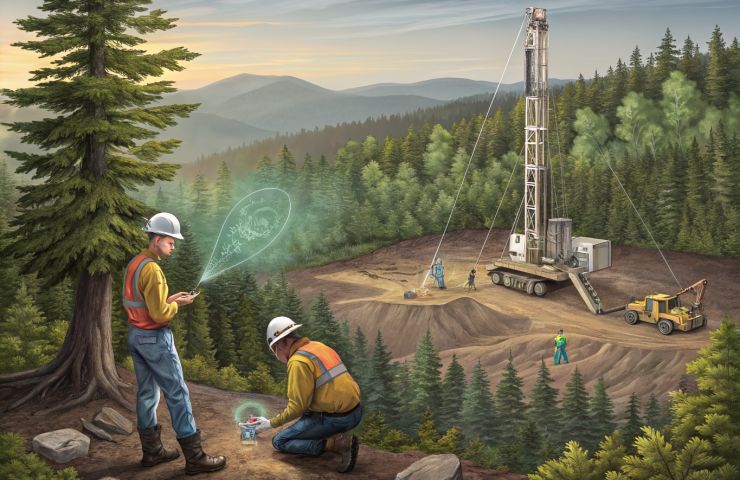
March 3, 2026Across the windswept Cobequid Highlands of Nova Scotia—land sculpted by ancient tectonic drama—the hunt for natural hydrogen is really picking up steam. On 26 February 2026, Québec Innovative Materials Corp. (CSE: QIMC) announced that its first diamond drill hole at the West Advocate Project struck two clear hydrogen-bearing zones—one between 142–191 m and another from 313–330 m—an exciting sign that this province might soon be a hub for hydrogen production.
Historical Context and Global Trends
“White hydrogen,” as natural hydrogen is often called, has been turning heads as a low-carbon alternative to green hydrogen (made via electrolysis) and grey hydrogen (tied to fossil fuels). Governments and research outfits—think ARPA-E at the U.S. Department of Energy—are pouring funds into models that explain how H₂ forms and migrates underground. In Eastern Canada, soil gas anomalies popped up in the early 2020s, but without drill data it was all just educated guessing. That changed when Nova Scotia’s Powering the Economy Act passed in early 2026, one of North America’s first laws to recognize natural hydrogen as an energy resource. It exempts passive exploration from fracking rules and lays out clear tenure paths, giving explorers a green light.
Discovery at West Advocate
Drilling kicked off on 17 February 2026, zeroing in on a corridor where earlier soil surveys had flagged higher hydrogen readings. By 26 February, DDH-26-01 delivered two standout hydrogen shows:
- Zone 1 (142–191 m): A 49 m fault corridor that literally bubbled gas and pressurized water. Surface and bore-collar readings topped 1,000 ppm H₂.
- Zone 2 (313–330 m): A 17 m deeper splay in the same fault network, hinting at stacked reservoirs or multi-phase migration pathways.
These intersections suggest a linked, structurally controlled system—not just isolated pockets. Overhead, a grid-based soil gas survey recorded a whopping 5,558 ppm H₂, the highest concentration yet documented in Eastern Canada along the West Advocate trend.
Subsurface Testing and Soil Gas Surveys
To nail down the play, QIMC blended advanced diamond drilling with a detailed surface geochemistry program:
- Core logging and analysis: Geologists measured gas release, pressure, flow rates and composition as the core came up, distinguishing free gas from hydration-driven release.
- Borehole gas monitoring: Collar-mounted instruments provided real-time hydrogen data, guiding tweaks to drilling speed and casing depth.
- Soil gas grid: Stretching into East Advocate and parts of Ontario, samplers logged peaks of 623 ppm H₂, flagging targets for the next holes.
This integrated workflow slashes geological uncertainty and zeroes in on the best targets—critical when reservoir quality hinges on fault permeability and regional stress regimes.
Strategic Outlook for QIMC and QMET
The West Advocate results are a game-changer for both QIMC and its neighbor, Q Precious & Battery Metals Corp. (QMET):
- Portfolio de-risking: QIMC’s success acts as proof of concept, boosting QMET’s upcoming drill campaign on contiguous ground under a unified structural model.
- Investor buzz: QIMC shares saw a jump in trading volume post-announcement, signaling growing confidence in the multi-zone discovery and a planned five-hole 2026 program.
- Collaborative frameworks: CEOs John Karagiannidis (QIMC) and Richard Penn (QMET) highlight how a shared corridor streamlines permitting, budgeting and field operations.
- District-scale potential: Combined, their claim blocks now span several kilometres of strike, reinforcing the idea that Nova Scotia could become a leading centre for hydrogen infrastructure.
Regulatory Environment and District Evolution
Nova Scotia’s legislative approach breaks from traditional subsurface rules by treating natural hydrogen differently than oil and gas. Key features of the Powering the Economy Act include:
- Dedicated tenures for hydrogen explorers, with lease terms matched to shallow drilling timelines to speed up data collection.
- Exemptions from hydraulic fracturing for un-stimulated systems, provided companies adhere to best practices in well construction and environmental monitoring.
- Provisions for baseline ecological studies and Indigenous consultation, creating clarity and fostering First Nations partnerships.
By cutting red tape yet embedding strong environmental and social safeguards, Nova Scotia is setting a standard other jurisdictions may follow as natural hydrogen exploration gains momentum.
Wider Impacts and Next Steps
The West Advocate discovery is already sparking activity across multiple fronts:
- Local economy: Drilling rigs and analytical services in Cumberland County are ramping up, generating skilled jobs and boosting vendor networks.
- Community engagement: First Nations representatives are joining site visits and briefings, aiming to align exploration with land stewardship and benefit-sharing.
- Infrastructure planning: Provincial agencies and private firms are mapping out potential hydrogen pipeline routes and storage facilities, gearing up for how onshore volumes could feed fuel cell supply chains or clean ammonia plants.
- Research collaborations: Universities in Halifax and beyond are analyzing drill cores and soil datasets to advance the science of structural H₂ generation and trapping.
Notably, QIMC’s approach sidesteps fracking and chemical stimulation, tackling environmental concerns head-on and showcasing a pathway to sustainable energy development and industrial decarbonization.
Looking Ahead
With DDH-26-01 in the books, QIMC is gearing up for a five-hole drill program in 2026 to:
- Extend the current hole to around 650 m and log additional structural complexities.
- Target East Advocate zones where soil gas anomalies hit 623 ppm H₂.
- Integrate geophysical tools—like induced polarization and magnetotellurics—to fine-tune targeting and optimize budgets.
As this natural hydrogen story unfolds, these structurally controlled systems could feed into hydrogen infrastructure for regional industry hubs or clean ammonia production—both essential for global decarbonization goals. For now, QIMC’s West Advocate breakthrough proves that the “white gold” of H₂ might be closer to market than anyone imagined, firmly placing Nova Scotia on the map of tomorrow’s clean energy future.

 With over 15 years of reporting hydrogen news, we are your premier source for the latest updates and insights in hydrogen and renewable energy.