Hydrogen Production: Energinet Secures Six LOIs for Denmark–Germany Pipeline
Energinet lands six LOIs for a green hydrogen pipeline linking Denmark and Germany, marking a step forward for cross-border hydrogen infrastructure.
Could a cross-border hydrogen infrastructure project finally find its footing? Back in late April 2026, the Deutsch-dänische Handelskammer revealed that six firms have signed Letters of Intent with Danish state-owned TSO Energinet for the planned Danish Hydrogen Backbone 1 (DHB1) pipeline. If everything goes to plan, Western Denmark’s offshore-wind-powered electrolysis hubs could start pumping green hydrogen into Germany’s industrial heartland as soon as 2031.
Core Update
On April 29, 2026, the German-Danish Chamber of Commerce dropped the news: six unnamed players—think big utilities and heavy industrial offtakers—have put pen to paper to explore capacity reservations on the Esbjerg–Frøslev/Ellund route. Since January 2026, Energinet has been selling capacity on its Prisma platform, offering between 2.7 and 3.6 GW of pipeline throughput. But there’s a catch: they need at least 0.5 GW of firm bookings to green-light the full project.
Pipeline and Capacity Details
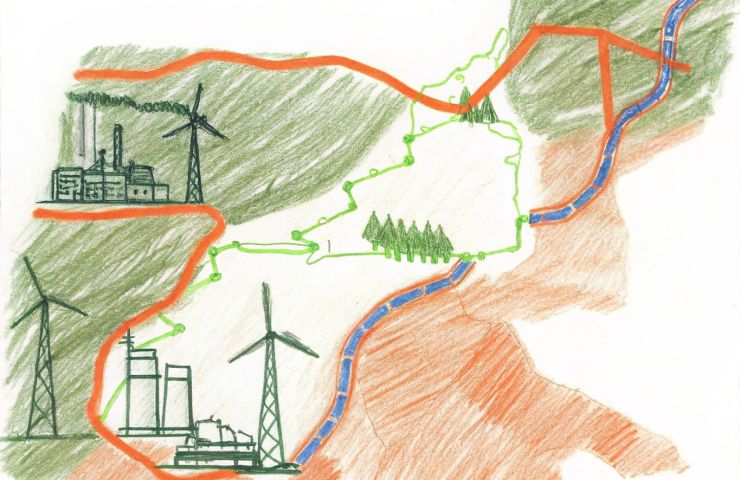
Nicknamed “Syvtallet” after its 133 km stretch, the DHB1 link blends about 88 km of repurposed natural-gas lines with 45 km of brand-new steel pipe. It’s built to run at 50–100 bar, carrying gaseous green hydrogen from the 1 GW electrolysis clusters sprouting up around Esbjerg. Down the line, it hooks into Gasunie Deutschland’s future core network at the Frøslev/Ellund border station in Schleswig-Holstein—an area hungry for industrial decarbonization solutions in steel, chemicals and heavy transport.
Strategic and Economic Implications
This Letter of Intent milestone doesn’t come out of nowhere. Germany’s 2020 National Hydrogen Strategy aimed for 10 GW of electrolyser capacity by 2030—plus another 10 GW through imports—so the Denmark–Germany link has been treated as a pilot for a pan-European hydrogen infrastructure network under the EU Hydrogen Backbone initiative. Denmark, for its part, set a 4–6 GW electrolysis target in its own 2020 roadmap, leaning heavily on its offshore wind advantage.
Of course, inking LOIs is one thing—filling them is another. Market watchers warn that interest still needs to pick up if Energinet is going to hit that 0.5 GW threshold. If bookings stall, the 2031 startup date could slide again—DHB1 was already nudged from 2028 after funding and demand doubts cropped up in late 2024.
Regional Context
Western Denmark’s Syddanmark region (pop. ~1.2 million, GDP per capita ~$55,000) is buzzing as a green-hydrogen hotspot, thanks to projects like H2 Energy Europe’s 1 GW plant in Esbjerg. When turbines outpace local grid demand, electrolysis becomes the go-to for capturing excess power. Just across the border, Schleswig-Holstein (pop. ~2.9 million, GDP per capita ~$45,000) sits near heavy-industry clusters in the Ruhr and Hamburg. Those sectors, long reliant on grey hydrogen imports, could slash emissions if they tap into large volumes of renewably produced H₂.
Technical Overview
Pumping green hydrogen at scale comes down to pipeline integrity. DHB1 will sport embrittlement-resistant coatings on high-grade steel and inline purity monitors to keep H₂ levels above 95%. Compression stations near Esbjerg will crank up pressure, while sectional valves let teams isolate segments for maintenance. Since there’s no blending, downstream users can plug in their fuel cells or burners without retooling.
Environmental and Policy Angle
Once up and running, DHB1 could haul around 240,000 tonnes of CO₂-free hydrogen a year—enough to chop several hundred thousand tonnes off emissions in hard-to-abate sectors. The project benefits from EU PCI and IPCEI status, fast-tracking permits and unlocking state backing. Denmark has set aside DKK 7.5 billion in loans plus DKK 10.6 billion in subsidies for its hydrogen backbone segments, giving the business case a serious boost.
Looking Ahead
Both Energinet and the Handelskammer are banking on more offtake commitments by mid-2026 to stay on schedule. If demand firms up, construction could kick off in late 2027 and first volumes may flow in 2031. But if talks fizzle, we could see another delay—echoing the 2024 wind-tender shortfall that stalled related networks.
No matter what, the Denmark–Germany pipeline is a telling test. If private players step up, we might see similar repurposing of gas grids in the Netherlands, Belgium and beyond. If they don’t, Europe’s drive for market-led growth in hydrogen production may need a bigger subsidy nudge. For now, those six LOIs offer a glimmer of cautious optimism: this corridor could prove whether Europe’s export dreams hold water.