
Hydrogen Production from Biomass: Elche Pilot Converts Agricultural Waste into Green Hydrogen
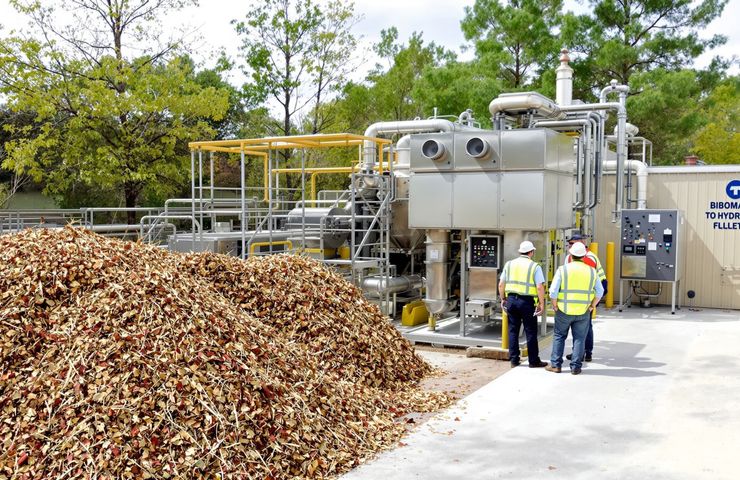
June 22, 2026In the outskirts of Elche, there’s a small pilot plant that’s quietly changing the game when it comes to waste and fuel. Instead of letting all those pruning leftovers and forest scraps just sit there or burn away, Greene Enterprise — through its subsidiary Greene W2H2 — is showing us a promising way to convert biomass into renewable hydrogen. They’re calling this project GW2H2-RENEWTON, and it’s a big step towards building local hydrogen infrastructure while making good use of agricultural waste.
Pilot Testing Thermochemical Routes
The GW2H2-RENEWTON pilot is pretty cool—it combines various methods like pyrolysis, cracking, and gasification. Basically, it takes in about 100 to 150 kilograms of those pruning leftovers and biomass every hour, turning them into synthesis gas that’s rich in hydrogen. The whole process starts with heating up the biomass without any oxygen, then those vapors and char go through some controlled gasification with steam and oxygen. After cleaning out the tars and particles, they isolate the hydrogen to a high purity level using pressure-swing adsorption or membrane units. Plus, the solid biochar and the CO₂ they separate can be used in other ways—like enhancing soil or upgrading biogas—which really keeps the project in line with the circular economy model.
Funding and Partnerships
The Elche plant got off the ground thanks to a mixed funding approach. Around 35% of the total investment—just over €4 million—comes from grants managed by the Conselleria de Industria, Turismo, Innovación y Comercio de la Generalitat Valenciana. The rest is backed by Moira Capital Partners, a private equity firm focused on tech start-ups. This blend of public and private funding not only helps spread the risk but also shows the commitment of regional authorities to see hydrogen become a key player in industrial decarbonization.
Technical Performance
Right now, the pilot is churning out about 6–8 kilograms of biohydrogen every hour. While that’s not a huge amount from a commercial standpoint, the data being gathered is invaluable. They’re getting a handle on crucial factors like energy balances, how different feedstocks perform, and the overall stability of the system. The team is also exploring heat integration, catalyst lifetimes, and purification efficiencies. The ultimate aim? To fine-tune the process so it can be scaled up to facilities capable of handling up to 50,000 tonnes of biomass each year.
Strategic Implications for Heavy Industry
This green hydrogen isn’t just a nice idea; it has the potential to significantly cut emissions in industries that are tough to electrify directly. Here are some key targets:
- Ceramics: currently, high-temperature firing relies heavily on natural gas
- Petrochemicals: need hydrogen for feedstock and energy in refining and synthesis
- Biogas & Biometano: could use hydrogen and recycle CO₂ into synthetic methane
By tying this project into local biomass supply chains, they hope to keep logistics costs low and manage fire risks better. Plus, the separated CO₂ could feed into on-site methanation units, creating a neat loop for renewable gas production.
Aligning with Europe’s Hydrogen Agenda
GW2H2-RENEWTON fits perfectly into Spain’s—and the EU’s—expanding collection of green hydrogen projects, which have mostly focused on water electrolysis using solar and wind power. Thermochemical methods present an exciting alternative, especially in areas rich in forestry and agricultural residues. By tapping into resources that would otherwise go to waste, this pilot strengthens supply diversity and helps ensure resilience—two crucial elements as we see hydrogen demand ramping up under various decarbonization initiatives.
From Pilot to Scale
So what’s next? The immediate focus is to really refine the process while dealing with real-world feedstock variability and making sure they hit industrial purity standards. If all goes well, Greene W2H2 hopes to roll out a commercial-scale plant in just a few years. Such a facility would ramp up hydrogen production significantly and help solidify Elche’s role as a key player in hydrogen project financing and tech development.
By turning pruning waste into a low-carbon fuel, the GW2H2-RENEWTON project shows how hydrogen production can merge with waste management and support rural development. As policymakers and investors keep an eye out for the next big thing in green hydrogen news, the success of this circular-economy pilot could serve as inspiration for strategies not only in Valencia but also across other biomass-rich areas in Europe.


 With over 15 years of reporting hydrogen news, we are your premier source for the latest updates and insights in hydrogen and renewable energy.