
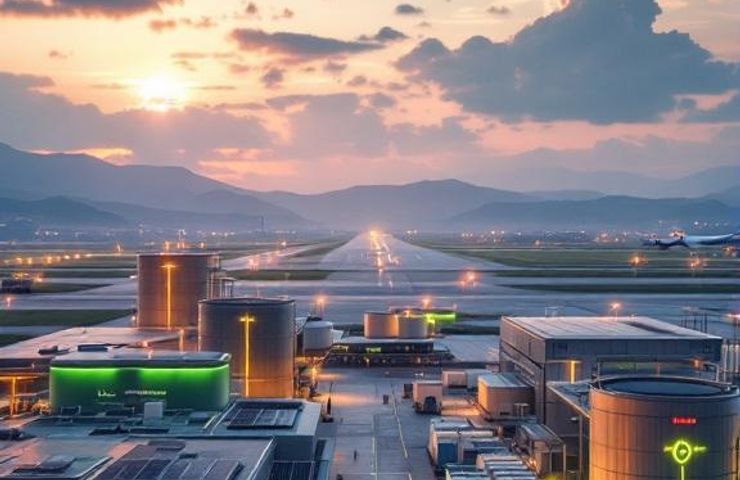
Hydrogen Production Hub Feasibility Assessed at Stockholm Skavsta Airport
January 25, 2026Fortum and Skavsta Logistics and Air Freight have shook hands on a non-binding letter of intent to kick off a feasibility study for a hydrogen and electro-sustainable aviation fuel (e-SAF) hub at Stockholm Skavsta Airport. They’ve set their sights on a 100,000-square-meter plot in the airport’s western precinct, which is already under detailed spatial planning with Nyköping Municipality. Over the next few months, the partners will dig into the nuts and bolts of hydrogen production, sustainable aviation fuel synthesis, battery energy storage systems and heat recovery—all without signing on for any big capital outlay just yet.
Strategic Partnership for Decarbonized Aviation
This collaboration pairs Fortum’s expertise in renewable energy and passion for industrial decarbonization with Skavsta Logistics’ know-how in airport operations. With Arlandastad Group owning 90.1% of the airport and the Municipality of Nyköping holding the rest, they’re positioning Skavsta as a future clean-energy hotspot. By producing green hydrogen and sustainable aviation fuel on-site, they’ll tackle EU and ICAO emissions mandates head-on—and give airlines the eco-friendly fuel they’ve been clamoring for.
Technical and Commercial Scope
The study will map out how to hook up on-site or nearby wind and solar farms to electrolyzers, powering the core of hydrogen production. That green hydrogen then feeds into a power-to-liquid setup, where it combines with captured CO₂ to churn out sustainable aviation fuel your average jet engine can burn. To smooth out the ups and downs of wind and sun, battery energy storage systems will act as a buffer. And rather than let all that waste heat from electrolysis and fuel synthesis go to waste, they’ll run it through heat recovery units for heating buildings or nearby industrial processes, cranking overall efficiency up a notch.
Regulatory and Market Context
The timing couldn’t be better—this project lines up with the EU’s Sustainable Transport Investment Plan (STIP), which doles out grants and offtake incentives for e-SAF facilities and helps shore up hydrogen infrastructure. It’s all about meeting tougher airline emissions targets and hitting long-term decarbonization goals. Here’s a twist: S&P Global data from January 16, 2026, shows renewable hydrogen trading at about €8.70/kg in Germany and €7.59/kg in France—a near double-digit drop day-over-day. Those price swings, driven by how much wind and solar are cranking out, will be key inputs for the project’s business model.
Implications and Next Steps
Since this is just a non-binding letter of intent, there’s no rush to break ground. What it does secure is site access and data sharing for a thorough feasibility analysis—think grid interconnections, feedstock logistics and permitting hurdles. If everything pencils out, we could see a regional supply chain for sustainable aviation fuel, a wave of skilled-job creation and a real boost to local hydrogen infrastructure. Of course, there are a few speed bumps ahead: the economics depend on continued EU support, evolving green standards and competition for renewable power in the Stockholm region.
In the months ahead, Fortum and Skavsta Logistics will flesh out detailed designs and navigate regulatory clearances. If the feasibility study validates the numbers, they’ll be primed to sign binding agreements and roll into the engineering, procurement and construction phase. For Stockholm Skavsta Airport, this marks a big step toward industrial decarbonization and could set the benchmark for integrated, on-airport clean-energy hubs across Europe.

 With over 15 years of reporting hydrogen news, we are your premier source for the latest updates and insights in hydrogen and renewable energy.