Hydrogen production: Moeve rolls out master’s in petrochemical and hydrogen technologies at San Roque Energy Park
Moeve has launched a dual training master’s in petrochemical and hydrogen technologies at San Roque Energy Park to equip students with skills in green/blue hydrogen, ammonia synthesis and petrochemical processes.
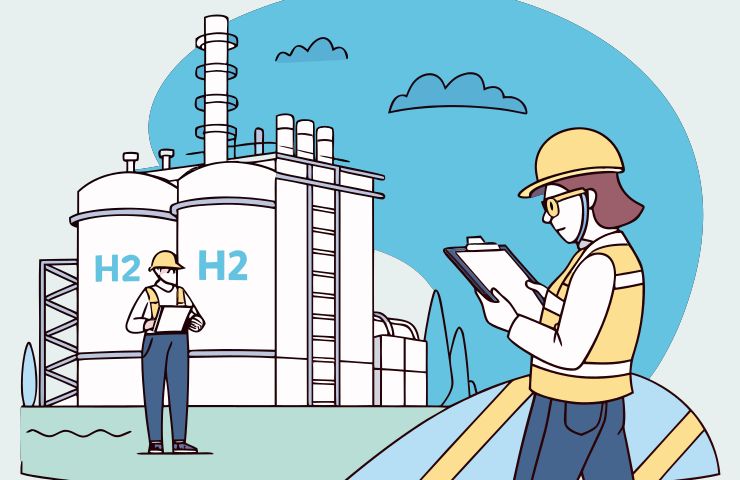
Right in the thick of Andalusia’s industrial corridor, Moeve is rolling out a new program to plug the skills gap in hydrogen production and petrochemical technologies. On April 14, 2026, the Spanish energy transition outfit unveiled a dual training master’s at the San Roque Energy Park. The idea? Equip students with both head knowledge and hands-on chops, so they’re ready to hit the ground running as Europe races toward its net-zero emissions goal by 2050.
Program details and objectives
This new Master en Petroquímica y Tecnologías del Hidrógeno isn’t just textbooks and lectures. Students won't only learn engineering fundamentals like catalytic cracking and reforming; they'll see how green hydrogen fits into real-world petrochemical processes. Core modules include:
- Principles of green hydrogen production via electrolysis powered by renewables
- Blue hydrogen methods, including natural gas reforming with carbon capture
- Synthesis of ammonia through the Haber-Bosch process for sustainable chemistry
- Operational safety and management of petrochemical units
- Industrial decarbonization strategies and evolving regulatory frameworks
The program runs over an academic year, blending classroom theory with on-site placements. Graduates earn a master’s degree recognized under Spain’s higher education framework. Moeve is teaming up with academic partners to fine-tune the curriculum—formal agreements are still in the works, but everyone’s committed to delivering industry-ready skill sets.
Bridging academia and industry
Known locally as “formación dual,” this model pairs lectures with real projects. At San Roque, students rotate through engineering teams at Moeve and partner facilities. Expect to dive into:
- Hydrogen compression, storage and distribution systems
- Ammonia production units leveraging clean H₂ feedstock
- Process optimization in petrochemical plants
- Safety protocols for handling hydrogen and chemical by-products
They’ll also tag along on site visits and catch guest talks from regional operators. It’s a test-drive of the workplace, building both the technical know-how and soft skills that companies crave.
Technical focus on hydrogen and petrochemicals
Hydrogen sits front and center in any serious discussion on industrial decarbonization. Over the year, students will explore:
- Green hydrogen: making H₂ via water electrolysis powered by solar or wind for zero-emission feedstock
- Blue hydrogen: natural gas reforming paired with carbon capture to cut down CO₂ output
- Ammonia: combining nitrogen and hydrogen at high pressure and temperature in the Haber-Bosch process—vital for fertilizer and as an energy carrier
- Petrochemical synthesis: integrating hydrogen into catalytic cracking and reforming to churn out chemicals and plastics with a smaller carbon footprint
Hands-on labs let students tinker with electrolysers, test hydrogen purity, and optimize reactor conditions. By the end, they’re not just fluent in theory—they know how to troubleshoot real systems.
Historical and regional context
Andalusia’s Bay of Algeciras has been a petrochemical powerhouse for decades, its coastline dotted with refineries and chemical complexes. The San Roque Energy Park was set up to pivot that legacy toward sustainable energy. Spain’s 2020 National Hydrogen Roadmap laid down targets like 4 GW of electrolysis capacity by 2030, sparking waves of infrastructure and skills investments. Moeve’s master’s program rides that momentum, tapping into port access and existing pipeline networks to fast-track new hydrogen and petrochemical projects.
A model for European hydrogen training?
Skills development is a cornerstone of Spain’s roadmap, and you can see echoes of successful vocational schemes from Germany and beyond. By fusing classroom study with on-the-job placements, this dual-training model might just be the blueprint for other centers across Europe. Aligning training with real industry needs could be the key to breaking through workforce bottlenecks in the clean energy transition.
Challenges and considerations
Launching a program focused on cutting-edge tech isn’t without its hurdles. Critical factors to keep in mind:
- Regulatory alignment: keeping the curriculum up to speed with evolving safety and environmental rules around hydrogen use
- Funding: striking a balance between tuition fees and scholarships to attract a diverse pool of talent
- Infrastructure: ensuring students get hands-on time with operational electrolysers and pipeline systems, which may mean extra investments in the park
Nip these issues in the bud, and you smooth the road from classroom to control room—getting a next-gen workforce ready for tomorrow’s energy facilities.
Economic impact and decarbonization drive
Hydrogen is a linchpin for decarbonizing sectors that can’t easily switch to electricity. Moeve’s initiative promises several payoffs:
- Creation of green jobs and specialized engineering roles in Andalusia
- Strengthening Spain’s foothold in the global hydrogen production market
- Helping the EU meet its climate targets through accelerated industrial decarbonization
- Boosting regional growth and energy security
Of course, the sticker price on electrolysers and transport infrastructure remains a challenge. Building resilient supply chains for electrolysers, compressors and storage tanks will be crucial as deployment scales up.
Linking startups to the energy transition
Alongside the master’s, Moeve has kicked off its Moeve light up startup accelerator, calling on deep science, cleantech and deeptech ventures to dream up solutions in the energy transition space. They’re on the lookout for breakthroughs in hydrogen storage, novel catalysts and process digitalization. By weaving startups into academic training, Moeve aims to speed up commercialization, creating a collaborative ecosystem where students, entrepreneurs and established players innovate together.
As Europe pushes forward with its net-zero agenda, programs that marry theory and practice will be game-changers. Keep an eye on enrollment numbers, industry partnerships and early wins from the accelerator. Whether Moeve’s dual-training model can scale across Spain and beyond is a story to watch—one that could shape the sustainable energy workforce of tomorrow.