
Hydrogen Production: Plug Power Completes 100MW Electrolyzer Installation at Galp’s Sines Refinery
January 25, 2026Plug Power Inc. has just wrapped up its 100 MW PEM GenEco electrolyzer at Galp Energia’s coastal Sines Refinery in Portugal. Thanks to a €650 million green-light back in September 2023, this plant will crank out about 15,000 tons of green hydrogen every year—a major leap in hydrogen production that replaces roughly 20% of the site’s old-school grey hydrogen feedstock, shaving off around 110,000 tons of CO₂e annually.
Strategic Implications
For Plug Power, the pressure’s on—negative margins and a debt-to-equity ratio of 0.7 have raised eyebrows. Pulling off this 100 MW electrolyzer underlines their knack for large-scale electrolysis contracts and cements their spot as a heavyweight in the global green hydrogen arena, especially in Europe where competition among electrolyzer suppliers is heating up.
At the same time, Galp Energia is doubling down on Sines as its low-carbon showcase. Rolling out this giant electrolyzer dovetails with their on-site plans for sustainable aviation fuel (SAF) and hydrotreated vegetable oil (HVO) production, ticking key boxes in markets where decarbonization mandates are getting tougher. It’s proof that smart investments in hydrogen infrastructure can really drive industrial decarbonization.
Background
Perched on Portugal’s Alentejo coast, the Sines Refinery has been an energy hub since the 1970s, thanks to its deep-water port and nearby offshore gas fields. In September 2023, Galp gave the green light to a €650 million package that bundled a 100 MW electrolyzer with a new HVO/SAF unit. By October 2025, the first 10 MW module was already in place, setting the stage for full-scale operations.
Technical Snapshot
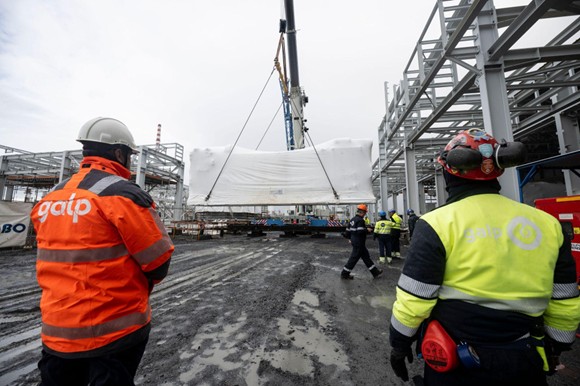
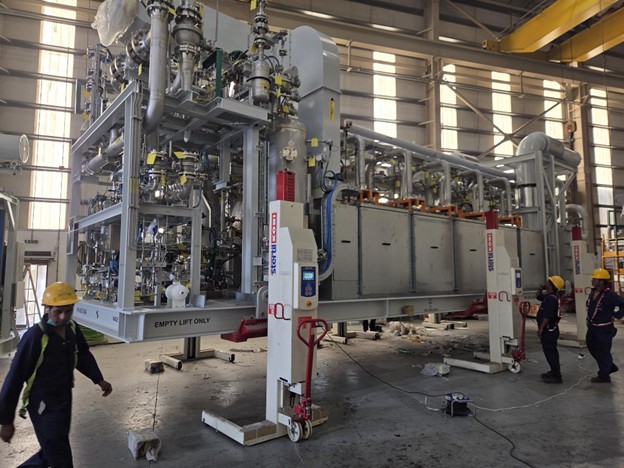
- Ten modular 10 MW PEM GenEco electrolyzers, each lifted into place by heavy-duty cranes and weighing in at about 42 tonnes apiece.
- Uses proton exchange membrane technology to split water into hydrogen and oxygen, with critical components coming from both the US and EU.
- Plug-and-play design means future capacity additions won’t force a full shutdown.
- Commissioning kicks off in early 2026, with full commercial operations slated for H2 2026.
Market Impact
At 100 MW, this installation ranks among Europe’s biggest single-site green hydrogen boosts to date. Cranking out an estimated 15,000 tons of H₂ annually, it helps plug a major industrial-scale supply gap on the continent. Here’s why it matters:
- Vertical integration: Galp’s in-house hydrogen demand slashes the offtake risk you’d see with merchant selling.
- Policy alignment: Drives down Scope 1 and 2 emissions in line with the EU’s Fit for 55 and REPowerEU goals.
- Investment template: Shows how strategic joint ventures in green hydrogen can attract capital while sharing execution risk.
On top of that, this project builds on Plug Power’s earlier 5 MW electrolyzer in Namibia, proving they can scale electrolysis across both emerging and mature markets. If Sines delivers on its targets, Spain and the UK could be next in line for roll-outs.
Operational and Economic Benefits
Beyond cutting emissions, this electrolyzer setup hedges operational risks by reducing reliance on grey hydrogen markets. While the final hydrogen price will depend on electricity costs and offtake agreements, the modular 10 MW approach is already driving down CAPEX and boosting bankability.
By blending US- and EU-sourced parts, Plug Power is also insulating itself from supply-chain bottlenecks—no small feat when lead times for critical electrolyzer components can stretch past a year.
Expert Perspective
We won’t see the full picture until after commissioning, but analysts expect PEM electrolyzers to exceed 70% system efficiency, delivering top-quality hydrogen. If Sines meets its design goals, it could push the levelized cost of hydrogen (LCOH) into competitive territory, especially where renewable power sits below €50/MWh.
Standardizing on 10 MW modules could mirror the cost reductions seen in wind and solar, where repeated builds have slashed CAPEX by up to 20% on successive projects.
Key Takeaways
- CO₂ reduction: Cuts around 110,000 tons CO₂e per year by replacing 20% of grey hydrogen.
- Production scale: 100 MW capacity delivering 15,000 tons of green hydrogen annually.
- Market leadership: Sines will be Europe’s largest dedicated green hydrogen unit at start-up.
- Supply chain: Transatlantic sourcing strategy strengthens resilience for large-scale electrolysis projects.
- Growth pipeline: Plug Power eyeing new sites in Spain and the UK; Galp pushing ahead with HVO/SAF facilities.
When 2026 rolls around, uptime, efficiency and operating-cost figures will be the ultimate test. For Plug Power, hitting or beating projections could unlock fresh capital and accelerate its European footprint. For Galp Energia, a steady stream of green hydrogen is the foundation for scaling up sustainable aviation and marine fuels, aligned with global industrial decarbonization roadmaps.
At its heart, Sines is proof that sustainable energy can leap from pilot plants into full-tilt reality. It’s a loud-and-clear signal that Europe’s hydrogen infrastructure is maturing, and the era of industrial decarbonization powered by green hydrogen is officially underway.
 With over 15 years of reporting hydrogen news, we are your premier source for the latest updates and insights in hydrogen and renewable energy.
