Hydrogen Production Secured by Shell Energy Europe’s REFHYNE 2 through Wind and Solar PPAs
March 3, 2026If you’ve been following Europe’s hydrogen boom, here’s one you can’t miss. Shell Energy Europe just sealed two long-term PPAs that lay the groundwork for major hydrogen production at its Rheinland site near Cologne. When the new 100 MW REFHYNE 2 PEM electrolyser fires up in 2027, it’ll run solely on wind and solar, pumping out up to 16,000 tonnes of green hydrogen each year and carving a big chunk out of Scope 1 and 2 emissions at one of Europe’s busiest energy and chemicals hubs.
Deal details
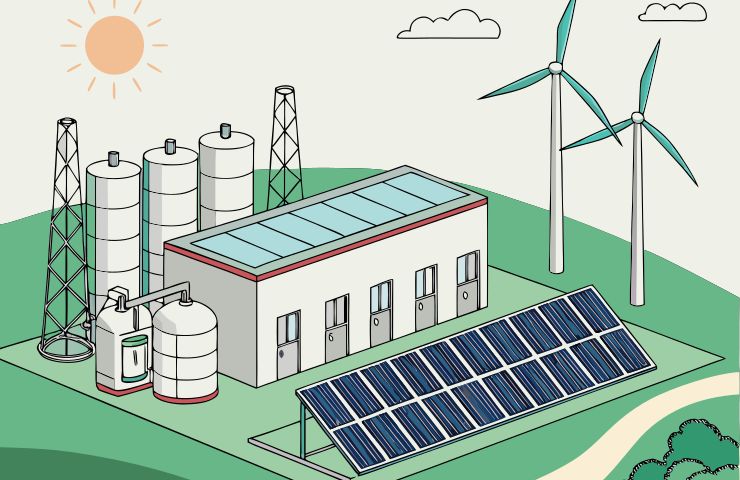
- Offshore wind PPA: A five-year pact with Nordsee One GmbH—that’s the 332 MW offshore JV between Northland Power and RWE—covering roughly a third of REFHYNE 2’s power needs starting in 2027.
- Solar PPA: A ten-year offtake deal with Solarkraftwerk Halenbeck-Rohlsdorf I/II GmbH, which runs a 230 MW ground-mounted solar park, locking down about 75 percent of the electrolyser’s juice.
Together, these fixed-volume renewable contracts help Shell hedge against wild electricity price swings and give the project’s financing a rock-solid foundation from day one.
Technical snapshot
REFHYNE 2 is essentially a 10× upgrade from its predecessor, REFHYNE 1, which has been churning out around 1,300 tonnes of hydrogen annually since 2021. For round two, Shell and its engineering teams chose a modular PEM electrolysis setup—think ten identical 10 MW stacks. This modularity not only speeds up construction but also means you can service one unit without shutting the whole plant down. At full tilt, REFHYNE 2 will split water into hydrogen and oxygen via a proton-conducting membrane, cranking out roughly 44 tonnes of hydrogen every single day.
The hydrogen then feeds directly into the existing pipeline network, supplying hydrotreating and hydrocracking units at the Shell Energy and Chemicals Park Rheinland. The oxygen by-product? It’s either captured for on-site use or vented, depending on what the operation calls for.
Strategic impact
Powering REFHYNE 2 entirely with wind and solar is a big leap toward industrial decarbonization. That green hydrogen will swap in for the grey stuff—still made from natural gas—in vital refining and chemical processes. Down the line, it’ll also feed into low-carbon transport fuels and specialty chemicals for Europe’s markets. It’s a neat fit with Shell’s broader aim to scale up low-carbon technologies and steer the energy transition in its heavy-duty industrial hubs.
History and context
The REFHYNE journey kicked off under the EU’s Horizon 2020 programme, with the first 10 MW electrolyser funded by grants via CINEA (now the Innovation and Networks Executive Agency). After Shell greenlit REFHYNE 2 with a Final Investment Decision in 2024, nailing down dedicated renewable power became the next big milestone. REFHYNE lives alongside projects like Holland Hydrogen 1—a 200 MW electrolyser in the Netherlands—and is helping push Europe’s total electrolyser capacity past the 300 MW mark.
Regional backdrop
North Rhine–Westphalia is Germany’s industrial epicenter, packed with refineries, chemical plants and pipeline arteries. The region’s also ramping up renewables, both onshore and in nearby North Sea wind zones. Dropping a huge electrolyser into this landscape not only slashes carbon in heavy industry but doubles as a flexible power sink, soaking up excess renewable output and smoothing out the grid.
Wider implications
These PPAs aren’t just about one project; they’re a signal that the market for green hydrogen is maturing. The ten-year solar deal, scored without direct subsidies, proves that large-scale PV is commercially solid in Germany. Meanwhile, the offshore wind agreement gives merchant developers off-take certainty. If this playbook can be copied, we could see a wave of electrolyser plants financed by corporate PPAs, changing the game for clean hydrogen investments.
Sure, hurdles remain—electrolyser CAPEX is still hefty, and you’ve got to juggle intermittent power inputs. But by pairing big electrolysers with fixed-volume PPAs, Shell and its partners are closing the risk gap and laying out a blueprint for future zero-emission hydrogen facilities across Europe.
Policy framework
These deals line up perfectly with the European Green Deal and Germany’s National Hydrogen Strategy, both of which put a premium on ramping up green hydrogen production as a pillar of industrial decarbonization. The incentive structures and certification schemes rolling out under these policies are meant to spur off-take and blend renewable hydrogen into existing gas grids, giving the sustainable energy transition extra momentum.
Financing and risk management
Locking in PPAs early is crucial for proving stable cash flows to banks and investors. Shell’s dual agreements establish a sturdy revenue base that makes REFHYNE 2 more bankable. It’s the same corporate off-take model that launched wind and solar on a big scale in Europe, now applied to industrial electrolysis. That predictability around costs and output also reassures equity backers and credit agencies eyeing debt financing.
Looking ahead
With construction rolling at the Rheinland site and renewable power secured, the next few years will be all about hitting engineering milestones, commissioning tests and ramping up operations. Industry watchers will be keen to see how Shell markets its hydrogen—will it lock in more long-term deals or try its hand on the spot market? And will additional PPAs be tacked on to scale up capacity further? If REFHYNE 2 nails it, we could see this model replicated across Europe’s major industrial clusters.
About Shell Energy Europe Limited
Shell Energy Europe Limited is the UK-based arm of Shell plc focused on energy trading, renewable power solutions and sustainable energy ventures. As part of Shell’s Global Energy Transition strategy, the team structures and manages PPAs, secures renewable electricity and develops electrolysis projects to push industrial decarbonization across European industrial hubs.

 With over 15 years of reporting hydrogen news, we are your premier source for the latest updates and insights in hydrogen and renewable energy.